




























With 4,763 places of worship registered in 2025, evangelical churches are growing in Spain, fuelled by Latin American immigration. The trend is clear at mass events such as the Festival of Hope.
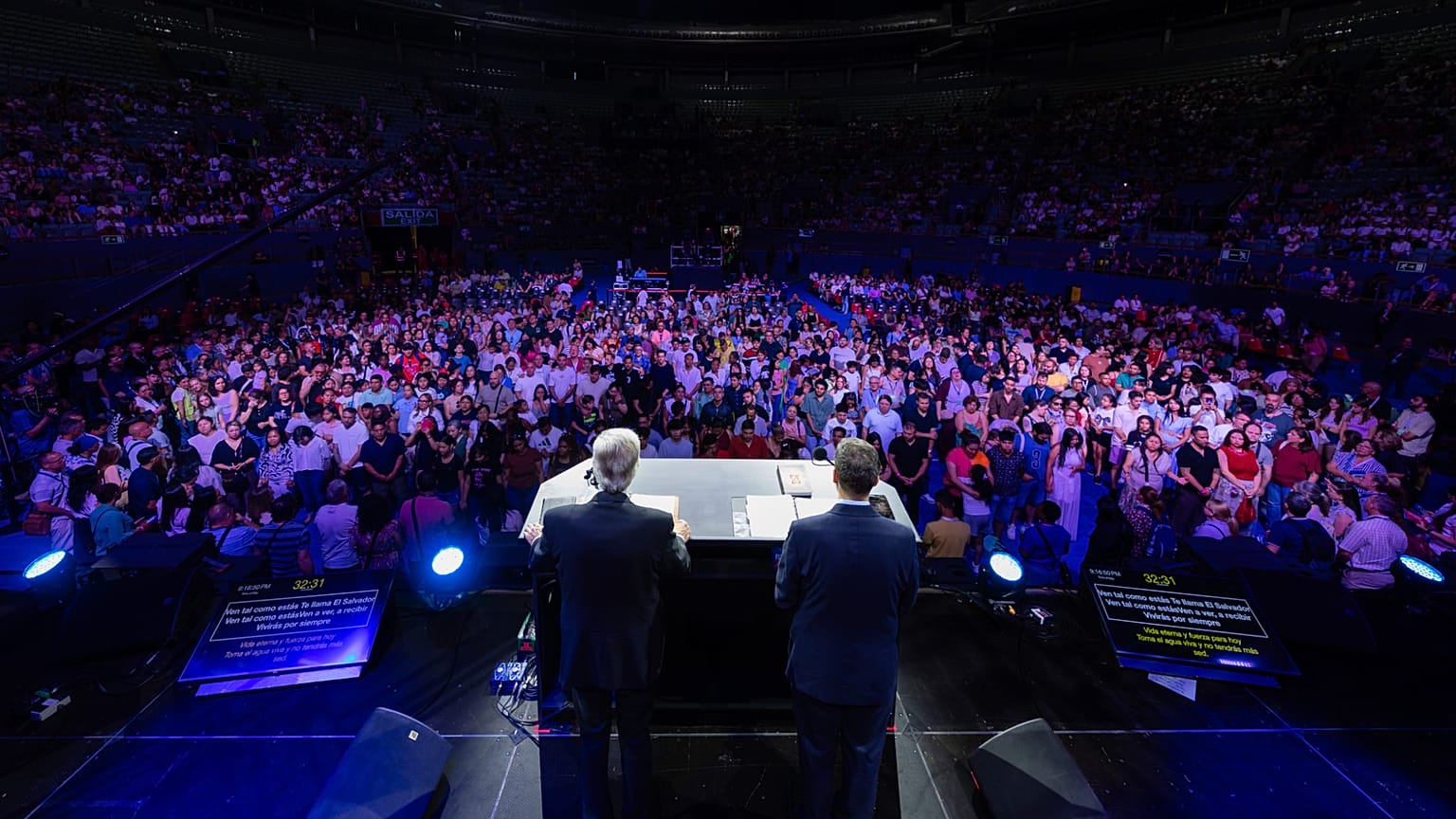
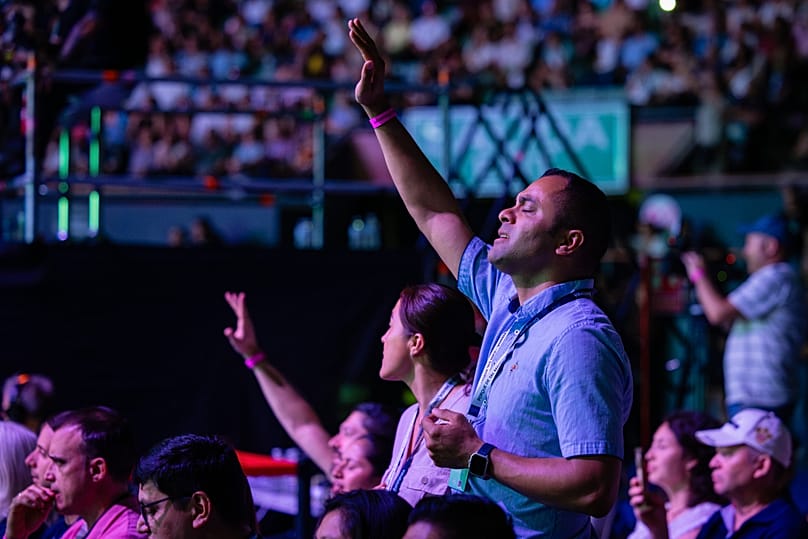
For a few moments, the scene looks more like a concert than a religious gathering. Thousands of people sing, raise their hands and follow the event from the stands of Madrid’s Palacio Vistalegre. On stage appears Franklin Graham, son of the historic evangelist Billy Graham, president of the Billy Graham Evangelistic Association and a close ally of US President Donald Trump.
 ADVERTISEMENT
ADVERTISEMENT
ADVERTISEMENT
The Festival of Hope (source in Spanish), held on 30 and 31 May, brought together thousands of attendees and once again highlighted a reality that is increasingly visible in Spain: the rise of evangelical churches.
"Spain needs hope, and that hope is found in Jesus Christ," Graham told those present. The preacher said he could see a renewed interest in the Christian faith in various European countries and expressed his wish for Spain to experience a new spiritual awakening.
According to the “Trump pastor”, 12,600 people attended the festival’s first day and around 2,000 more were left outside the venue for lack of space. The Billy Graham Evangelistic Association later put total weekend attendance at 18,700 people.
The gathering was prepared over 18 months and mobilised around 840 churches in the Madrid region belonging to different evangelical denominations. According to the organisers, close to 9,800 people also took part in training and evangelisation activities held in the preceding months.
The sheer scale of the event attracted attention in its own right. But the Vistalegre mega-event is also the reflection of a deeper transformation that is reshaping Spain’s religious landscape.
Almost 4,800 evangelical churches
According to the latest data from the Observatorio del Pluralismo Religioso en España (source in Spanish), the country had, in September 2025, 4,763 evangelical places of worship. The figure represents an increase on the 4,455 recorded a year earlier and is far above the 2,944 counted in 2011.
Catalonia currently concentrates 1,010 evangelical churches, followed by Madrid with 855, Andalusia with 744 and the Valencia region with 510.
Although the Catholic Church remains overwhelmingly predominant, with 22,922 registered places of worship, evangelical churches now account for more than half of all religious centres belonging to non-Catholic denominations.

The growth has been particularly visible in Madrid. Data from the observatory show that the number of evangelical churches in the region has risen from around 662 to 855 in barely a decade.
Evangelical organisations estimate that the community currently numbers around 1.5 million people, although there are no precise official statistics on the number of worshippers.
The growth is not limited to the number of churches. According to various evangelical organisations, these churches have also gained ground in universities, neighbourhood associations, the media, public events and social networks, reflecting far greater visibility than they had barely two decades ago.
Latin American immigration as a driving force
Behind this expansion one recurring factor keeps emerging: Latin American immigration. According to the latest data from the National Statistics Institute (INE), Spain continues to record all-time highs in population, driven mainly by the arrival of residents born abroad. Among the nationalities that have grown most in recent years are the Colombian and Venezuelan communities.
Many of these new residents come from countries where evangelical churches are far more widespread than in Europe. Colombia, Venezuela, Honduras, Guatemala, Brazil and the Dominican Republic have seen strong growth in evangelical and Pentecostal churches over decades.
For many migrants, congregations also serve as spaces for meeting, support and accompaniment. Beyond religious worship, they offer community networks, guidance and a family-like environment for those who arrive in the country without an established social support structure.
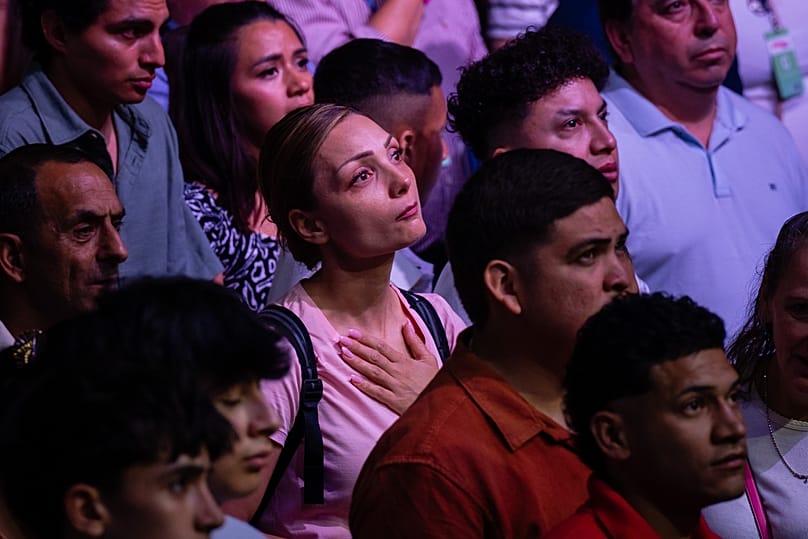
That social role comes up repeatedly in analyses of evangelical growth. For many newcomers, churches act as a first safety net, help them build personal and work contacts and offer a sense of belonging in a new environment.
The movement’s growing visibility can also be seen outside church walls.
Weeks before the Festival of Hope, the gathering The Change Madrid (source in Spanish) brought together around 35,000 people at the Metropolitano stadium, according to its organisers. The event drew international preachers and featured the participation of former Brazilian footballer Dani Alves, who shared a personal account of his religious conversion after his time in prison.
The event highlighted the shift in scale the movement has undergone in recent years. What for decades was associated with small congregations and neighbourhood premises is now capable of filling some of the largest venues in Spain.
Part of that growth has been underpinned by formats that combine live music, audiovisual production, digital broadcasts and personal testimonies: a blend of religious fervour, emotion and spectacle that has helped raise their profile in the public sphere.
These latest mega-events coincide with the days leading up to the arrival in Spain of Pope Leo XIV. And while the Catholic Church remains by far the majority, evangelical churches are experiencing one of the fastest growth rates in the country.
The thousands of people gathered in Vistalegre were only the most visible expression of a transformation that has been quietly advancing for years, away from the spotlight, in neighbourhoods and cities across the country.