





























Every year on 31 May, Kazakhstan commemorates the millions who perished during the Soviet-era famine and political repression.
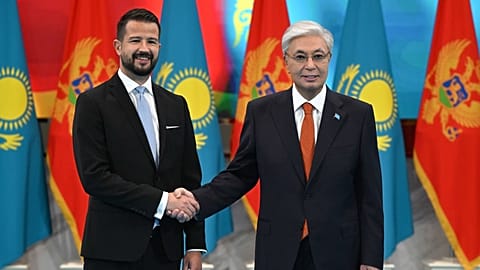
People in Kazakhstan remember the millions killed in the famine and political persecutions of the early Soviet era with a solemn ceremony on 31 May. Kazakh President Kassym-Jomart Tokayev, during a wreath-laying ceremony, highlighted that the losses the nation sustained in the 20th century should not be forgotten.
 ADVERTISEMENT
ADVERTISEMENT
ADVERTISEMENT
The Great Famine
By the 1930s, the Bolsheviks had largely stabilised their rule, eliminated competition and started building communism across the Soviet Union. They decided it was time to accelerate the country’s industrialisation, through a massive collectivisation campaign, during which they confiscated all of Kazakhs’ livestock.
“When people were herded into collective farms, enormous herds would be concentrated in one place. This led to deaths from lack of food,” explained Andrey Drebezgov, head of the Exhibition Department at the KarLag Museum.
The Red Army slaughtered much of the remaining cattle, unable to feed the animals. Herd numbers fell from 40 million to five million. For a nation whose primary source of food was cattle, this meant widespread starvation.
As a result, out of six million Kazakhs, approximately two million died of starvation and another 600,000 fled to neighbouring Soviet republics, as well as China, Iran and Afghanistan, hoping to avoid a similar fate.
KarLag – Kazakhstan’s largest labour camp
Kazakh intellectuals criticised the government for the excessive policies that led to famine and mass deaths. For this perceived rebellion, they were arrested, exiled and executed. Between 1920 and 1953, more than 100,000 people were convicted in Kazakhstan alone, and 25,000 of them were sentenced to death.
The Karaganda Corrective Labour Camp, also known as KarLag, was one of the largest labour camps in the USSR. Its territory of 20,800 sq km was once compared to the size of France. From 1931 to 1959, about one million people passed through the camp. While some 5,500 people were shot at KarLag, majority died because of harsh conditions, including extreme cold and overcrowding.
Amanbay Kaspakbayev: Persecuted for helping others
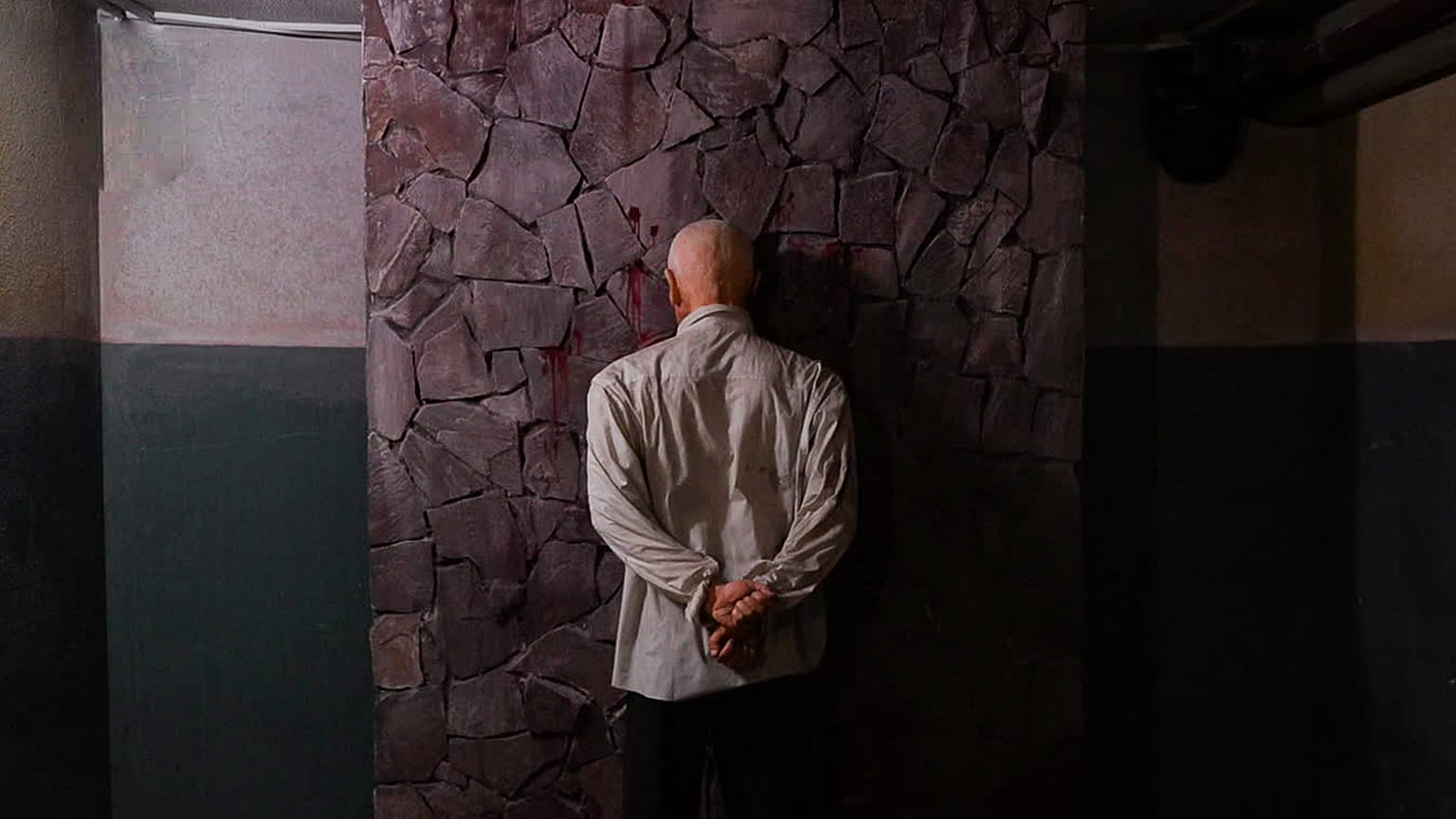
For some, the outcome was even more immediate. They were executed. Among them was Rakhat Amanbayev’s grandfather, Amanbay Kaspakbayev, once secretary of the Central Executive Committee of the Kazakh Soviet Republic.
“In October 1937, during regular dinner, NKVD officers came in, brought charges, and took him away,” remembers Amanbayev.
According to documents Rakhat was able to obtain, only after the collapse of the Soviet Union, Amanbay was accused of being a fascist, a Trotskyist and of helping suspected dissidents.
“On 27 February, 1938, he was sentenced to death and executed. My grandmother, as the wife of a traitor to the Motherland, was also arrested and sent to serve her sentence in the Akmola Camp for the Wives of Traitors to the Motherland — ALZHIR,” Amanbayev said.
After spending there 8 years, enduring hardship and abuse, she took her children from their uncle and moved away, because people in their village were unhappy that the family of an “enemy of the people” lived nearby.
Saken Seifullin: From revolutionary to the “enemy of the people”
One of the most prominent figures who faced a similar fate was Saken Seifullin, a Kazakh poet, promoter of the Kazakh language, and once former head of the Kazakh Republic.
In that position, he ensured that official documentation in the republic would be written in Kazakh, as well as helped restore the historic name of the Kazakh people (before that they were incorrectly called Kirghiz Kaisak.) For this he was accused of nationalism and anti-Soviet activity. Ironically, he was a revolutionary and a Bolshevik.
“It was Sunday, 24 September. Two men came for him and went into the house. They showed him a paper, and Saken Seifullin immediately turned bright red, and then suddenly black,” said Altay Kussainov, the grandson of Seifullin’s only surviving younger brother.
Seifullin’s young son died on a train, while he and his mother were deported. His daughter died even before his arrest. His father and older brother were also executed. His younger brother survived only because he was too sick and the NKVD officers thought he would die anyway. From 1937 to 1957, the Seifullin family lived under the label of “enemy of the people.”
“My mother still remembers how they pulled her hair at school. And then there was this constant fear that one day, God forbid, someone would report them and something might happen,” Kussainov recalled.
No university wanted to admit the child of an “enemy of the people.” When she finally got admitted to the Zoological Institute, someone denounced her, and she had to complete her education in secret. Her father, Saken’s younger brother, struggled to hold down a job for 20 years. Each time someone discovered his connection to an “enemy of the people,” and he was dismissed.
When Stalin died in 1953, many people were amnestied and rehabilitated. Both Seifullin and Kaspakbayev were rehabilitated in 1957. In 1993, independent Kazakhstan adopted a law on the rehabilitation of victims of political repression, restoring their reputations and compensating their families.