














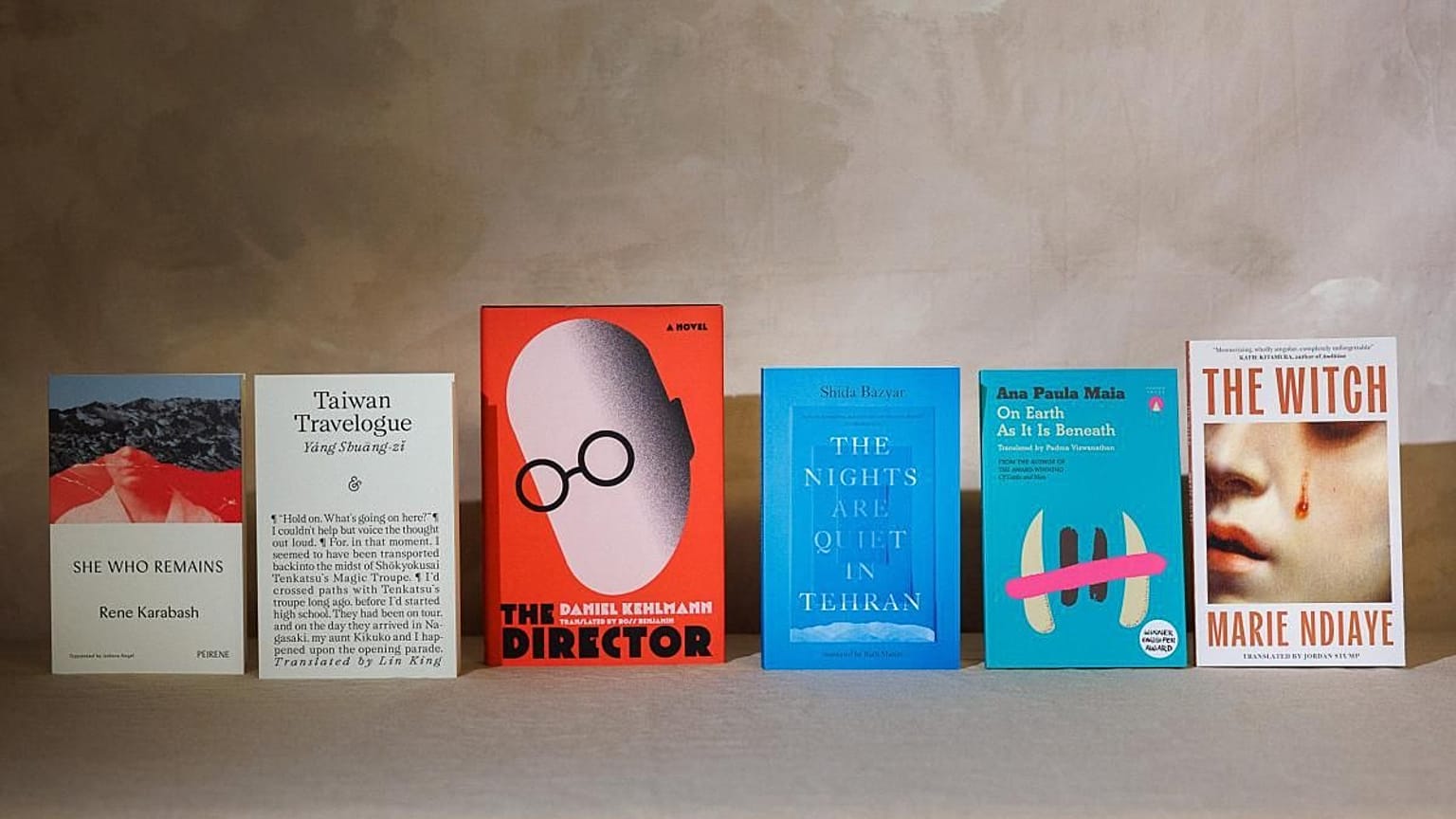













This year's International Booker Prize shortlist of six novels take readers from a Japanese colonial-era Taiwan to the propaganda studios of Nazi Germany.
The wait is almost over. The winner of the International Booker Prize 2026 will be announced this week.
 ADVERTISEMENT
ADVERTISEMENT
ADVERTISEMENT
There are six stunning translated works competing for the main prize of €57,000 and the honour of collecting one of the world's most prestigious literary awards.
Each shortlisted author and translator also receives nearly €3,000.
The prize is awarded annually for a single book, translated into English and published in the UK or Ireland.
This year, five of the six shortlisted authors are women, as are four of the six translators, and the books were originally written in five different languages, with authors and translators together representing eight nationalities.
Judging chair and author Natasha Brown said the six shortlisted books "capture moments from across the past century, these books reverberate with history."
She added: "Rereading each book, we found hope, insight and burning humanity - along with unforgettable characters to whom I'm sure readers will return again and again."
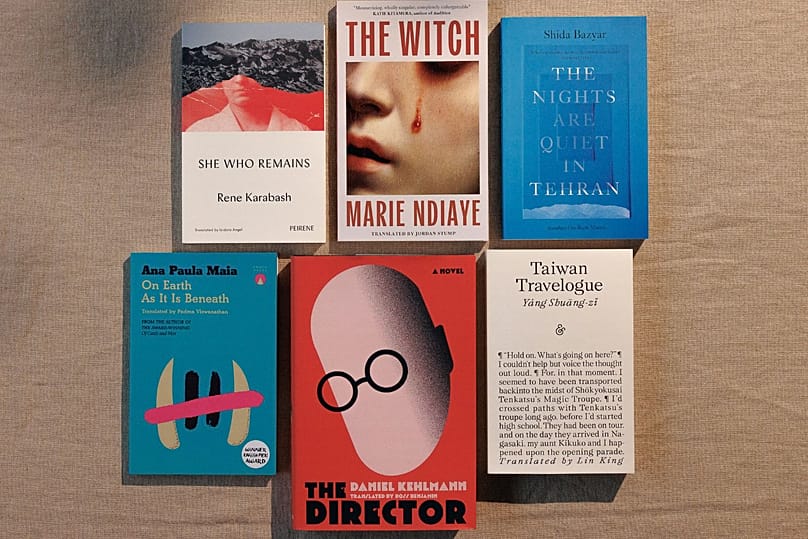
Here is what you need to know about each contender.
Taiwan Travelogue - Yáng Shuāng-zǐ, translated by Lin King
Set in 1930s Taiwan under Japanese colonial rule, the novel follows Japanese writer Aoyama Chizuko and her Taiwanese interpreter as they travel around the island with Chizuko.
At its heart is the intimate relationship between the two women: charged with queer desire, unspoken longing, and the tensions of colonial life, played out through shared meals and half-finished sentences.
"With sumptuous food writing, laugh-out-loud dialogue and metafictional twists, this novel was impossible to put down. Taiwan Travelogue pulls off an incredible double act: it succeeds as both a delicious romance and an incisive postcolonial novel," say the competition judges.
It was first published in Mandarin Chinese in 2020 and took home the Golden Tripod award - Taiwan's most prestigious literary prize - before being translated into English.
She Who Remains - Rene Karabash, translated by Izidora Angel
Set in a disappearing Albanian community ruled by the ancient Kanun of Lekë Dukagjini - a legal code that treats women as property - this novel centres on Bekija, a 33-year-old facing a forced marriage.
Her escape is to be renamed Matija and become the community's last "sworn virgin," socially transitioning from female to male.
According to the judges, the novel "perfectly captures the slippery uncertainty of painful memories. Matija is a compelling narrator, whose story swept us up completely."
The Witch - Marie NDiaye, translated by Jordan Stump
Originally published in French in 1996, The Witch tells the story of Lucie, a "mediocre" witch in a stifling, small-town French marriage. Her daughters inherit her magic and immediately fly the nest (literally), her husband leaves, and the family she built falls apart around her.
Witty, dreamlike, unsettling and enchanting, The Witch brings the mysteries of womanhood and motherhood into sharp relief, according to the jury.
"The language in this novel – and in Jordan Stump’s translation – is exquisite: sentences twist and transform in unexpected ways," say the judges.
The Nights Are Quiet In Tehran - Shida Bazyar, translated by Ruth Martin
Starting in the wake of the 1979 Iranian revolution and spanning four decades, The Nights Are Quiet In Tehran follows one family across upheaval and exile.
Each of the four sections is narrated by a different family member - a revolutionary father, a literature-loving mother, a daughter visiting Iran for the first time, a son pulled into politics by the 2009 Green Movement - each a decade apart.
The Nights Are Quiet in Tehran is a moving novel about oppression, resistance, and the absolute desire for freedom.
The Director - Daniel Kehlmann, translated by Ross Benjamin
When the Nazis seize power in the 1930s, G.W. Pabst, one of cinema’s greatest directors, is filming in France. To escape the horrors of the new Germany, he flees to Hollywood. But under the dazzling California sun, the world-famous director suddenly looks like a nobody. Not even Greta Garbo, whom he made famous, can help him.
The Director is a novel about the dangerous illusions of the silver screen. It delves into an artist's life and pact with the devil while exploring the complicated relationships and distinctions between art and power, beauty and barbarism.
On Earth As It Is Beneath - Ana Paula Maia, translated by Padma Viswanathan
On land where enslaved people were once tortured and murdered, the state built a penal colony in the wilderness, where inmates could be rehabilitated, but never escape.
But in the prison’s waning days, a new horror is unleashed: every full-moon night, the inmates are released, the warden is armed with rifles, and the hunt begins.
The judges have described this as "an unsettling novel that sets us among an isolated group of men whose bonds break down in ways both hard to comprehend and impossible to look away from."
The winning book will be announced from 23h CET on Tuesday, 19 May 2026 at a ceremony at Tate Modern in London.