




























JR’s latest project celebrates real and complicated contemporary human lives, while seeking to forge new social connections.
The latest project by JR, the renowned French street artist and photographer, is now on display at the Palazzo Ca’ da Mosto, otherwise known as the Venice Venice Hotel for the 61st International Art Exhibition of the Venice Biennale 2026.
 ADVERTISEMENT
ADVERTISEMENT
ADVERTISEMENT
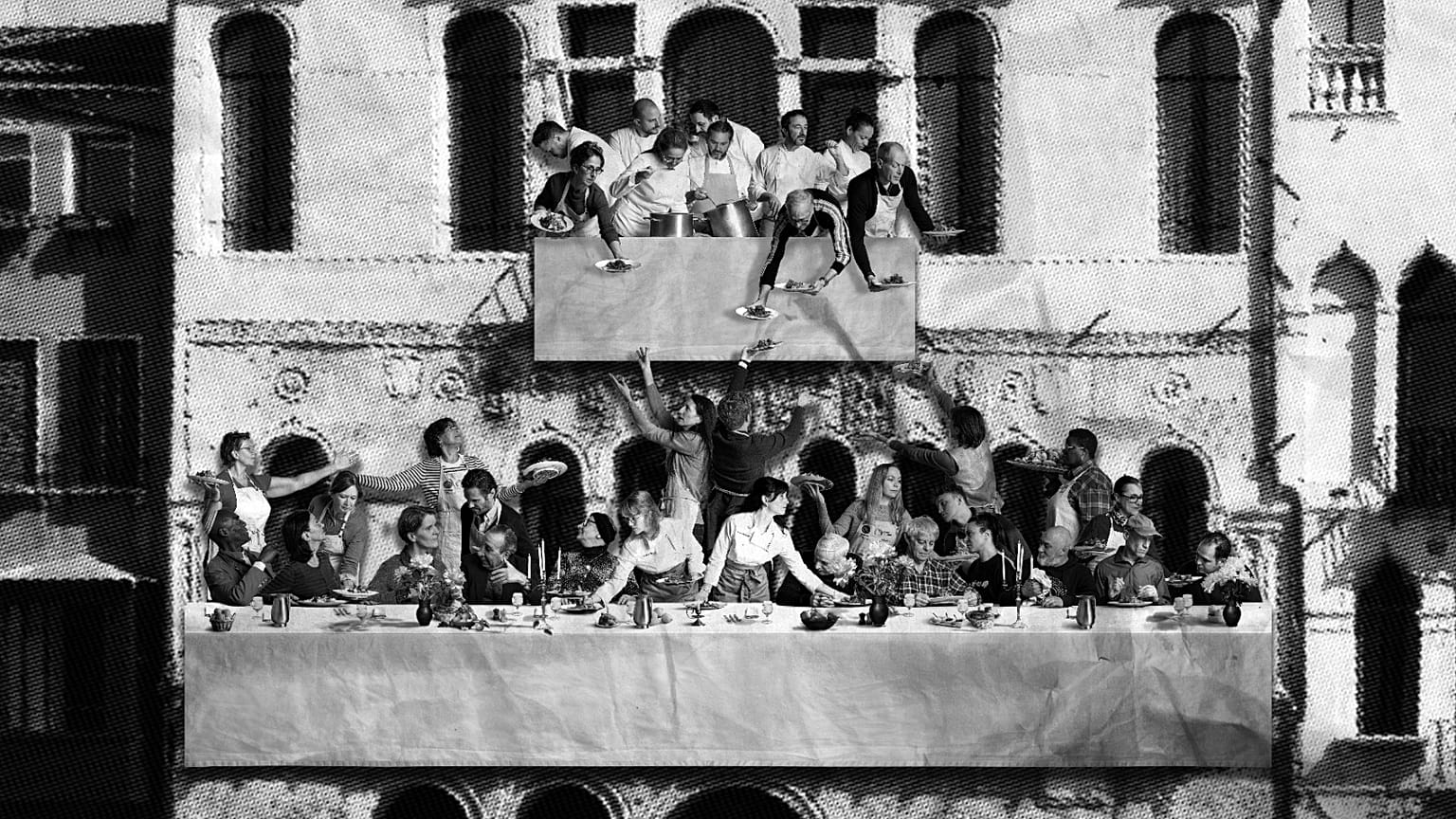
Inspired by Paolo Veronese’s The Wedding at Cana paintingfrom 1563, the facade of the hotel has become the surface of JR’s huge temporary art installation, dubbed Il Gesto.
The installation highlights JR’s signature style of turning classic works into contemporary recreations.
Il Gesto features photographs and recordings of 176 people from the Refettorio Paris community, an anti-waste culinary and culture project. These are volunteers, chefs and guests all coming together to create a collective composition, all while celebrating personal stories and journeys.
From 1563 to the present
Il Gesto takes The Wedding at Cana’s banquet scene of winebeing turned into water, and reimagines it as a key social transformation.
This reflects the work done by Refetterio Paris to decrease food waste by turning surplus food into elegant meals, while strengthening human connection and improving social inclusion along the way.
Rather than the choreographed settings signalling abundance in The Wedding at Cana, the table in Il Gesto highlights the real and often complicated lives of people today, becoming a metaphor for equality.
The installation also functions as a living archive chronicling the voices and lives of people at the edges of society and preserving their dignity, with each portrait holding a recording.
This adds an extra layer to the experience, with visitors being able to read, listen and explore the installation at the same time.
A digital platform also allows them to discover more about the stories of the people featured, while JR's portal will allow them to learn more about the creative process.
Within the building, the installation starts on the Second Piano Nobile of Ca’ da Mosto, in the grand salon, and extends till an adjoining room, allowing visitors to absorb the full impact of the grand chandeliers, mirrored table and giant tapestry.
The tapestry uses yarns made from virgin wool, recycled plastic, washi paper and organic cotton, highlighting Venice’s textile heritage and artisan traditions.
Bringing life to the facade
The Venice Venice Hotel is a 13th-century Venetian-Byzantine palace, which now features a 20th century avant-garde interior, highlighting the “postvenezianità” style, to create a 5-start “art hotel”.
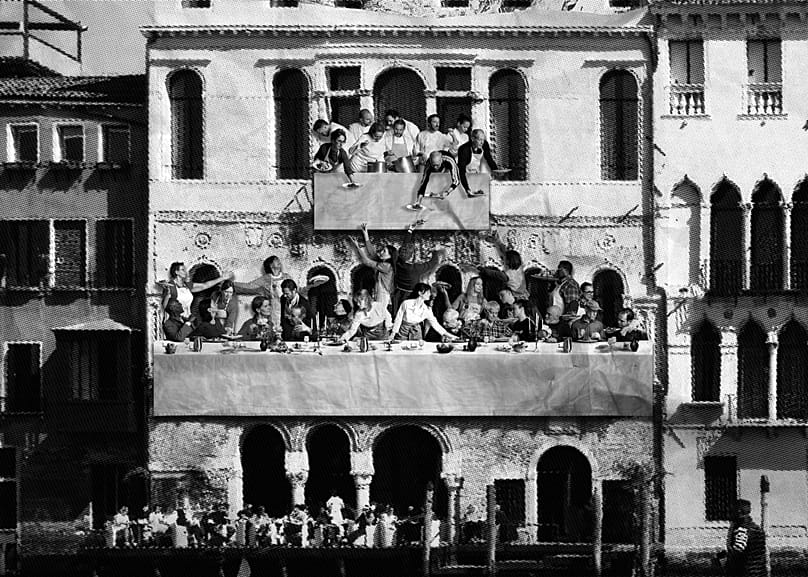
Il Gesto stretches across the palazzo’s two piani nobili in an expansive continuation of living art. The gestures and faces of the people featured merge with ancient stone and peek through the windows, visible from the Grand Canal and banks of Rialto.
Made with ultra-lightweight panels, the external part of the installation seems to turn Venice into an open-air stage, extending an invite to residents and visitors alike to take part in the shared experience.
“By bringing together people of different origins in a single composition, I ask: what idea of community are we building today? Who is truly visible? Who is invited to sit at the table? What does it mean, at the deepest level, to share a meal?” JR noted.
“In this work, the banquet becomes a necessary space of encounter, where beauty ceases to be a privilege and becomes a shared human experience.”
Some of JR’s previous iconic works include Portrait d’une Génération, which attempted to challenge stereotypes impacting young people from Parisian suburbs, Kikito, a giant, peering child at the US-Mexico border and the anamorphosis installations of the Louvre Pyramid Projects.