






























New academic research highlights the Timurid era as a structured system of scientific and cultural development. An international conference brought together global experts to reassess primary sources and expand cooperation on historical research and preservation.
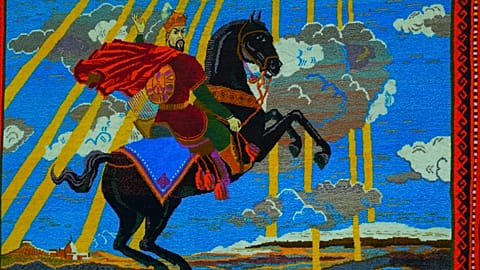
International scholars are re-examining the legacy of Amir Temur, as new research shifts attention beyond military history to the scientific, cultural and institutional achievements of the Timurid era.
 ADVERTISEMENT
ADVERTISEMENT
ADVERTISEMENT
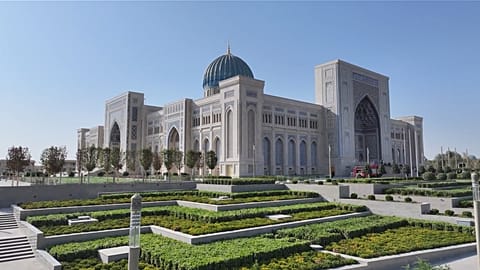
These debates were central to an international scientific conference titled “The Role and Significance of Amir Temur and the Timurid Civilization in World History and Culture,” held at the Islamic Civilization Center in Tashkent, marking the 690th anniversary of Temur's birth.
The event brought together more than 300 participants from over 20 countries, including historians, archaeologists and representatives of international institutions such as the Islamic World Educational, Scientific and Cultural Organization (ICESCO), the Oxford Center for Islamic Studies, the Research Centre for Islamic History, Art and Culture (IRCICA) and the Al-Furqan Foundation.
Discussions focused on governance, diplomacy, science, education and cultural development during the Timurid period, as well as its broader impact on world history.
Reframing the Timurid era
Current scholarship increasingly interprets the 14th and 15th centuries as a period of intellectual transformation, often described as a “Second Renaissance.”
Historians point to the emergence of scientific institutions, structured education systems and sustained cultural development across the Islamic world.

President Shavkat Mirziyoyev, in a formal message to participants, described the Timurid Renaissance as “one of the most remarkable periods” in the country’s history and called for deeper academic research and international cooperation. A central focus of current research is the reassessment of historical narratives and primary sources related to the Timurid era.
Scientific legacy beyond military history
Director of the Al-Furqan Islamic Heritage Foundation, Sali Shahsavari, said public understanding often overlooks the scientific dimension of the Timurid era.
“Amir Temur is known widely as a military leader, as a political leader, but very few people know the legacy that he left in the so-called Timurid era in terms of scientific development,” he said.
“We are talking about a whole reign and a whole period of scientific excellence and scientific development.”
According to Shahsavari, the Timurid period represented not only political authority but also a structured system of knowledge production that influenced scientific progress for centuries.
Historians describe the period as one of major advances in astronomy, mathematics, geography and medicine. Scholars highlight the emergence of madrassas and organised research systems that supported long-term intellectual development and the transmission of knowledge across generations.
Cultural and architectural impact
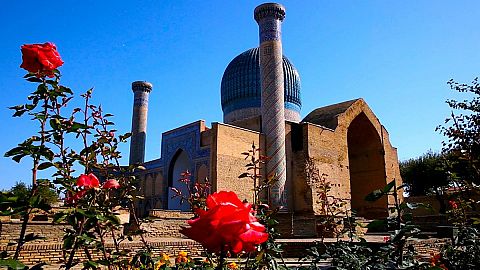
Cengiz Tomar, Deputy Director of the Research Center for Islamic History, Art and Culture (IRCICA), noted that the legacy of the period remains visible today through architecture and cultural identity.
“When we see Timurid architecture, we understand that this is a building from the Timurid period,” he explained. “
“Like Ottoman or Seljuk architecture, Timurid architecture also has its own special place in civilization.”
Historian Hilola Nazirova, a Doctor of Historical Sciences and specialist in source studies, said her research challenges long-standing interpretations of Amir Temur.
“Usually, we know Amir Temur as a conqueror, and Sharafiddin Ali Yazdi’s Zafarnama was interpreted only in a one-sided way,” she said.
Her research with Khorezmian sources and translation traditions, including Ravzat as-Safa and Turkish historical texts, uncovered a nuanced historical reality. She argues that depictions of Amir Temur as purely destructive are shaped mainly by biased historiography, and urges scholars to consult primary sources, emphasizing that the challenge lies not in a lack of sources, but their overwhelming abundance.
TURKSOY Secretary General Sultan Raev described the Timurid era as a foundational period for state-building, culture, and civilization.
“He built buildings that we now proudly call Samarkand and Bukhara. It all began during the time of Amir Temur,” he said. “The legacy of Temur teaches us to love our land.”
Bedar Shayesta, Director of the Khuda Bakhsh Oriental Library, pointed to the wide scope of Timurid contributions.
“The contribution of the Timurids, especially in the field of art, culture, religion, Sufism, architecture, literature and language, poetry and philosophy, logic, as well as in the pure sciences,” she said.

Also, she emphasized the long-standing historical connections between India and Uzbekistan and called for expanded academic cooperation. “There is a great connection, a strong connection between India and Uzbekistan.”
“Our institute holds one of the world’s largest collections of manuscripts on Eastern languages,” Irina Popova highlighted the importance of manuscript preservation and collaboration.
She described these collections as shared cultural resources that continue to be studied by international researchers.
From research to implementation
Following the conference, participants outlined initiatives to expand international research, strengthen academic cooperation and improve the preservation of manuscripts and cultural heritage.

These efforts aim to support a more systematic and globally coordinated study of the Timurid era.
Read more