





























A new study has crunched the numbers, and it turns out that while attention spans are dwindling, movie runtimes are growing.
“That was a bit long, wasn’t it?”
 ADVERTISEMENT
ADVERTISEMENT
ADVERTISEMENT
A persistent comment you’ll have heard when stepping out of your local multiplex or when chatting with fellow cinemagoers.
Also, if you’re a regular reader of our weekly Film of the Week series, you’ll have noticed that a frequent criticism routinely pops up: Few films would suffer if they had about 20 minutes shaved off the runtime. Not all, mind you - but enough of them.
Is it a false impression that could be down to our attention spans getting shorter, courtesy of social media and ubiquitous online shorts? Or are we dealing with a genuine phenomenon?
Well, the stats are in and you’re not imagining things... On top of shot-to-shit focus, movies are getting longer.
Researcher and film industry analyst Stephen Follows recently appeared on The Town podcast and revealed that he’s “crunched the running times of 36,431 movies” that were released theatrically from 1980 to 2025. Quite the feat. And the data speaks for itself.
“The average running time has barely changed in decades,” says Follows. “It has hovered around 100 to 103 minutes since the 1980s. In 2024, the average film was 103.6 minutes long.”
However, that’s the average of everything. If you look at just “wide theatrical releases”, those movies alone averaged 106 minutes in the 1990s and early 2000s. But by the current decade, “that figure had risen to 114 minutes.”
You read correctly: Movies are roughly 10 minutes longer than they were 20 years ago.
The percentage of wide releases that run less than 90 minutes has shrunk considerably in the last 40 years.
“In the 1980s, roughly 13 per cent of wide releases ran under 90 minutes. In the 2020s, that’s down to 7 per cent.”
According to his study, films with blockbuster budgets ($100 million +) tend to be even longer, and Follows also points out that pre-show advertising and trailers have expanded to average around 20 to 30 minutes.

The genre of movies most responsible, you ask? Action films, which now average 128 minutes - a staggering 25 minutes longer than a few decades ago.
Take the Indiana Jones films. They started in 1981 with the stellar Raiders of the Lost Ark, which delighted audiences for 115 minutes. Fast forward a few decades and the final adventure, 2023’s Indiana Jones and the Dial of Destiny, squandered all its potential in the space of 154 minutes.
Similarly, the first Mission: Impossible adventure ran for a thrilling 110 minutes in 1996, while last year’s Mission: Impossible – The Final Reckoning seemingly ended the franchise in 170 bloated minutes.
As for the James Bond franchise, Sean Connery’s debut as 007 in 1962’s Dr. No lasted 109 minutes, while the last Bond film to date, 2021’s No Time To Die, was the longest in the franchise’s history with a runtime of 163 minutes.
And there’s still no excuse for the most recent instalment – Avatar: Fire And Ash – wasting 197 minutes of your life. Nor are there mitigating circumstances for the deteriorating MCU films, with Multiverse Saga adventures averaging a runtime of 123 minutes.
It’s not just franchise film runtimes that have ballooned, mind you.
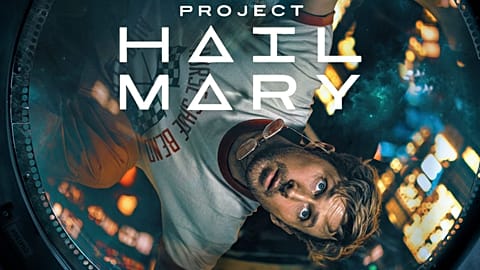
Current box office juggernaut Project Hail Mary runs for 156 minutes, while recent Oscar winners like One Battle After Another and Oppenheimer clocked in at 162 and 180 minutes, respectively.
Granted, not a minute wasted in both, but toilet breaks were a must before the lights went down.

Follows admits that there’s no neat answer to explain the "why" behind ever-expanding runtimes.
However, he does list several possible reasons, including studios increasingly wanting films to feel like major events, as well as cinemas needing to “justify a premium ticket price, and maybe a longer film can feel like a better value”.
We recommend you check out Follows’full breakdown – complete with delightful graphs – which leads to the question: Should cinemas bring back the intermission?
What do you think? Are expanding runtimes a good or a bad thing? And without creating a direct correlation between length and quality (pipe down at the back), do appetites for longer movies mean that modern audiences are craving cinemagoing experiences that feel more meaningful?