



























To understand why Catholic and Orthodox Christians celebrate Easters on different dates you have to go back more than 400 years, to ten days that didn't exist...
The vast majority of the Christian world celebrates Easter next weekend, but not all of Europe celebrates it on the same date. While for Roman Catholics and Protestants, Easter Sunday is on 5 April, for the Orthodox of various denominations, the celebration takes place a week later.
 ADVERTISEMENT
ADVERTISEMENT
ADVERTISEMENT
Why is this? To understand, you have to go back more than four centuries and ask what European Catholics did between 5 and 14 October 1582. The answer will surprise you: they didn't actually do anything. That's because those days didn't exist, but automatically moved from the 4th to the 15th.
This happened on the orders of Pope Gregory XIII, who decided to introduce a new calendar, more in line with the movements of the stars, in response to the lateness of the Julian calendar (introduced by Julius Caesar), which was already showing a considerable lag.
This gave birth to the calendar we use today in the West, not only for religious celebrations but also for civil dates - in honour of its founder, it was called the Gregorian calendar.
Today, the Julian calendar is 13 days behind the Gregorian.
Why celebrate on different dates?
The Council of Nicaea, held in 325 on the initiative of Emperor Constantine I, made it clear that Easter should be celebrated on the same date by all Christians. It was later established (in a decision often wrongly attributed to the council) that this would take place on the first Sunday after the first full moon of spring.
But the date of the spring equinox differs in the two calendars, hence the persistence of the problem.
While the Roman Catholic Church and most Protestant churches adopted the Gregorian calendar, the Julian calendar remained the reference for the Orthodox churches. In the case of Russia, this applied not only to religious celebrations but also to the civil date itself, which was only adjusted after the 1917 revolution (hence the "October Revolution" took place in November...).
The Julian calendar would also eventually be reformed to coincide with the Gregorian (it would diverge only after the year 2800), but it was not adopted uniformly.
The Greek Orthodox Church uses the reformed Julian calendar, but only for the fixed feasts, such as Christmas. For the movable feasts, such as Easter or Pentecost, it continues to use the old calendar. The Russian Church, on the other hand, uses the old calendar for all feasts. For this reason, the Greeks celebrate Christmas on the same date as Westerners, but not Easter, while the Russians celebrate both dates on different days.
Last year, in a rare event, the Catholics' Easter coincided with that of the Orthodox.
How is Orthodox Easter celebrated?
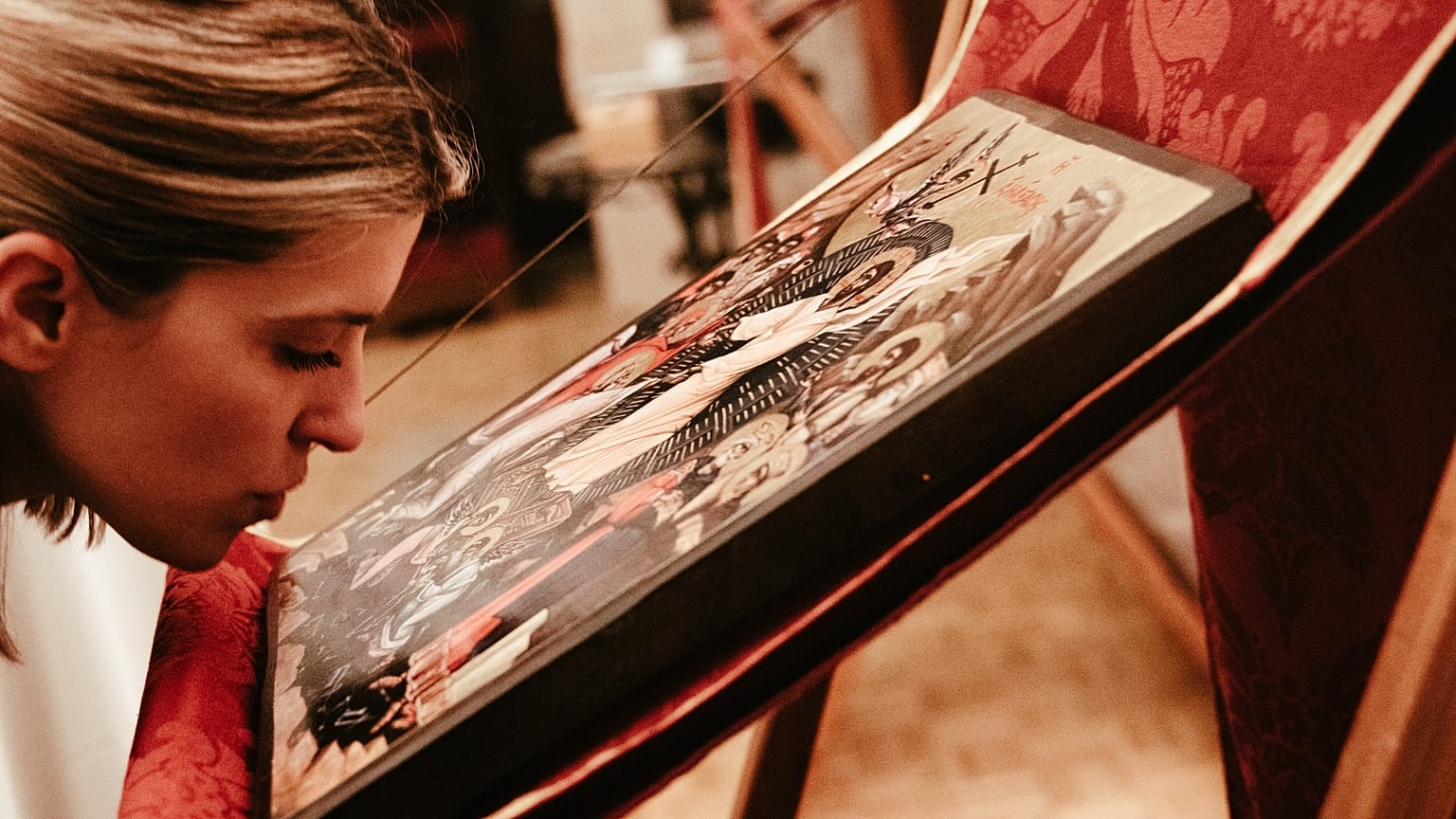
Orthodox celebrations have some particularities that make them different from Western ones.
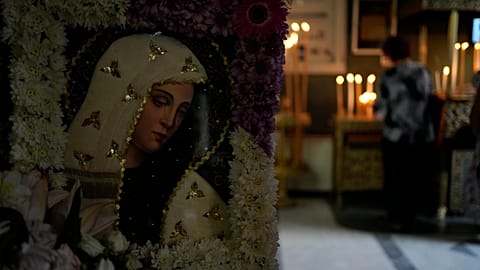
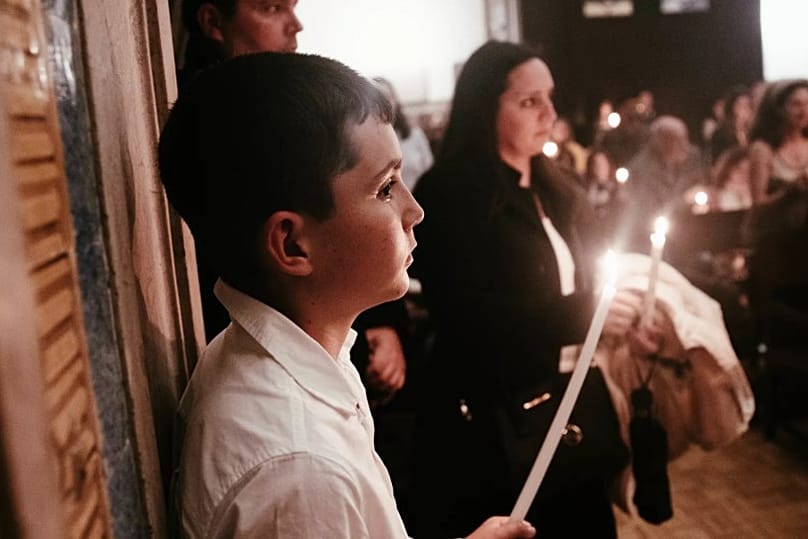
Easter is celebrated with a mass on the night of Saturday to Sunday, during which the faithful (standing, as is always the case at Orthodox masses) hold a lit candle. At midnight, the priest sings a song that includes the phrase "Christ is risen".
It is also with this phrase that the faithful greet each other after midnight from Saturday to Sunday. So instead of wishing each other "Happy Easter", the usual phrase is "Christ is risen", to which the other person should respond with the phrase "indeed, he is risen".
After Mass, people often play a game in which each participant has a hard-boiled egg painted red and must try to break the shells of the other players' eggs.
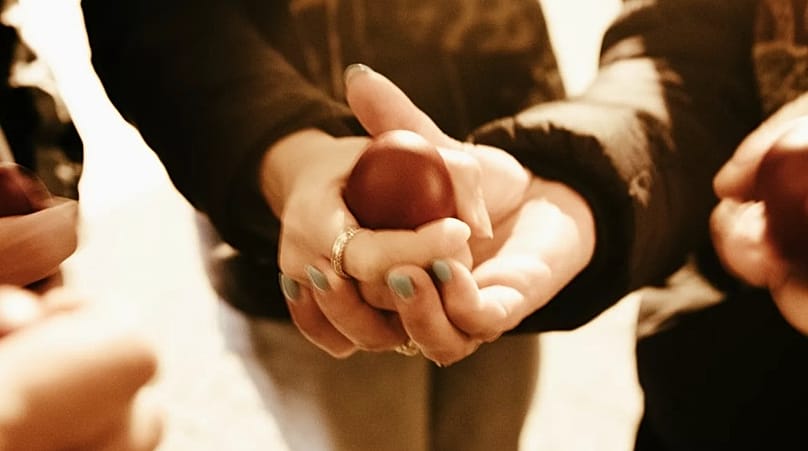
Games and games involving eggs, whether real painted eggs or chocolate eggs, such as the traditional egg hunt, are common to almost all Easter celebrations, and the egg, which represents fertility and renewal, is an almost universal symbol.