





























The celebrated American artist has been in the Greek capital Athens to present his exhibition 'Jeff Koons: Aphrodite of Lespugue' at the Museum of Cycladic Art.
Jeff Koons, one of the most important artists of our time, likes to talk.
 ADVERTISEMENT
ADVERTISEMENT
ADVERTISEMENT
Throw any subject at him and he can wax lyrical, which is extremely useful for interview purposes and especially when the main topic is his work and how it connects with the past and present.
The American has been in Athens for the opening of "Jeff Koons: 'Venus' Lespugue", an exhibition hosted by the Museum of Cycladic Art entitled .
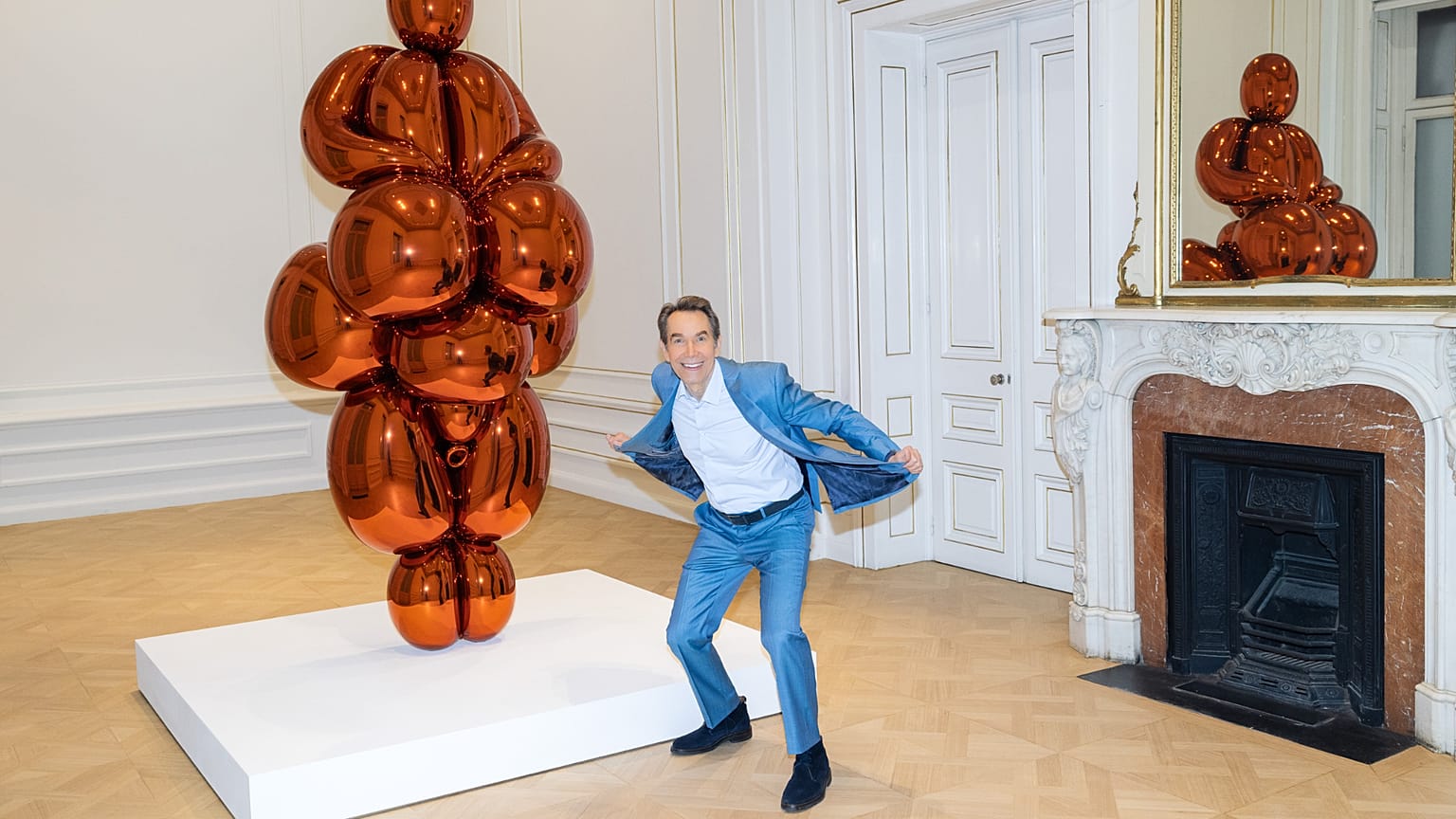
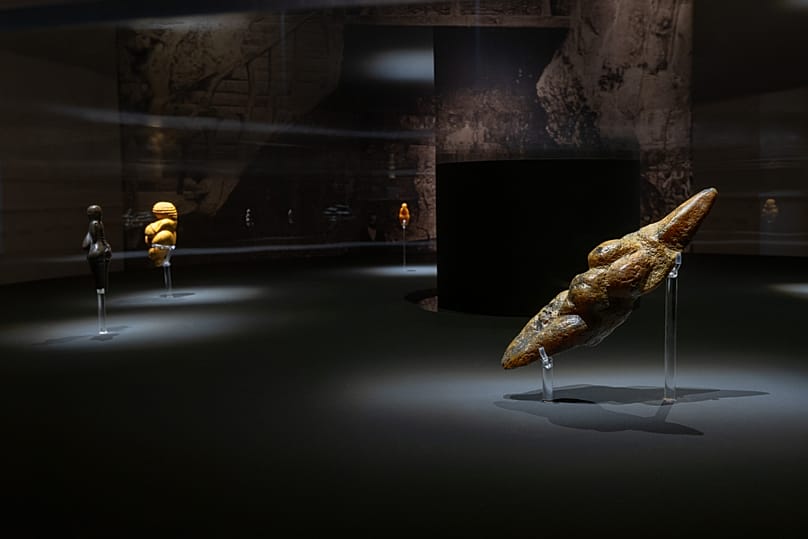
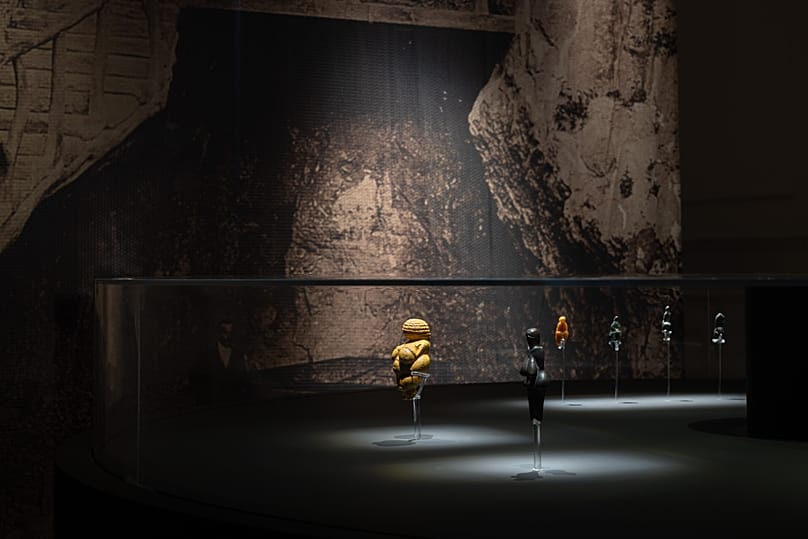
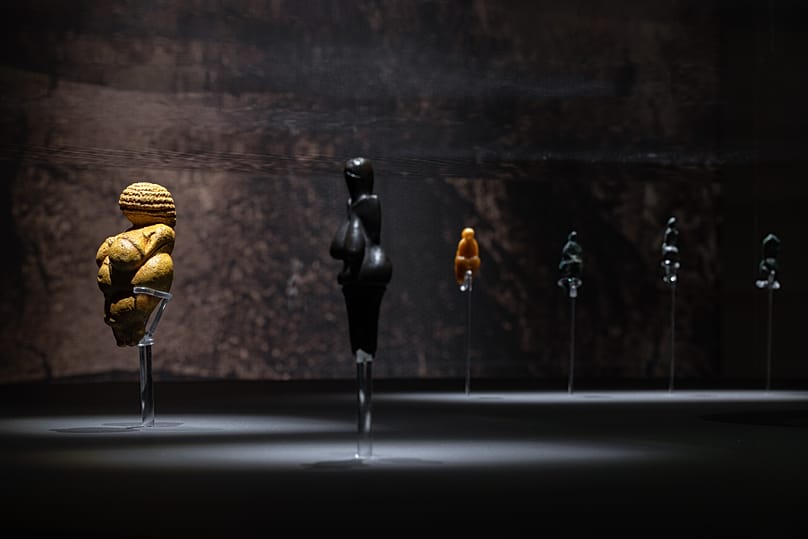
It is a conversation between ancient and contemporary art, between his 'Balloon Venus Lespugue (Orange)' and ten Paleolithic Venuses, certified copies of the immovable originals kept in major European museums.
The exhibition explores the female form from the Palaeolithic period to the present day, proposing an intriguing journey spanning more than 40,000 years of human creation.
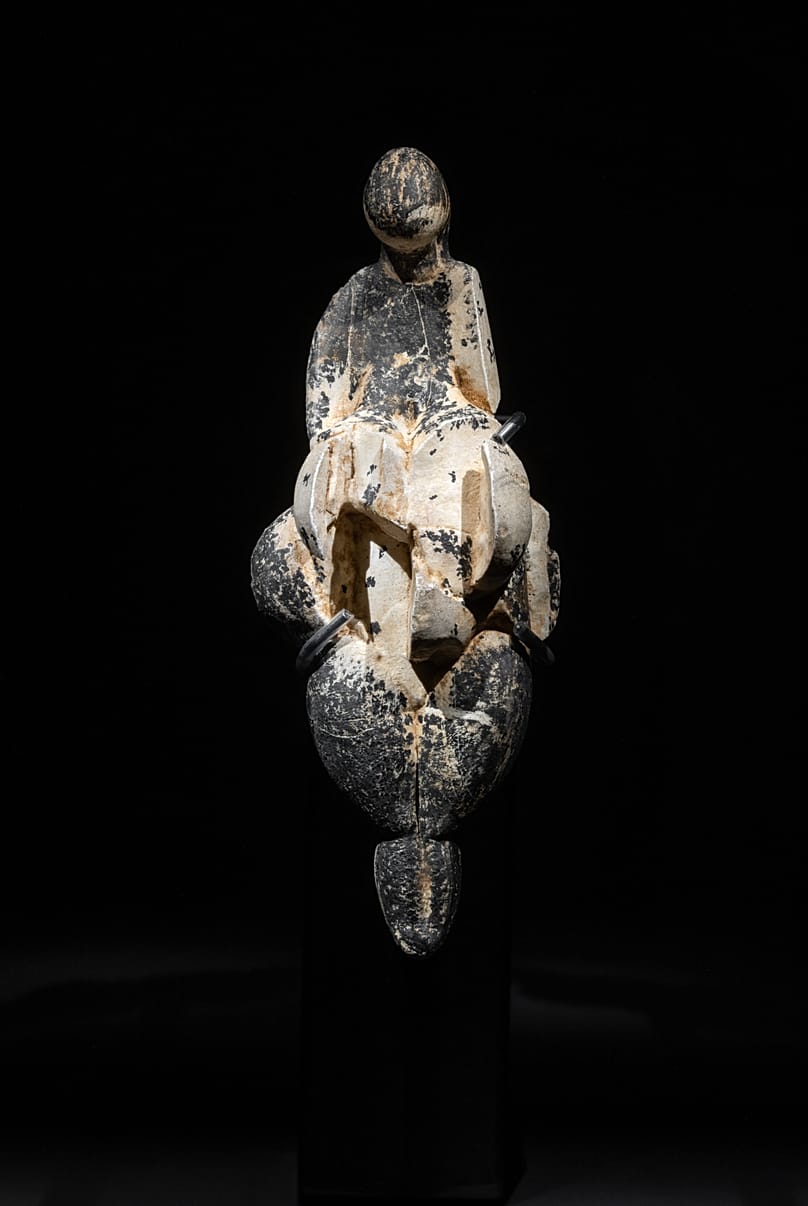
Between about 42,000 and 20,000 years before present, across the Eurasian continent, Palaeolithic humans created small female figurines from ivory, limestone and clay. These objects, now known as Palaeolithic 'Venuses', are among the oldest sculptural works of mankind and have been found in caves.
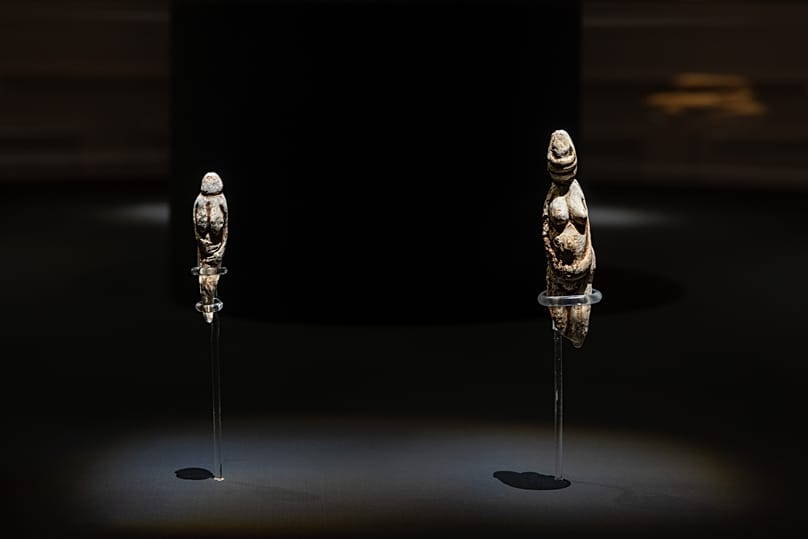
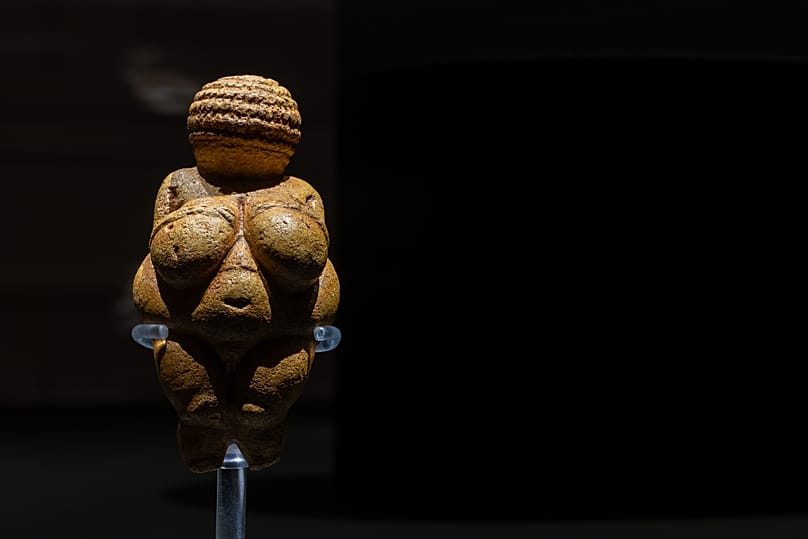
The 'Venus de Lespugue' was named after the town in which it was discovered in a cave in France's southern Occitanie region. It dates back some 28,000 years before our time. It's only 15 centimetres long and is carved into a mammoth tusk. Along with the other nine Venuses, they form a "womb of human creation" and are set in a dark, cave-like chamber, making for a particularly intense viewing experience. Their bodies symbolise life, fertility, and vitality.
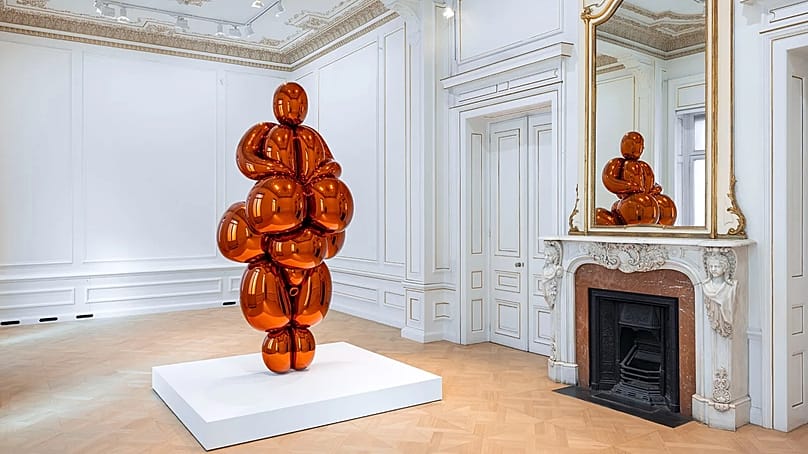
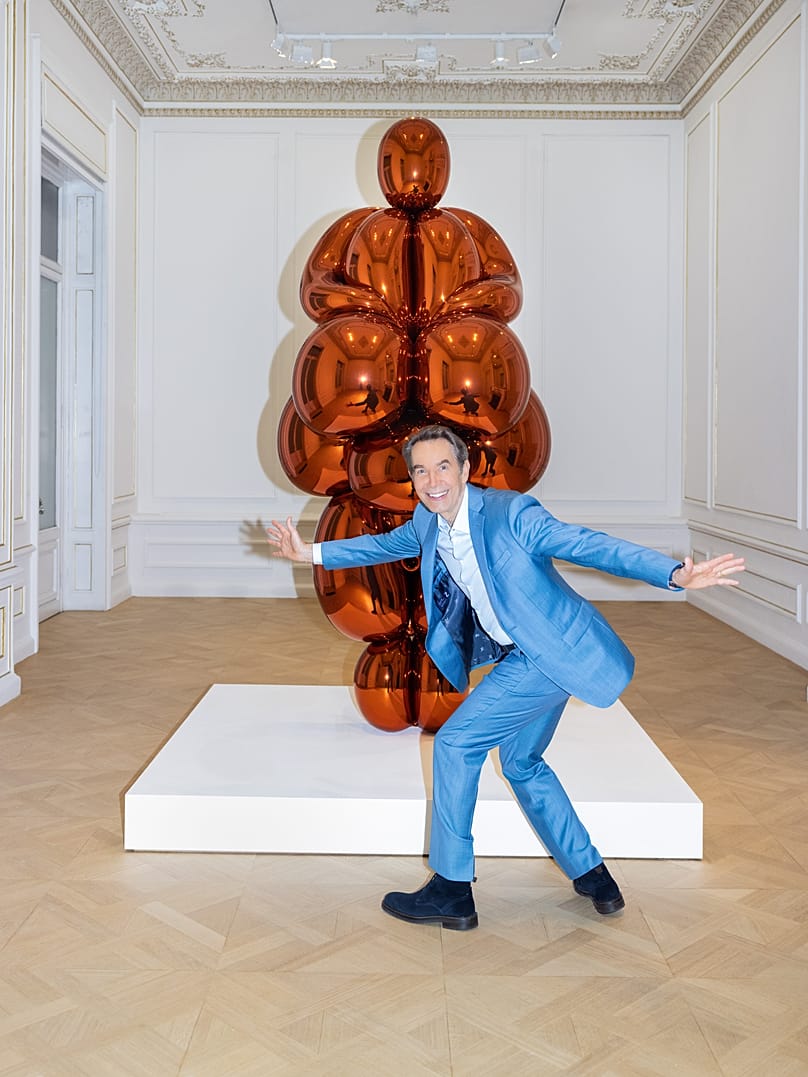
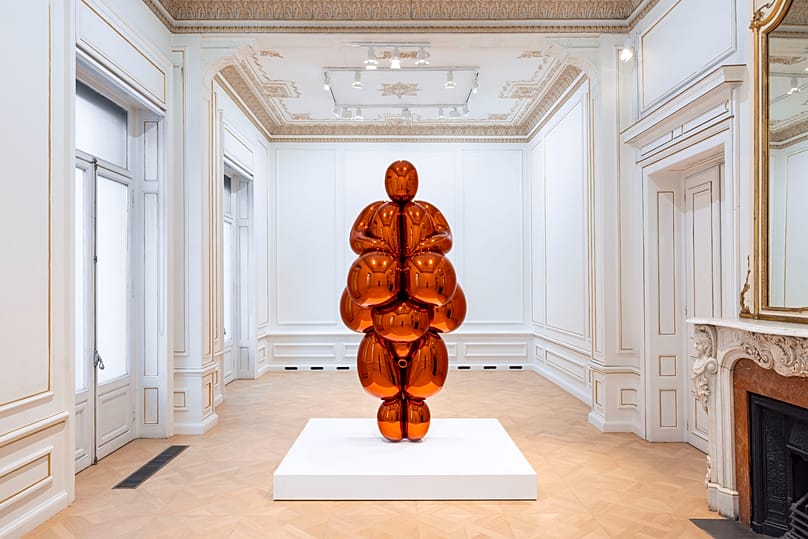
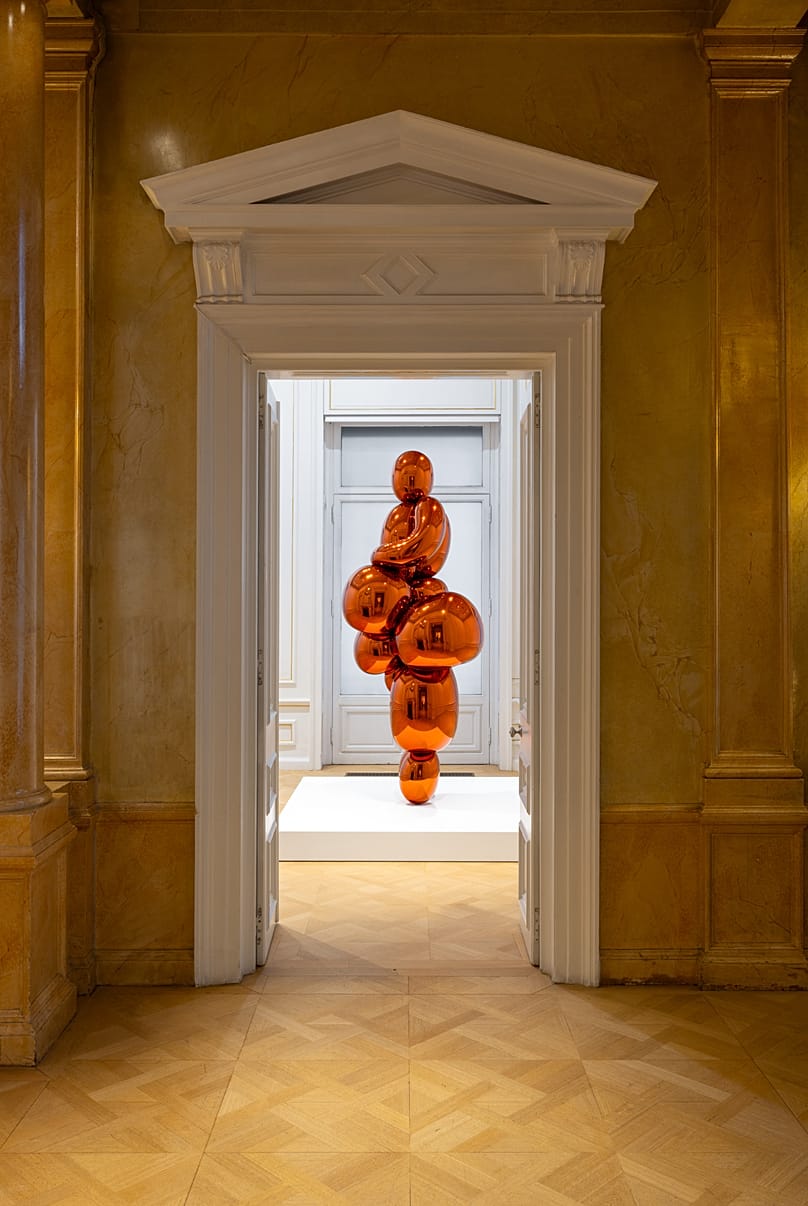
The figure of Venus has been a source of inspiration for Jeff Koons since the 1970s. His playful Venus Lespugue (Orange) (2013-2019) is placed alone in an adjacent panelled room of the neoclassical mansion. She translates the small Paleolithic figure into a monumental sculptural presence made of reflective stainless steel, which looks like it is made of balloons. It reflects anything and anyone around it. Presented to the public for the first time, it is part of the Homem Sonnabend Collection of Antonio Homem Sonnabend and Phokion Potamianos Homem.
Shortly before the opening of the exhibition, we had the opportunity to talk to the famous American artist about his work, the materials he uses, the Venuses and his iconography.
What attracted you to this particular figurine?
Jeff Koons: When I decided to make the Balloon Venus body of work, I made four different versions. Lespugue's Venus was for me the most modernist. The figurine, the Paleolithic figurine reminded me more of a sculpture by Giacometti. If you look at it from the side, it looks very modernist. At the same time, it has the ability to hold really deep information about human history. This is the first time I've had an exhibition where the replicas of Paleolithic figurines have been brought together in one place. They brought many here, not only to be in dialogue with each other, but also with my own work Balloon Venus Lespugue (Orange).
What are the key features of your work and how does it relate to the Venuses we see in the other room?
The other figurines were made with the expertise available at the time and from the materials available to them. They used ivory, bone and even terracotta. They were able to create terracotta. The Balloon Venus that I created is made of stainless steel. So, I work with the expertise I have at my disposal. But what's so amazing about these Paleolithic Venuses is the way they were able to incorporate information.
Some of these objects date back to about 35,000, even close to 40,000 years ago. And it's amazing the way that the artisans were able to incorporate important information about humanity, about civilization, about what was important to them to help them survive. And those were difficult times, it wasn't all as pleasant as it is nowadays. My own work that I have here is really about a form of visual luxury. It's not material luxury, it's stainless steel, a very proletarian material. But it's polished and it reflects everything. It accepts everything in the environment that it's in.
Does prehistoric art, these symbols of our cultural history, have anything to tell us today?
This is a specific moment in time, and like the artisans of the Paleolithic era, the people who created these objects retained information not only so that they could apply it themselves, incorporate that meaning into something, but also so that they could share it with others. This information was not just for themselves, but for the entire human community. And civilisation has been able to be created and shaped from then until today. But we are not at the end of the journey.
We are still incorporating information, sharing information with each other so that we can maintain our cultural quality, be a civilisation. So that we can continue to transmit the information that helps us survive and thrive.
You have travelled a vast artistic journey. How has your relationship with art evolved over time? Where do you draw inspiration for your creative work today?
I've always been a very intuitive artist, so I follow my interests. And I really don't know what applies to any of us, regardless of what we do, whether we're doctors, architects, artists, whatever we do. What we have in life is our interests. And if we follow those interests and really focus on them, that's what connects us. It connects us to a universal vocabulary. And I think that's where we can gain such breadth and be as connected as our potential in life allows us to be.
How would you describe your personal iconography? What are the themes that you enjoy and continue to explore in your work?
When I was younger and began to understand the power of art, I realised that I could control the way I felt by combining certain colours or certain images, maybe using reflection, this affected the chemical changes I felt within my body. I realised I could control it. Then at some point, I realised that I could also influence other people, that certain people were also responding to it. And that's really the way illustrations work. That's the way we can also communicate information.
So, I tried to develop my own iconography to incorporate the information that I hope to be able to serve, the things that I found beneficial in my own life as well. So that I can continue to evolve as a person. I think one of the most important things is to care. And one of the reasons I take all this time and use the technology I use to make an object like the Balloon Venus is to make something with tremendous care. And that's a way of showing respect to the viewer: that I find an absolute equivalent in that this conversation is about both of us.
We live in very dark times and this is a very bright work. What is the message you want to send?
I think throughout the history of humanity there have been dark times. If you look at the exhibition space where the Palaeolithic figurines are on display, the atmosphere is quite dark. It's like they're in a cave. It also gives an idea of where these objects came from. They were found in caves. It was a very difficult place to live, to be able to survive and find meaning and purpose in life, to endure all the hardships that existed at that time. And we made it this far. I try to believe in humanity. I believe in trying to be the best we can be, to not judge in any way, to find everything perfect as it is, and to practice accepting each other.
Ultimately, we are talking here about a work of art and other works of art that exist from the past, but they are only objects. What we should really be interested in, is being able to accept ourselves as individuals, and having the ability to accept other people for who they are. That is what really matters to us as human beings is to accept each other.
The ten Paleolithic Aphrodites
The journey begins with the "Aphrodite of Lespugue", discovered in the Rideaux cave in southern France and carved into a mammoth tusk. Her bulging abdomen, pronounced hips and breasts are characteristic elements of a figure that emphasises fertility and the body's vitality. The 'Venus de Lespugue' is on display at the Musée National d'Histoire Naturelle in Paris
Next are the 'Venuses of Grimaldi', from the Balzi Rossi caves near the French-Italian border, which present a different, more elongated rendering of the female form.
From Italy comes the 'Venus of Savignano', a stone sculpture with a strongly abstracted form, while from central Europe, the exhibition includes the 'Venus of Dolní Věstonice', one of the oldest known ceramic sculptures in the history of mankind.
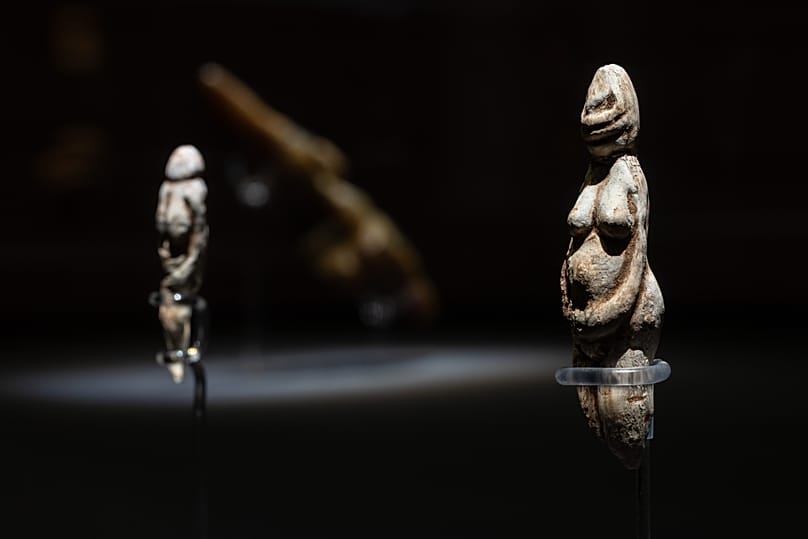
The show continues with the famous 'Venus of Willendorf' from Austria, one of the most recognisable works of Palaeolithic art, and the two 'Venuses of Parabita' from southern Italy.
Despite the great distances that separate their sites of discovery, these figurines share common characteristics: small size, a strong emphasis on the reproductive features of the body and a high degree of abstraction in the rendering of the face and limbs.
As noted by the curators of the exhibition and Scientific Directors of the Museum of Cycladic Art, Dr. Panagiotis Joseph and Dr. Ioannis Fappas:
"The most striking feature of these Aphrodites lies in the exaggeration of their form: bulbous abdomen, accentuated hips, ample breasts, while often the facial features and limbs are reduced or completely absent. The body becomes the message and the form the vessel that carries meaning."
The exhibition also includes original drawings by Jeff Koons for the production of the Balloon Venus Lespugue series, as well as a short video production by the Museum of Cycladic Art in which the artist talks about his work. It is accompanied by a scholarly catalogue, with essays by Jeff Koons and renowned researchers on the Paleolithic "Venuses" and their timeless significance.
In addition to the guided tours that are part of the exhibition, guided talks are also on every month with a special guest offering the opportunity to delve deeper into the questions that arise from the exhibition.
Jeff Koons: 'Venus' Lespugue is on at the Museum of Cycladic Art in Athens until 31 Aug 2026.