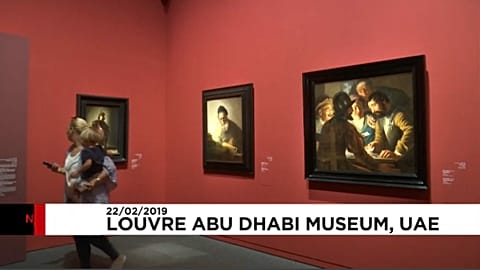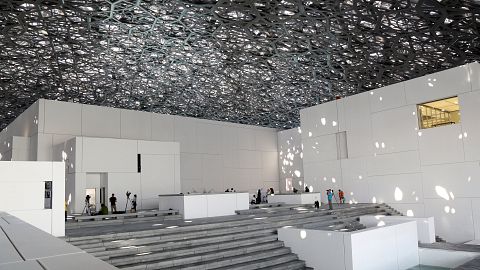






























The museum, which opened in the United Arab Emirates in 2017, has so far escaped damage from nearly 1,800 Iranian drone and missile strikes since the conflict began last month.
Escalating conflict in the Middle East has raised concerns about the safety of masterpieces on loan from France to the Louvre Abu Dhabi, raising questions about the security of the famous museum's only foreign branch.
 ADVERTISEMENT
ADVERTISEMENT
ADVERTISEMENT
The museum, which opened in the United Arab Emirates in 2017, has so far escaped damage from nearly 1,800 Iranian drone and missile strikes since the conflict began on 28 February.
The Louvre Abu Dhabi, which remains open, has stated that "the safety of our visitors, our staff, and our collections (both in-house and on loan) remains our top priority".
But concerns are growing in France.
"The works must be kept safe", said Didier Selles, who helped negotiate the initial agreement between France and the United Arab Emirates.
He told Télérama magazine that the artefacts were under threat following the outbreak of war between Israel and the United States and Iran.
The French newspaper La Tribune de l'Art echoed this concern: "The Louvre's works in Abu Dhabi must be kept safe!"
France's Culture Ministry has sought to reassure critics, telling AFP that the French authorities were "in close and regular contact with the authorities of the United Arab Emirates to ensure the protection of the works on loan from France to the Louvre Abu Dhabi".
Risk of repatriation
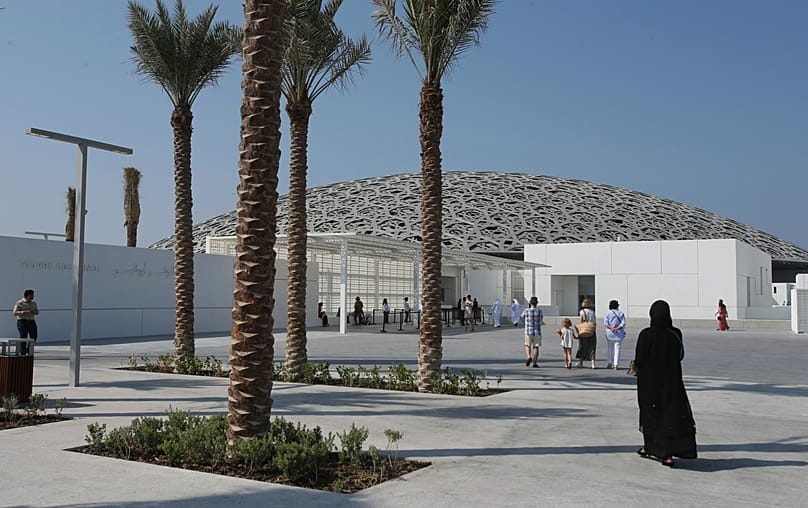
Under the terms of the agreement signed with the United Arab Emirates, France undertook to provide its expertise, lend works of art and organise exhibitions, in exchange for €1 billion ($1.1 billion), including €400 million for the licence to use the "Louvre" name alone.
This historic agreement was extended in 2021 for a further ten years, until 2047, for a further €165 million.
France Musées, the international consultancy responsible for the development of the Louvre Abu Dhabi, has indicated that in addition to the 600 works in the museum's permanent collection, some 250 works are on loan from France, without providing any further details.
A great deal of secrecy surrounds the works from French public collections temporarily on display in this 24,000 m2 showcase.
None of the French institutions contacted, including the Louvre, Versailles, Beaubourg and Orsay, would say which paintings or sculptures are on loan to Abu Dhabi as part of a partnership worth €190 million over ten years, according to the Cour des Comptes (excluding temporary exhibitions).
They all refer to France Muséums, the private-sector body that is supporting the development of the Louvre Abu Dhabi, which has a permanent collection of some 600 works. This agency agrees to indicate that 250 works are currently on loan, but refuses to give details.
When the Louvre opened in 2017, 300 works were on loan from France, including paintings by Vinci, Monet, Van Gogh and Warhol and a statue of Ramses II. On its website, the Louvre states that it entrusts "100 masterpieces from its collections" to Abu Dhabi each year.
A source close to the matter, speaking on condition of anonymity to AFP, said there was no imminent danger, stressing that the museum is designed to protect its collections from security threats and natural disasters.
Repatriation would entail its own risks, the source added.