





























'The Dollmaker' (Encantador) is the title of the film by Argentinian director José María Cicala that took the top prize at Portugal’s oldest film festival, which this year also paid tribute to Norwegian cinema.
Fantasporto returned to the venue it has occupied in recent years, the Batalha cinema, for the 46th edition of what is Porto's biggest film festival and one of the largest in Portugal.
 ADVERTISEMENT
ADVERTISEMENT
ADVERTISEMENT
This year films from as far afield as Argentina, Greece and China were rewarded with top prizes in the festival's two main competitive sections: one devoted to fantasy cinema and the other, Directors’ Week, for auteur films of all genres.
Held every year since 1981 without interruption, Fantas, as it's locally known, has evolved from a showcase focused essentially on fantasy, especially horror and science fiction, into a more general festival that gives pride of place to independent and auteur cinema.
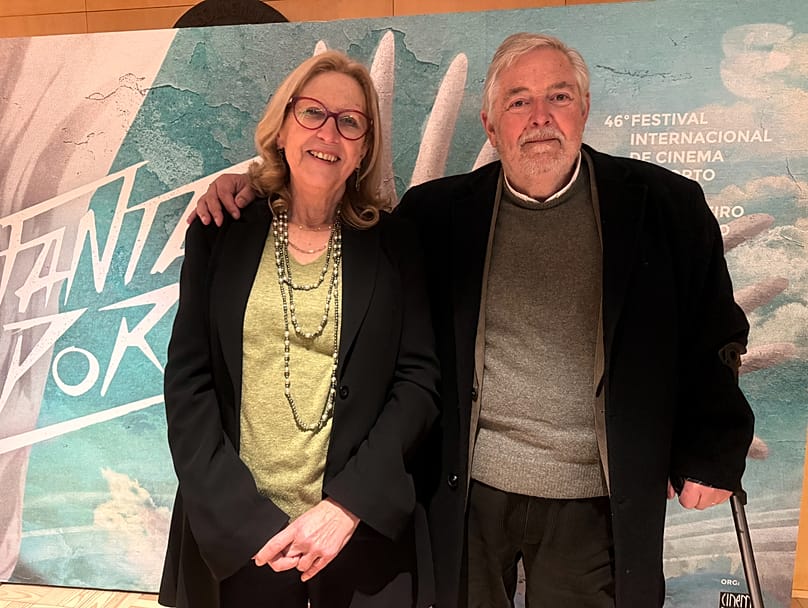
Mário Dorminsky and Beatriz Pacheco Pereira, the duo who have run the event from the beginning, complement each other: “Our tastes are relatively different,” said Dorminsky. “I tend to go for a more accessible kind of cinema, geared towards the general public, while Beatriz prefers auteur films. That means we don’t have just one audience but several, in the plural, especially since we created Directors’ Week.”
This year, the organisers had to choose from 350 feature films and almost 800 shorts from all over the world.
Argentine scares and a film in Basque
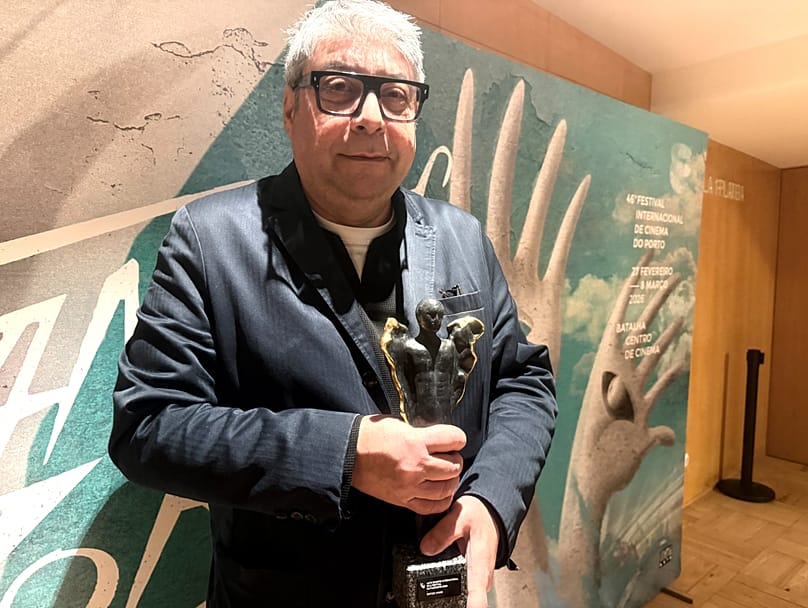
In the Fantasy Film Competition, the top prize went to an Argentine film, Encantador (international title: The Dollmaker), directed by José María Cicala. It is a classic horror film, packed with jump scares that won over the jury, including the president of the Norwegian Directors’ Association, Elisabeth O. Sjaastad: “It’s a very classic film in its genre, about a killer who is kidnapping women. The story is very well told, with very strong performances by the actors. The atmosphere works very well, with very good production design, so it is very well achieved.”
Also in the fantasy competition, another film that caught the eye was Gaua, by Spaniard Paul Urkijo Alijo. The film, which features witches, the Inquisition and a degree of female homoeroticism, stood out for being in Basque, still a very rare language in cinema.
For the director, the linguistic choice is nothing more than natural: “I don’t ask why make a film in Basque, but why not,” he told Euronews. “If we don’t use the language and don’t extend it to different fields, it remains confined to the region or to the peoples linked to it and to more limited uses. It’s good for it to spread to music or cinema.”
Gaua (which means “Night” in Basque) is inspired by the stories the director heard as a child: “Night is that moment when all those supposedly very frightening, dangerous, forbidden things appear, but it can also be a refuge for those who are different. So Gaua is a tribute to all the legends of Basque mythology linked to the night, which I was told when I was a child and which fascinated me so much,” he says.

'Endless Land', a poetic ode to rural life
Greek director Vassilis Mazomenos needs no introduction to Fantas regulars: he is already an emblematic figure of the festival, where he has presented almost all his films and was honoured with a career award in 2001.
This time he took home the Critics’ Prize with Endless Land, screened in Directors’ Week. It's a tribute to Greek rural life and its lost traditions, marking a shift from the urban settings of his previous works: “The film is not different, but the form is different,” explained Mazomenos. “My ideas remain unchanged. Even if it doesn’t show at first glance, this is a political film. At a time when we are living through the horror of war, going back to basic principles, to the cycle of life, to what our ancestors taught us and [what] we have lost, is the most important thing,” he added.
In Endless Land (“Apeiri Gi” in the original), we follow Lazaros who, like his biblical namesake, is reborn, not literally but metaphorically, from generation to generation, keeping alive the wisdom and traditions of a village in the region of Epirus (north-west Greece).
The film is punctuated by the beauty of the landscape and by traditional and religious songs which, as the director explains, are a key narrative element.
There is a whole layer of symbolism here. On the one hand, the origin of the name “Epirus” (Ipiros in Greek) comes from the same root as “Apiros”, which means “infinite”, as this was how the inhabitants of the island of Corfu referred to the land they saw on the other side of the sea that seemed endless to them. On the other hand, according to Mazomenos, “there is a symbolic meaning linked to the boundlessness of this population’s feelings, passed down from generation to generation despite factors such as migration or poverty.”
Norway in the spotlight
Over its 46-year history, many Norwegian films have been screened at the festival. Some of the returning attendees will remember The Bothersome Man in 2007 or Thale in 2013.
To showcase this rapidly growing yet still little explored film output (with a few exceptions), Fantasporto this year organised a retrospective of Norwegian cinema.
As well as sitting on the jury, Elisabeth O. Sjaastad, president of the Norweigan Directors Association, curated this strand and did not forget Fantasporto's origins when choosing the films: “We wanted to put together a contemporary retrospective that also pays tribute to Fantasporto’s profile. So some of the titles have supernatural elements that fit with the festival’s original DNA, but they also showcase some of our most talented Norwegian filmmakers. For example, we have Thelma by Joachim Trier (nominated for the Oscars this year with Sentimental Value), and also Armand by Halfdan Ullmann Tøndel, winner of the Caméra d’Or in Cannes in 2024.
“Something that characterises the current state of Norwegian cinema is the diversity of narratives, of subjects, of the focus each filmmaker brings to the big screen. We suddenly have a very clear pool of talent that is now able to make films that speak both to national audiences and to international ones,” added Sjaastad.

What is it about Fantas?
With four years to go before it celebrates its half-century, Fantasporto continues to draw a legion of film lovers to Porto, including fans who have become regulars and never miss an edition. Director Isabel Pina is one of them. Every year since 2008 she has made the trip from Lisbon to Porto: first as an ordinary spectator, later as a participant, having already sat on the jury and worked on the organising team in previous years.
Asked which film in 18 years of festival-going has stayed with her most, she said: “I wouldn’t pick a single film, but an entire filmography, that of Philippine cinema, which I discovered thanks to this festival, which is practically the only one to screen it.
"At Fantas you come across surprising things. For example, yesterday I saw a film from Papua New Guinea. At what other festival would I have the chance to see a film from that country on the big screen?” she added.

Equally unwavering is Spaniard Luis Rosales, who has attended Fantasporto every year for more than two decades. He started out by reporting as a journalist, working for a magazine specialising in fantasy cinema, continued as director of the Nocturna festival in Madrid, and today he comes in his capacity as director of the Imaxinario Festival in Galicia: “I found a new family here,” he said.
And that is true not only in a figurative sense but also literally, as it was here that Rosales and German actress Marina Anna Eich, now a couple, first met: “The first year we met here, I came as a journalist and she as an actress. Later on, we both came back as jury members. Those repeated encounters meant we became friends, but for several years we were just friends, until the spark finally flew,” he recalled.
Today they both work on the management of the Imaxinario Festival, one of the oldest in the Iberian Peninsula, founded in 1973, which this year received a recognition award from Fantas.
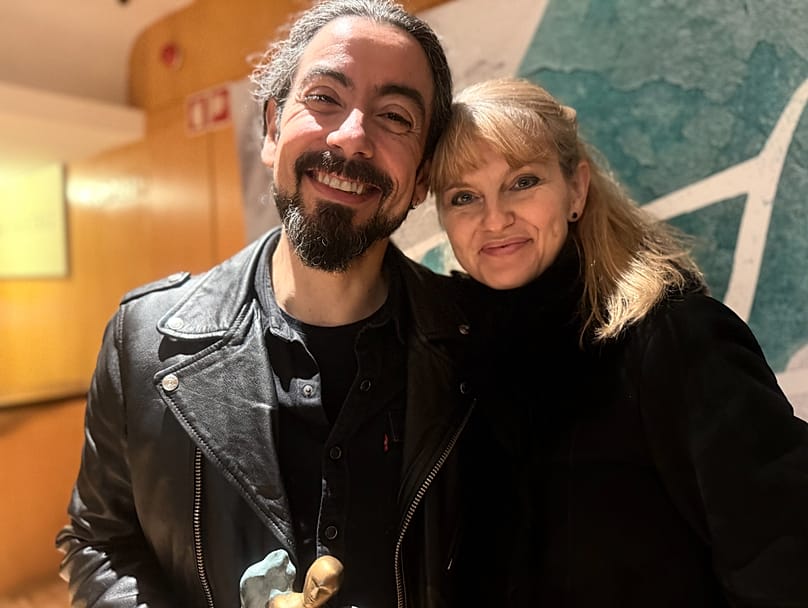
The couple’s ties to Fantasporto go further: it was also in Porto, during one of the recent editions, that Marina bought the wedding dress in which Rosales led her up the aisle.
You could say that Fantasporto does not live on horror alone, but also on love stories.
Above all, on the love of cinema.
Full list of winners:
FANTASY FILM COMPETITION
BEST FILM / FANTASPORTO GRAND PRIZE
Encantador, José María Cicala (Argentina)
SPECIAL JURY PRIZE
The Skeleton Girls, and a Kidnapped Society - Richard Eames (Australia)
BEST DIRECTOR
Don't Leave The Kids Alone | No Dejen a los niños solos (Mexico)
BEST ACTOR
Rodrigo Noya - The Dollmaker | O Encantador de José María Cicala (Argentina)
BEST ACTRESS
Maribel Verdú - Under Your Feet / Bajo tus pies - Cristian Bernard (Spain)
BEST SCREENPLAY
The Whisper / El Sussurrro - Gustavo Hernández, Ibañez (Uruguay | Argentina)
BEST CINEMATOGRAPHY
The Journey To End - Chen Xian (China)
BEST SHORT FILM
Señuelo - Martha Gayerbe (Spain)
SPECIAL MENTION FROM THE FANTASY JURY
The Curse - Kenichi Ugana
DIRECTORS’ WEEK
BEST FILM / MANOEL DE OLIVEIRA AWARD
Wild Nights, Tamed Beasts - Wang Tong (China)
SPECIAL JURY PRIZE
The Trek - Meekaeel Adams (South Africa)
BEST DIRECTOR
Wang Tong - Wild Nights, Tamed Beasts (China)
BEST SCREENPLAY
Jun Robles Lana - Sisa (Philippines)
BEST ACTOR
Uirô Satô - Suzuki Bakudan (Japan)
BEST ACTRESS
Pia Tjelta - Don't Call Me Mama
SPECIAL JURY MENTION (CINEMATOGRAPHY)
Endless Land - Vassilis Mazomenos (Greece)
ORIENT EXPRESS
BEST FILM
#IWILLTELLYOUTHETRUTH - Keisuke Toyoshima (Japan)
SPECIAL JURY PRIZE
PAPA BUKA - Dr. Biju Damodaram (Papua New Guinea / India)
BEST PORTUGUESE FILM AWARD
BEST PORTUGUESE FILM
Cativos - Luis Alves
BEST SCHOOL FILM
Os Terríveis - João Antunes - Lusófona University of Lisbon
SPECIAL MENTION FROM PCP
Cama de Lavado - Maria Lima - Catholic University of Porto
UNOFFICIAL AWARDS
AUDIENCE AWARD
Jointly awarded to The Specials - EIji Ushida (Japan) and Lenore - David Ward (Australia)
CRITICS’ AWARD
Endless Land - Vassilis Mazomenos (Greece)