















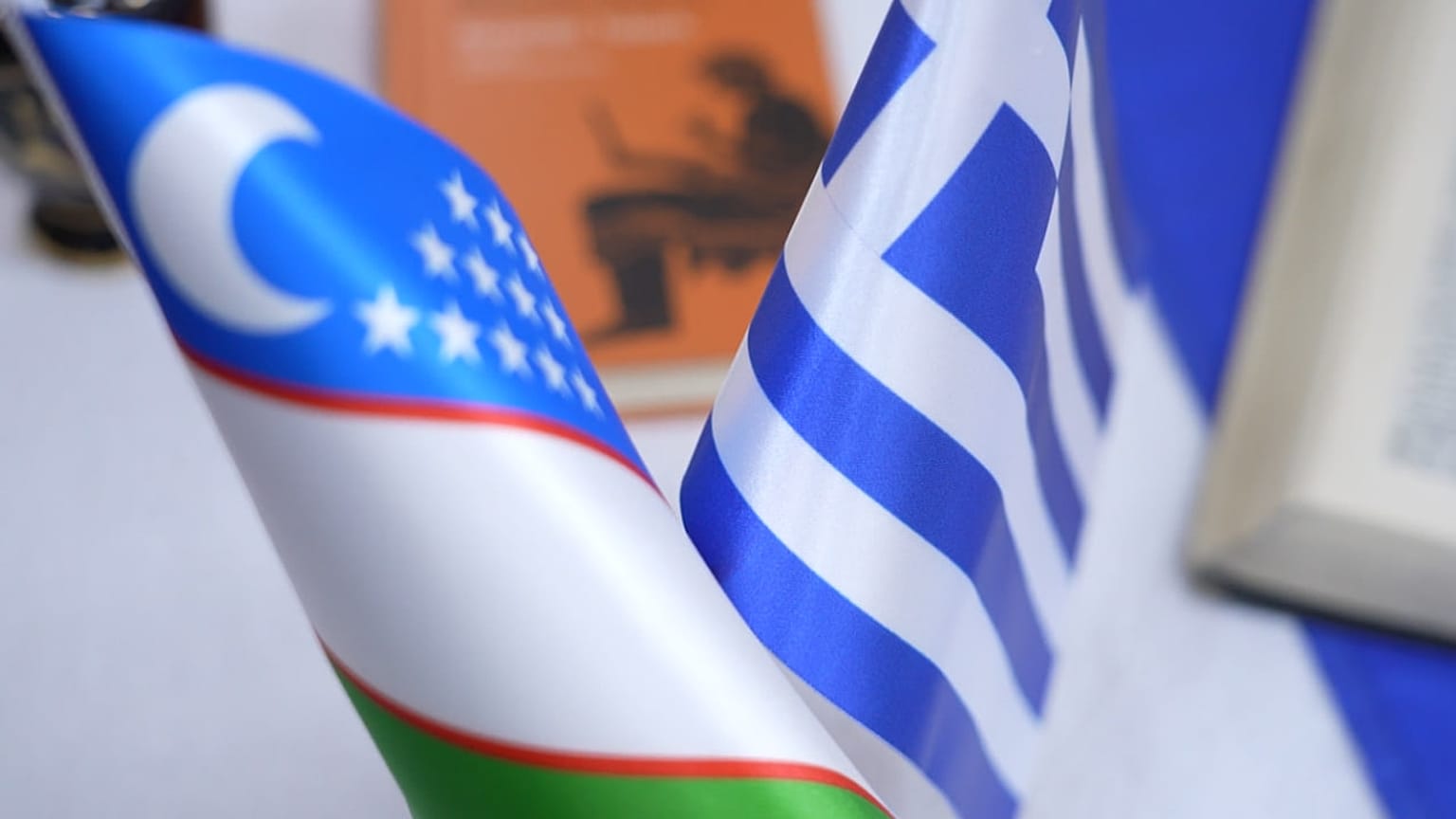














The event brought together students, diplomats and academics to explore how Greek has shaped modern science, philosophy and education. With strong academic exchanges and a growing interest among students, cultural ties between Greece and Uzbekistan continue to deepen.
Words like demokratiya, teatr, akademiya, logika and kosmos are written today in Uzbek almost exactly as they sound in Greek. They appear in university lecture halls, academic texts and public discourse, from Europe to Central Asia. Born in Greek, these words have acquired a global life of their own.
 ADVERTISEMENT
ADVERTISEMENT
ADVERTISEMENT
That enduring, cross-border power of the Greek language stood at the heart of this year’s International Greek Language Day celebrations in Uzbekistan, thousands of kilometres away from Greece.
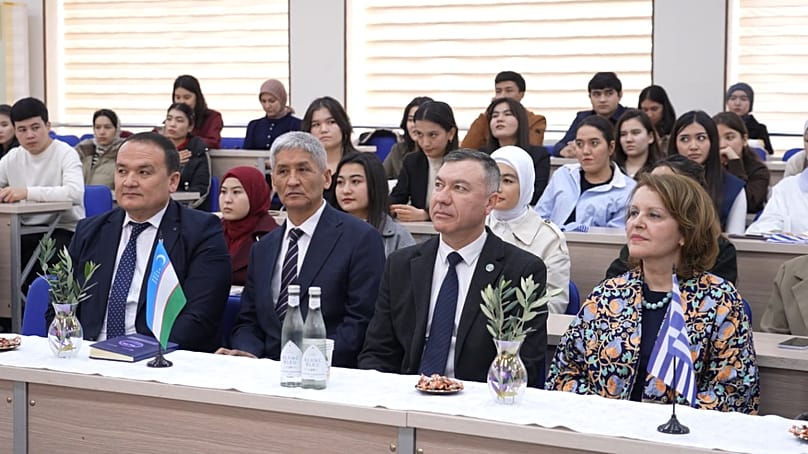
Uzbekistan marked International Greek Language Day at the Uzbekistan State World Languages University in Tashkent, highlighting the lasting global influence of one of the world’s oldest living languages.
The event took place at a time when the international community is increasingly recognising Greek as a foundational pillar of European and global culture.
From UNESCO recognition to global significance
This recognition was formally sealed on 6 November, during the recent UNESCO General Conference hosted in Uzbekistan, when 9 February was officially declared International Greek Language Day.
With a recorded history spanning more than 3,000 years, Greek is among the very few languages that continue to actively shape modern scientific, philosophical and cultural terminology worldwide.
Greek is often described as the “root system” of many modern languages. Terms such as philosophy, democracy, theatre, mathematics and academy are now used across dozens of languages, from English and Russian to Uzbek academic discourse.
Its alphabet, with its clear phonetic structure, also laid the foundations for the Latin script, now used by much of the world.
One of the most distinctive features of Greek is its uninterrupted continuity. From Homer, Plato and Aristotle, through Byzantine scholarship and into modern literature and poetry, the language has evolved without losing its core structure.
This continuity allows modern speakers and students to engage directly with texts written thousands of years ago — a distinction shared by very few languages globally.
Deep historical roots
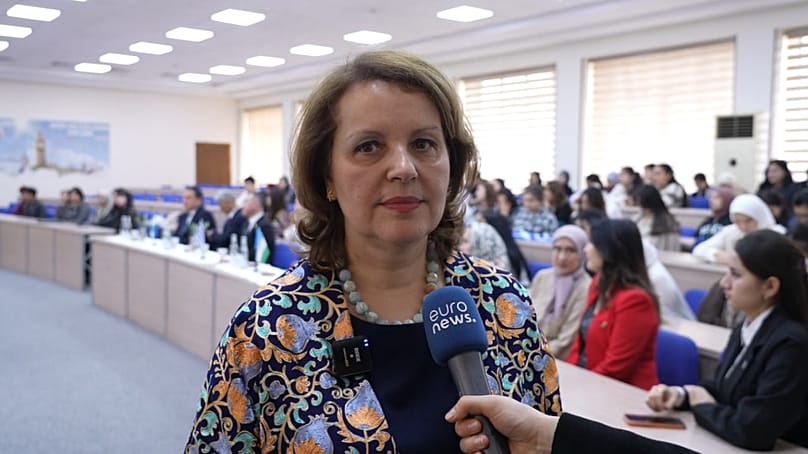
Talking to Euronews, Greece’s Ambassador to Uzbekistan, Paraskevi Tzeveleki, explained that the celebration forms part of a broader effort to deepen bilateral relations.
The Greek Embassy, she said, opened only a few months ago with the aim of strengthening ties between Uzbekistan and Greece.
“A dynamic Greek diaspora has been present here for decades, and the embassy’s main task is to bring people, cultures and business communities closer together”, she added.
Together with around 150 students studying Greek as a second foreign language, the embassy marked the occasion at the university with a programme of presentations on the history and evolution of the Greek language, as well as its influence on modern languages including English and Russian.
The event also highlighted the deep historical roots connecting Greece and Central Asia. Scientific and cultural exchanges played a significant role in shaping philosophy, science and education in the region. Cooperation between the two countries has expanded in recent years, especially in the humanities, including linguistics, history, philosophy and cultural studies.
The rector of the Uzbekistan State World Languages University, Ilhom Tukhtasinov, recalled that Greek has been taught at the institution since 1993.
“Today, we teach 21 foreign languages, and Greek remains one of the most important among them. Around 150 students currently study Greek, guided by experienced teachers and professors”, he explained.
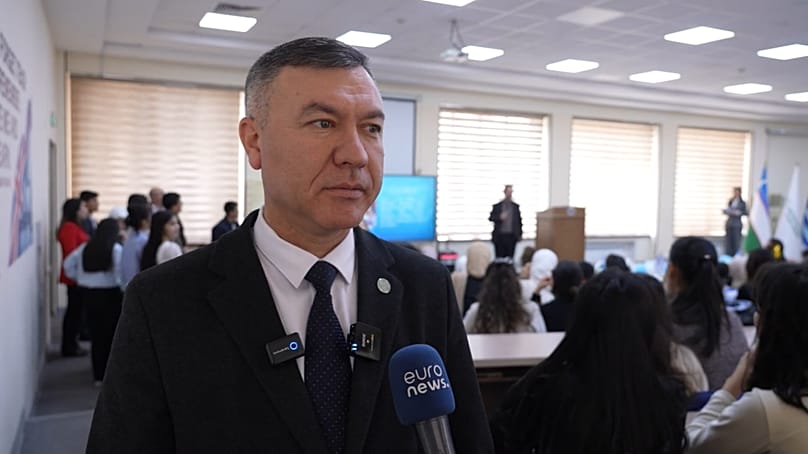
He also pointed to long-standing cooperation with leading universities in Greece, noting that in 2009 around 40 students had the opportunity to participate in educational programmes in Athens.
Today, academic exchanges, joint scientific seminars and conferences, as well as short-term educational programmes, continue to strengthen cooperation between universities in Uzbekistan and Greece.