














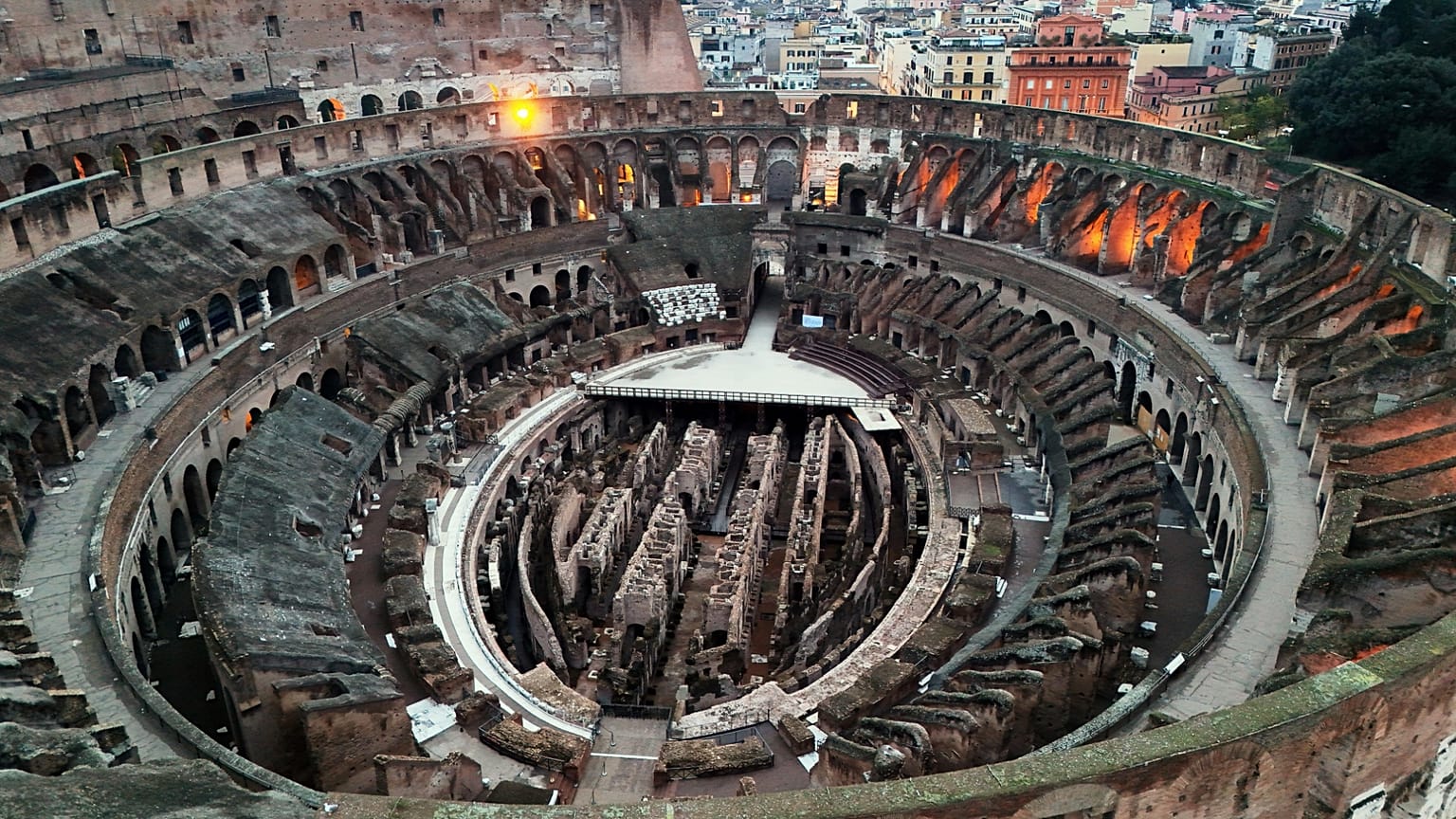














The passage, constructed somewhere between the years 90 and 98, allowed emperors to get to their seats without having to use the main entrances, the vomitoria, through which the masses would spew forth into the Colosseum.
Rome reopened the Colosseum's secret imperial corridor to the public in October, following extensive restoration funded by European Union recovery programmes and Italian archaeological park resources.
 ADVERTISEMENT
ADVERTISEMENT
ADVERTISEMENT
The underground passage, known as the Commodus Passage, connected areas reserved for Roman nobility with the exterior of the ancient amphitheatre.
The route, which ensured imperial privacy, was built after the construction of the Flavian Amphitheatre at the turn of the first and second centuries. It was discovered in the 19th century.
The restoration received 160,000 euros from Italy's National Recovery and Resilience Plan, in addition to ordinary Colosseum Archaeological Park funds, according to Barbara Nazzaro, the monument's technical officer.
The EU contribution enabled the construction of accessibility features, including a convertible staircase that transforms into a platform for visitors with mobility difficulties to reach lower levels.
"This has made it possible to overcome architectural barriers, with the construction of a staircase that we like to call 'magic', because it becomes a platform and allows descent to this lower floor," Nazzaro told Euronews.
Complex restoration and new works planned
Built after the construction of the Flavian Amphitheatre at the turn of the 1st and 2nd centuries and discovered in the 19th century, the secret passage ensured the emperor's privacy.
The renovation work took place in a particularly delicate underground environment, which was capable of restoring artefacts of great archaeological value.
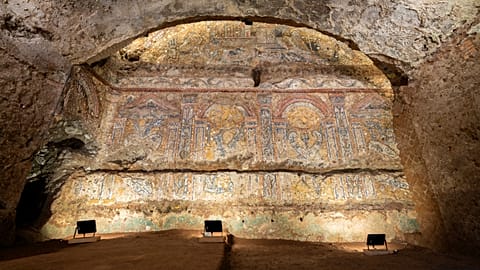
Walls covered with marble, later replaced by plaster painted with landscape subjects. In the niches at the entrance to the route, the remains of arena scenes can be seen.
In the absence of the original vaults, the restoration project used evocative lighting to enhance the space without compromising its historical integrity.
A second building site is already planned, affecting a new section of the passageway that is currently not accessible.
"The new restoration work will allow us to recover other very important fragments of stucco and frescoes, which have also been preserved in their decorations," Barbara Nazzaro told Euronews.
Ten projects funded by EU
There are a total of 10 projects planned to enhance the Palatine, part of the Caput Mundi plan, financed by Italy's National Recovery and Resilience Plan (PNRR), with the aim of upgrading archaeological sites, historic gardens, parks, and innovative tourist routes.
The recent opening of the House of the Griffins is part of the selection with the aim "of opening secret places to the public," explained the director of the Department for the Enhancement of the Cultural Heritage of the Ministry of Culture Alfonsina Russo.
These include the Schola Praeconum, which was opened last year. A building on the southern slopes of the Palatine, once home to those who announced the circus pompae.
But also the dungeons of St Anastasia under the Palatine Basilica and the secret rooms of the Domus Tiberianae, and many others. These also include the Coenatio Rotunda, on the Barberini Vineyard, which, according to some sources, could be the famous rotating dining room linked to Nero's Domus Aurea.
"All of these works have already begun," said Russo, "and should be completed this year according to the timetable of the PNRR."