














Tourists in Rome next month will have to pay two euros to visit the Trevi Fountain, but entry remains free for residents. The measure is the latest in a series of heritage preservation schemes in Europe where cities such as Venice, Athens and Seville are increasing efforts to protect monuments.
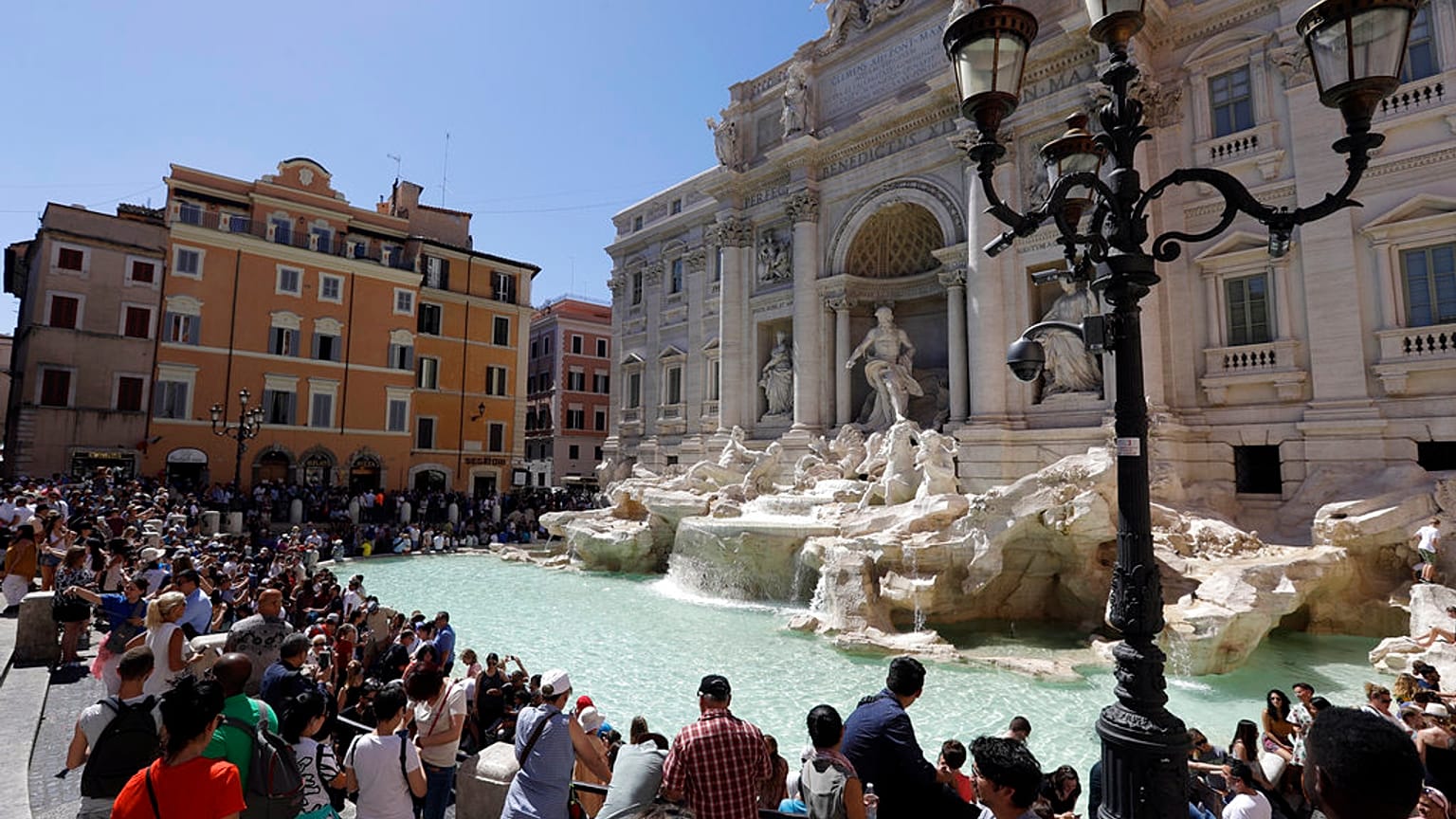
Visitors in the Italian capital will soon be subject to a two euro charge if they want to visit the Trevi Fountain, one of Italy's most famous symbols and a benchmark of its artistic heritage.
 ADVERTISEMENT
ADVERTISEMENT
ADVERTISEMENT
The measure, promoted by the Councillor for Tourism and Major Events Alessandro Onorato and approved by the municipal administration, is part of a plan to manage tourist flows and protect the ornate site from the damage and degradation caused by crowds of visitors.
It's estimated the entrance fee could swell municipal coffers by up to 20 million euros, with the resources earmarked for improving facilities for tourists and services dedicated to site.
For months, the area around the fountain has been subject to controls to limit the number of people to a maximum of 400 at any one time. Now, as part of new measures, two separate access lanes will be organised, one for residents for whom entry will remain free, and another for tourists who will be able to pay for their tickets with credit cards.
Why now?
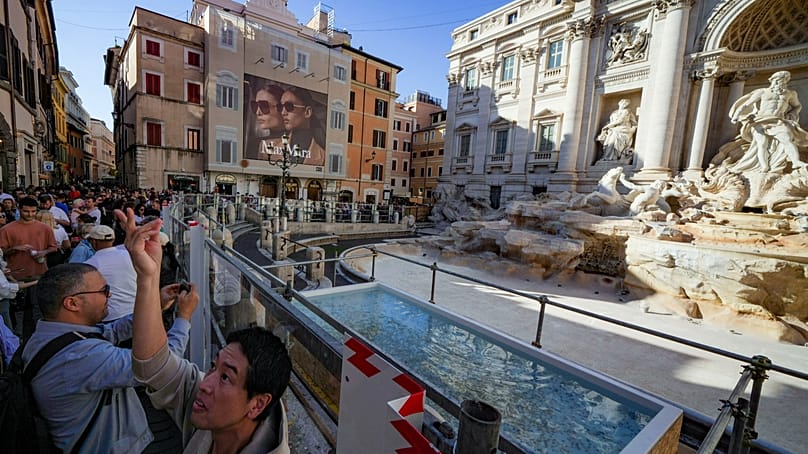
The decision is primarily motivated by local complaints about overcrowding at the Trevi Fountain, where millions of people flock every year to take photos or make a wish by flipping a coin in the fountain.
In the first six months of 2025 alone, the area recorded more than 5.3 million visitors, a number higher than the Pantheon in the whole of 2024.
However, there is no shortage of criticism of the monetisation of the public space. The Codacons association has called the ticket a detriment, arguing that beauties such as squares and fountains should remain accessible for free and that proceeds from tourist taxes are often not reinvested to improve services.
According to the association, it is instead desirable to maintain quota accesses to avoid overcrowding and defacement.
A European phenomenon
Rome's choice is part of a broader European context in which several cities are experimenting with or discussing ways to regulate access to their iconic open air cultural attractions and mitigate the effects of mass tourism.
Venice is the best known case, with an entrance fee for day visitors on the days of greatest tourist influx, varying between around 5 and 10 euros, with exemptions for residents and those staying in the city. The system makes it possible to monitor flows and discourage excessive day visitors on the most congested routes.
In Spain, cities such as Seville are considering charging a fee for access to the famous Plaza de España to finance maintenance and security of the space.
In the Netherlands, the village of Zaanse Schans has introduced an entrance fee of about 17.50 euro to visit the historic centre with its windmills, protecting the heritage and the lives of residents.
Alternative non-costly measures
In addition to tickets, many European cities are testing non-burdensome solutions to reduce overcrowding without directly burdening visitors.
In France, some heavily frequented areas such as the island of Île-de-Bréhat in Brittany and natural areas such as the Calanques National Park on the outskirts of Marseille have introduced daily access limits and advance bookings, thus managing the influx during peak periods without requiring any direct payment.
In Paris and Marseille, authorities use similar systems to distribute flows in the most sensitive places, improving the safety and usability of public spaces.
In Greece, the Acropolis of Athens has implemented a time-based access system to better distribute visitors throughout the day, avoiding overcrowding during peak hours and preserving the most fragile archaeological structures, without changing the principle of public access to the site.
In Germany, many historic cities and towns regulate tourism through participant quotas for group tours, limitations on activities in fragile neighbourhoods and regulations on tourist traffic, focusing on the protection of residents and the quality of the visit, without introducing tickets for access to squares or fountains open to the public.
These strategies show how tourism management can combine heritage preservation, urban liveability and a quality tourist experience, even without fees.