
















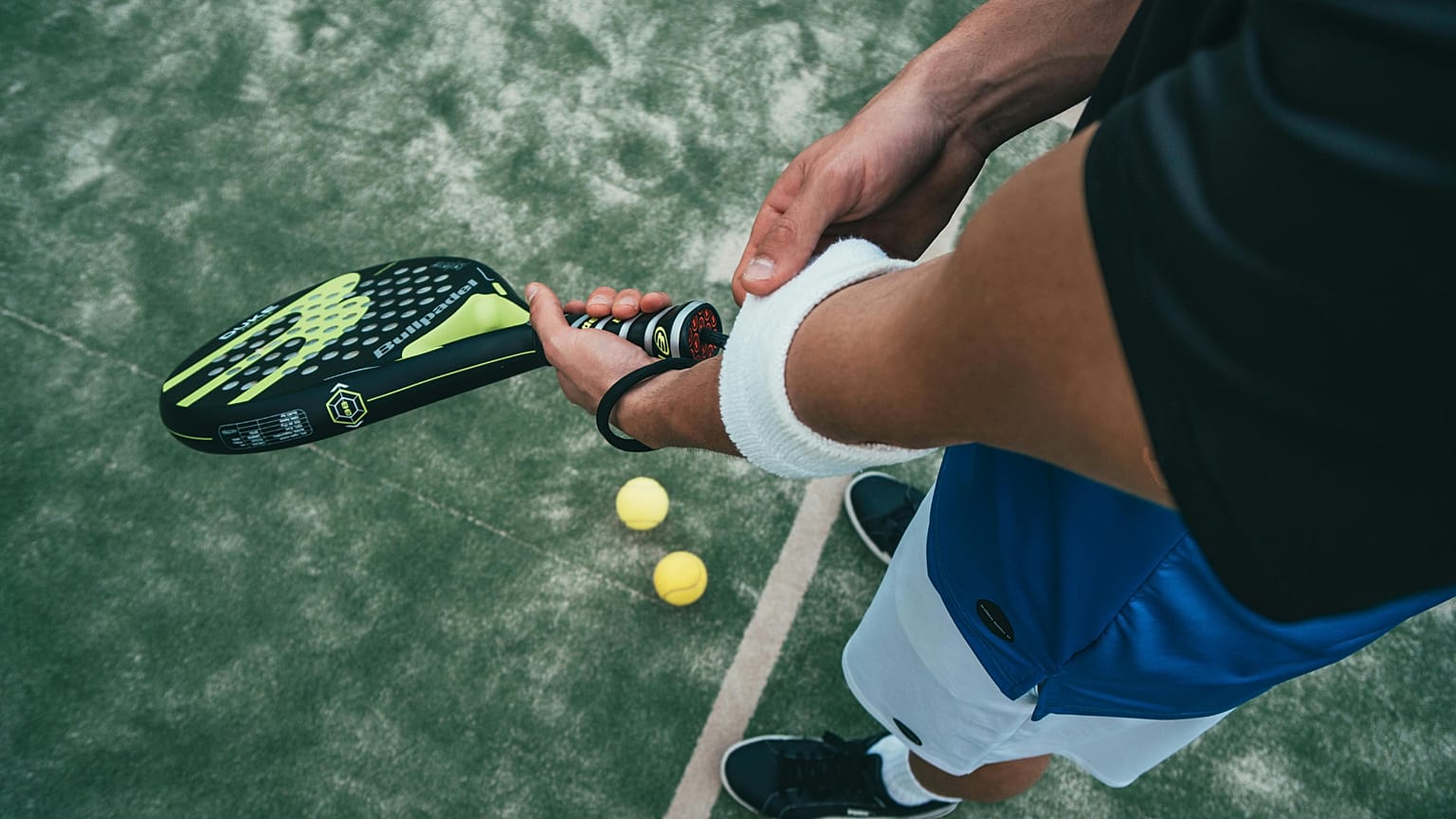














From packed clubs in Spain to newly built venues across Europe and beyond, padel is rapidly growing into a global phenomenon.
Once a little-known pastime played behind glass walls, padel is now spreading at remarkable speed. New clubs are opening at pace and the sport is now established in around 90 countries.
 ADVERTISEMENT
ADVERTISEMENT
ADVERTISEMENT
The appeal of the fast-growing racquet sport lies in its simplicity, accessibility and the social nature of the game. Most often played in doubles on a compact, glass-walled court, padel keeps rallies alive and players constantly engaged - whether they’re seasoned competitors or complete beginners.
That’s clear inside an indoor padel club in southern Spain. By 10AM on a weekday, the venue is already buzzing. Francis Calvache, a padel coach and the highest-ranked player in Almería province, says the sport’s global rise is no surprise.
“It’s relatively easy to move the ball from one side of the court to the other. And because there are also walls, you have the chance for the ball to bounce back and not lose it, unlike in tennis.”
Where did padel originate?
Padel was born in sunny Acapulco, Mexico, in the late 1960s when wealthy gentleman named Enrique Corcuera drew inspiration from frustration. He had a passion for tennis but lacked the space to build a proper court on his property.
Determined to enjoy the sport, he came up with the idea of constructing a smaller court surrounded by walls to keep the ball in play.
Alfonso de Hohenlohe-Langenburg, a Spanish friend of Corcuera, had the opportunity to try out the new padel invention at Enrique's home and was instantly hooked by the sport.
Inspired by his experience, Alfonso took the initiative and established the first two padel courts at a tennis club in Marbella, Spain, in 1974. It then quickly gained popularity in Spain and other Spanish-speaking countries including Argentina and Uruguay.
From there, the sport quietly embedded itself into Spanish life - and nowhere more so than in Andalusia, where padel moved from private clubs into public parks, apartment complexes and everyday routines.
The country now dominates the professional game: seven of the world’s top ten male players are Spanish, according to the International Padel Federation (FIP).
A sport for everyone
Away from the intensity of indoor clubs, there is another side to padel’s popularity. In the coastal town of San José, a group of local women has recently taken up the sport, meeting on Friday mornings for casual games on an outdoor public court.
None of them has taken formal lessons, but rallies flow easily and laughter regularly interrupts play.
For María Jesus, the game evokes childhood memories: “It’s a lot like when I play bat and ball on the beach. It reminds me of that, and that’s a really nice memory for me,” she says. "It really brings me back to those beach moments with my family in summer."
Internationally, padel has become one of the world’s fastest-growing sports, with tens of millions of players now active across more than 130 countries, according to estimates cited by national federations and industry reports.
As well as being easy to adopt, local authorities in many countries have been increasingly supportive as a padel court is cheaper to run compared to tennis. Private facilities have also embraced the sport as they make more money from more people renting the same space for an hour or longer.
FIP says the sport has expanded rapidly beyond its traditional strongholds in Spain and Argentina, with strong growth across Europe, the Middle East and the Americas.
In Britain alone, more than 400,000 people played padel at least once in 2025, the Lawn Tennis Association estimates - a sharp rise year on year.
For a sport born out of limited space, padel is spreading with surprising ease.