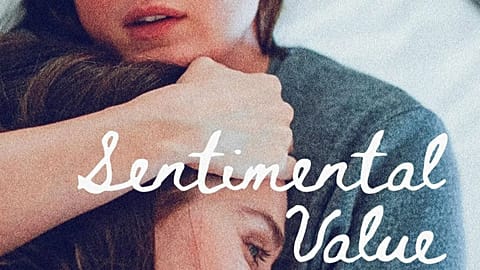

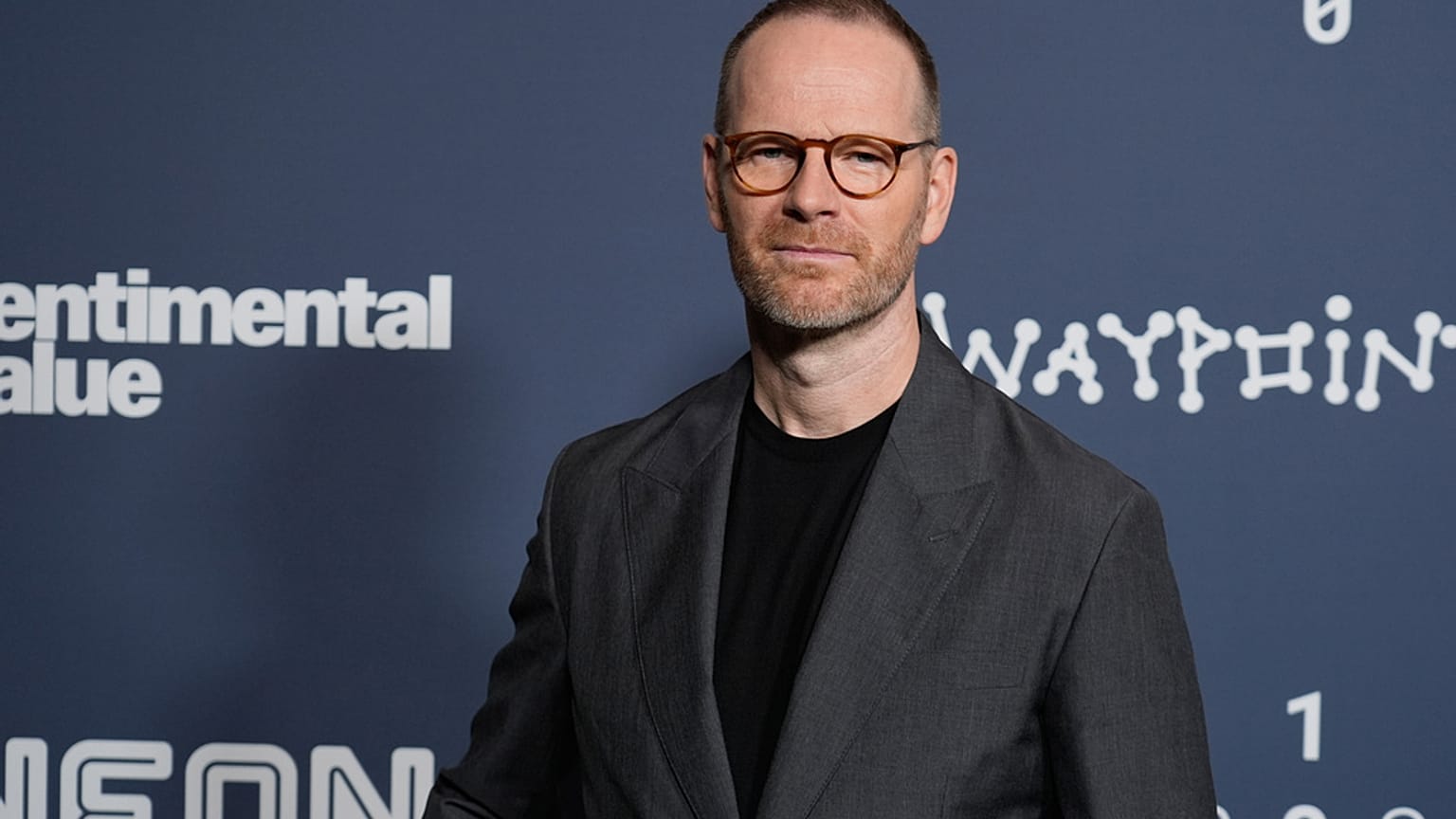













Cannes Film Festival Grand Prix winner ‘Sentimental Value’ is Joachim Trier’s most personal film to date. It opens in the UK today and Euronews Culture sat down with the director to discuss one of this year's finest and most emotionally resonant movies.
Many films this year focused on themes of illness, ruin and despair, but Joachim Trier’s Sentimental Value is something more radical in these troubled times. It deals with repair, forgiveness and hope.
 ADVERTISEMENT
ADVERTISEMENT
ADVERTISEMENT
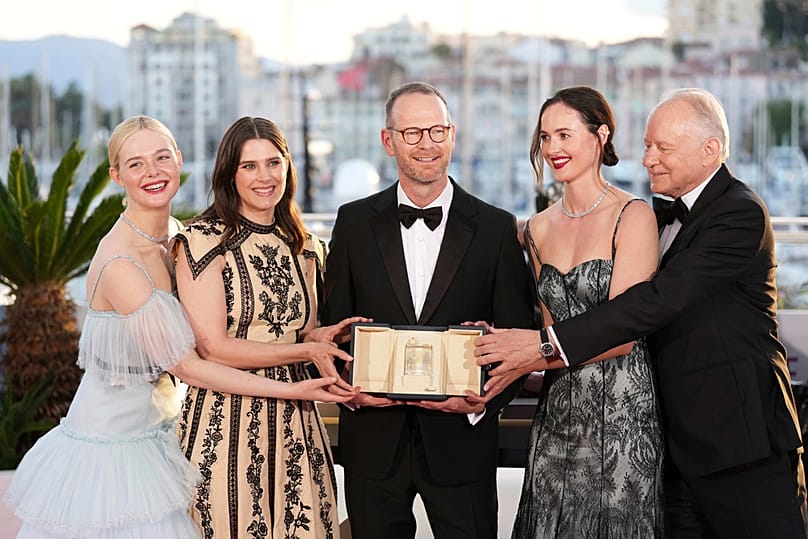
Focusing on family and memory through the story of two sisters who reunite with their estranged father, the Norwegian family drama emerged as one of 2026's critical darlings. It won the Grand Prix at the Cannes Film Festival, garnered praise for the central performances from Stellan Skarsgård and Renate Reinsve, and even made Euronews Culture's Best Films of 2025 ranking.
We called it a "seriocomedy that explores dysfunctional family dynamics and the possibility of reconciliation through art" and an "affecting ode to trying one’s best and how, in some cases, life and art can converge to create something bigger."
We're far from the only ones who hold the film in high regard. Sentimental Value has already emerged as one of award season’s strongest contenders, with eight nominations at the 2026 Golden Globe Awards, including Best Motion Picture (Drama), Best Director (Joachim Trier), Best Actress (Renate Reinsve), Best Supporting Actor (Stellan Skarsgård) and Best Supporting Actress (Elle Fanning, Inga Ibsdotter Lilleaas).
In addition, the film leads the nominees for next year's European Film Awards, nominated in the Best European Film category, as well as Best Director, Best Actress, Best Actor, and Best Screenwriter for Eskil Vogt and Joachim Trier.
With films such as Oslo, 31 August and The Worst Person in the World, Trier has inscribed the fragility of human relationships into film history. However, Sentimental Value feels like Trier’s most personal narrative to date, and it occupies a special place him.
“I’ve always made personal films,” he tells Euronews Culture. “Not with a commercial genre aim, but maintaining creative control. I come from a small country; it was hard for Norwegian cinema to gain international recognition. Being able today to talk about my film with people from different parts of the world is very precious to me.”
At the centre of the film is a house, which functions both as a physical space and an emotional metaphor. This is a film that understands and appreciates that sometimes a location's reach goes beyond its four walls; it can carry not only memories but also the words left unsaid, the confrontations postponed, and the grief passed on in silence. In Sentimental Value, the family house is a refuge, the echo of a ghost, and the arena in which the two sisters reassess their complex relationship with their father.
The director shares that the idea of time’s finitude shaped the story.
“I wanted to show these two sisters realising they no longer have an endless amount of time with their father,” he says. “The house is a place that bears witness to that awareness. It is also cinematically very rich, because it feels like a character that has lived through the 20th century. It excited me to show the texture of history and the traces of time on those walls.”
“Making a house the witness to that awareness was a powerful idea, emotionally and cinematically.”
Trier explains that Sentimental Value is not just a family story for him, but also a reckoning with time, memory and the emotional legacy passed on in silence. He sees cinema as a unique art form because of the way it relates to time.
“Film is a form of memory,” he says. “You record a moment, then years pass: you change but the film remains the same. It is like establishing a dialogue between past and present. Time’s elasticity is one of the most fascinating aspects of storytelling. Sometimes you stretch a moment, sometimes you cut. The gap between what is shown and what is not is the narrative itself.”
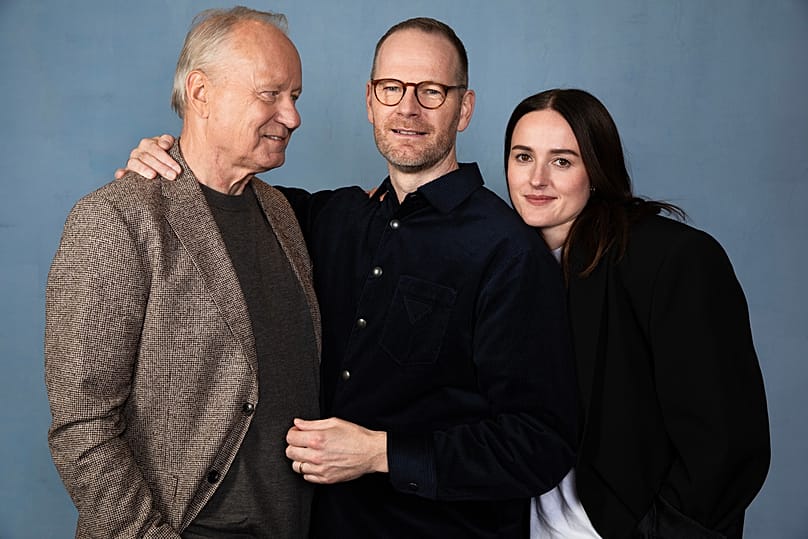
The title Sentimental Value also holds special meaning for Trier. For him, the phrase carries both subjective emotional bonds and a nostalgic ring.
“It reminds me of an old jazz song,” he says with a laugh. “Like the film: backward-looking, emotional, but also with an ironic tone.”
Speaking of music, Trier tells us that he listened to the Beatles while writing, often returning to John Lennon’s 'Imagine'. “I used to find that song overly sentimental. I don’t think that anymore. In such a dark period, hope is, I believe, one of the most honest feelings.”
While Sentimental Value is indeed about the hope that decries from honest and open communication, Trier avoids turning the story into an easy tale of reconciliation, saying that communication is important but not everything.
“In this film I didn’t want to ask whether reconciliation is possible, but to show what trying to reconcile teaches us,” he explains. “I don’t believe we can solve everything simply by talking,” he adds. “The issue in the film is not reconciliation itself, but its impossibility. I wanted to look at how we might make peace with our differences.”
“I have two small children,” the director adds. “For their future, I have to believe reconciliation is possible. I look for that hope in art, too.”
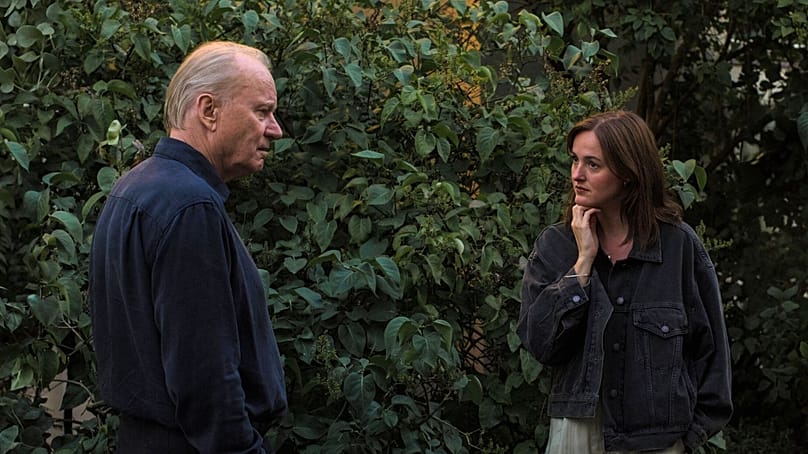
In Sentimental Value, Gustav, the father figure brilliantly played by Skarsgård, is a selfish and clumsy man, yet the director wanted to avoid any clichés when it came to the character.
“Although Gustav initially appears as a self-centred, demanding father, over time you see his vulnerability and the wounds he carries from the past. I am third generation after the war - my grandfather resisted the Nazi occupation. Those traumas are transmitted from generation to generation. That silent inheritance lies behind the distance between Gustav and his children.”
This approach takes the film beyond the bounds of conventional family dramas. Trier’s camera chooses to dwell in silence, to understand his characters rather than dissect them. This has led to comparisons with Ingmar Bergman’s Persona, a reference point that Trier keeps at arm’s length - but doesn’t deny its subconscious effects.
“I love Persona, but the reference wasn’t deliberate,” he says. “Even so, Bergman taught us how cinema can depict the inability of two people to meet. I wanted to look into that area, that quiet zone.”
Above all, for Trier, the film is also a look back at his own past.
“My grandfather was a director, my parents worked in cinema. In families many things are passed on without being said,” he says. “The beauty of cinema is its ability to make those silent spaces visible.”
Sentimental Value hit European cinemas earlier this year and is out today in the UK (MUBI). Read our review here and check out our ranking of 2025's Best Movies.