




























Choreographer María La Ribot brought the curtains down on her illustrious career at Europalia in Brussels with 'Juana Ficción', a poetic portrait of the Spanish queen’s inner world, the men who tormented her and an exploration of the ongoing stigma of madness.
Of the female names erased by history, that of Joanna I of Castile is among the most obvious, swallowed by the black shroud that consumed the monarch until all that remained of her was the epithet ‘Joanna the Mad’.
 ADVERTISEMENT
ADVERTISEMENT
ADVERTISEMENT
The vanishing of light is precisely one of the central metaphors in 'Juana Fiction'. It's the work with which dancer and choreographer María La Ribot brought to an end a cycle of more than 30 years working in parallel with this historical figure who premiered in 'El triste que nunca os vido' (The sad one who never saw you, 1992).
Last week's final presentation at Belgium's Europalia festival was the culmination of an exercise in poetic justice, approached from a completely contemporary perspective.
"It's Joanna fiction because there is always a fiction invented within history and we want to remove that stigma," the La Ribot told Euronews before the rehearsal. "Romanticism has always placed her in that position, but you can ask whether it was true or the result of a plot carried out by the most important men in her life, who were her husband, her father and her son," La Ribot said.
The deprivation of identity
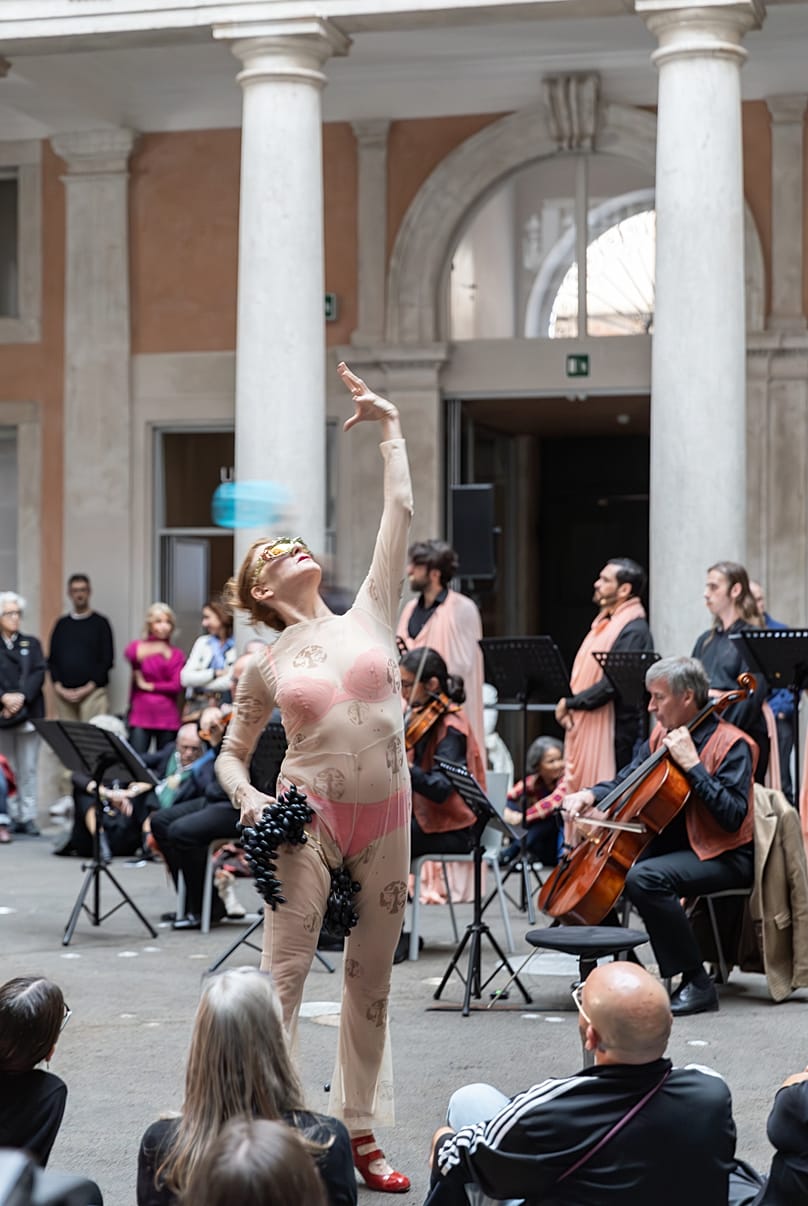
The queen who could not overcome her husband Philip the Handsome's infidelities or his death, was confined to a convent in Tordesillas for 46 years. The anguish stemming from that process of deprivation, denial and forced transformation of identity is conveyed in every movement La Ribot makes.
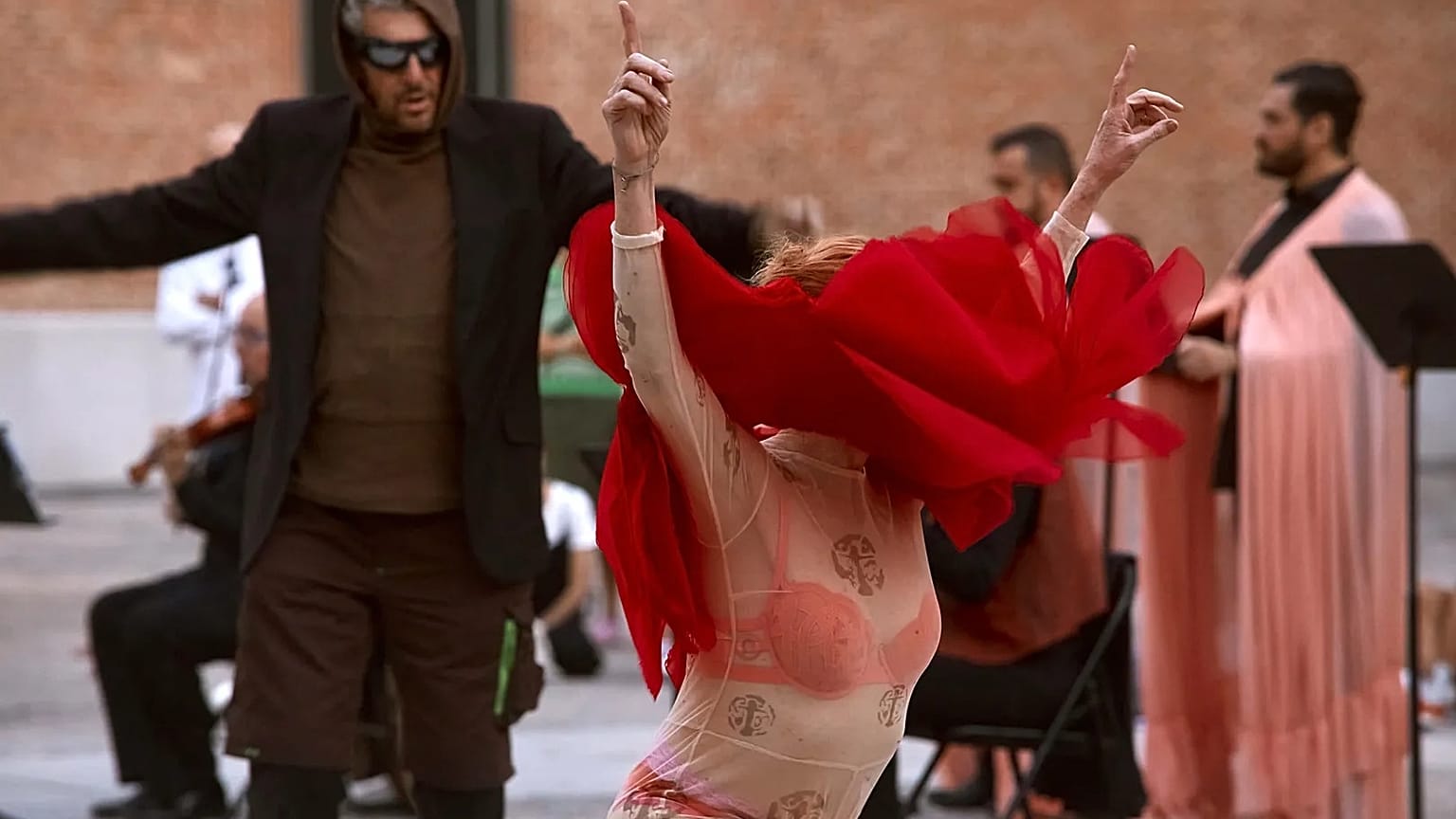
As she moves through the hall, the orchestra conducted by Asier Puga drives forward, together with the soloist ensemble Grupo Enigma and the polyphonic choir Schola Cantorum Paradisi Portae, the chaos also illustrated by Elvira Grau’s costume design, based on The Garden of Earthly Delights, by Bosch.
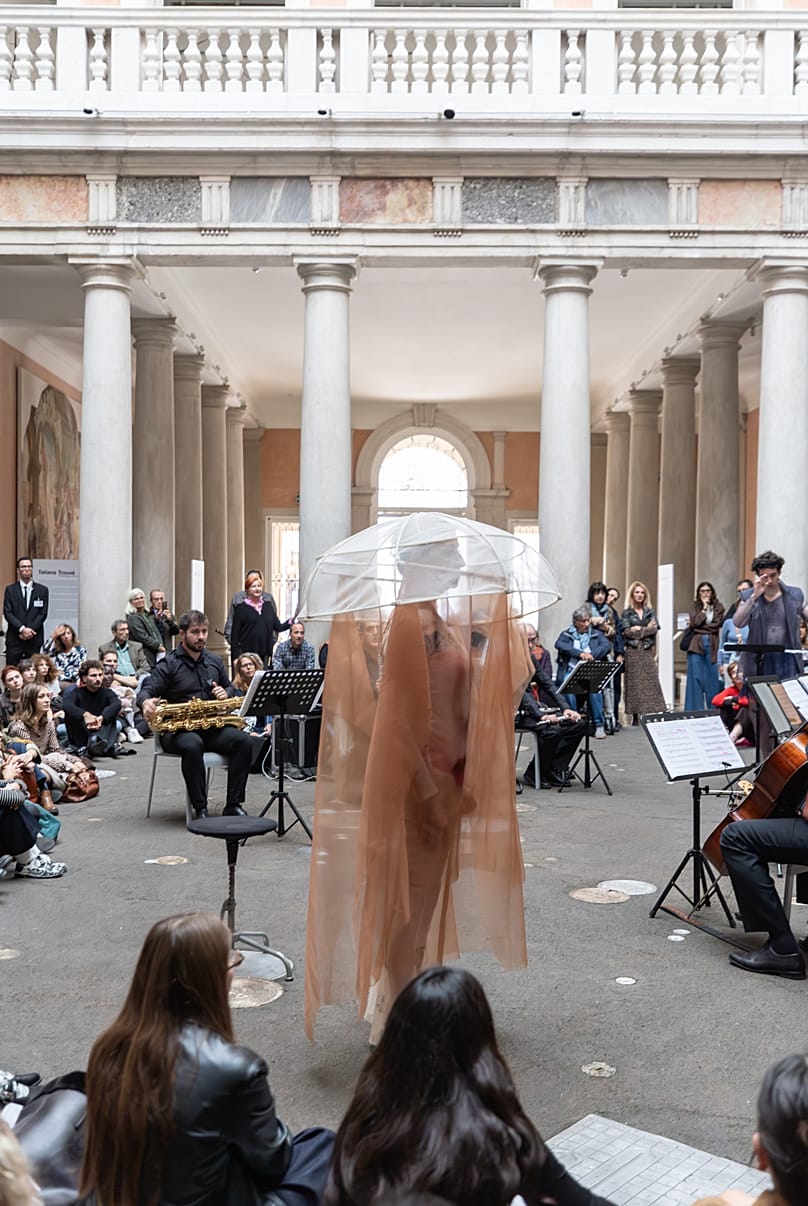
The music for the piece draws on the songbook gifted to Joanna and Philip when they married and mixes influences from Spanish and Flemish sonic traditions in the 16th century before the performance advances towards the peak of Joanna’s mental state with electronic music by Álvaro Martín.
The artistic coexistence of both eras heightens the listening experience and lays bare a cruel reality: the violence Joanna I of Castile experienced remains very present. As La Ribot told Euronews: "The centre of the work is Joanna, but it is also about state power, about terror; we see it now in Gaza, how the power of the state of Israel massacres and commits genocide in full view of everyone".
The masked character played by actor Juan Loriente, with whom La Ribot also worked on 'El triste que nunca os vido', acts as a counterpoint between the audience (almost another piece of set dressing), and the Joanna embodied by La Ribot, linking the two with a certain violence. It is a combination of elements that helps the viewer to be present in the moment, but also to be aware of a terrifying reality: there will always be figures (women) ahead of their time, crushed by what is hegemonic.
"Light is fundamental in this piece because it goes out progressively alongside Joanna’s life; at heart, it is about life disappearing," the artist explains. She refers to the fact that each run of this performance is always timed with millimetric precision, the 45 minutes before sunset, so that real darkness asserts itself just as Joanna disappears beneath a shroud of objects and black paint.
In the Brussels performance, they had no choice but to set up an artificial spotlight to mimic the real sunset because it "was at three in the afternoon and at that hour we were going to have fewer people", the choreographer admits. With artificial or natural sun, the result is still overwhelming, with the audience drawing close to the motionless body of Joanna-La Ribot, drowned in solitude.
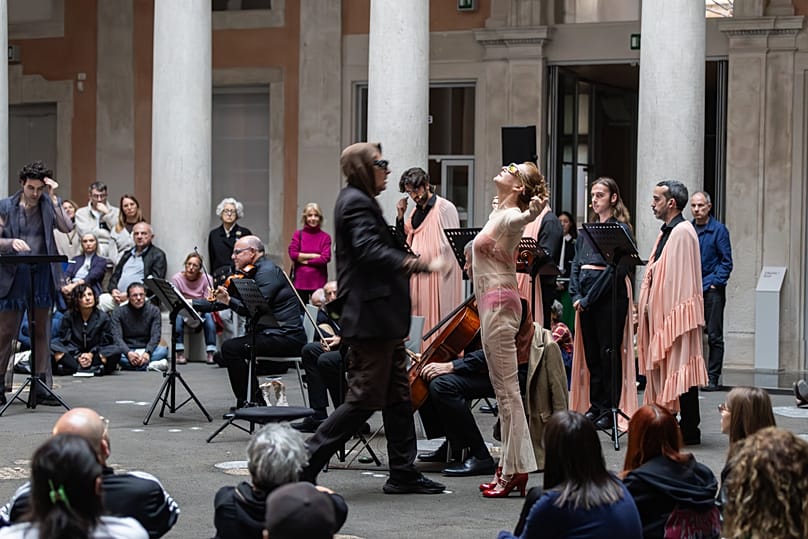
"My works are always transformative; that’s why I make them," La Ribot said. From her longstanding interest in the life of Joanna I of Castile comes the question of whether she too has encountered challenges in her career. "You always face many obstacles, but I don’t know whether they come from the profession itself or are sexist or patriarchal, or have more to do with the era; I have worked naked a lot, so I have been censored. There are countries I cannot set foot in", she added.
She acknowledges this is one of her least colourful performance works (if colourful is taken to mean a contrast of bright colours), in which the horizon — far off — of a contemporary dance career is also sketched, lived under the permanent title of pioneer.
In 2027, the Reina Sofía museum will present a retrospective titled 'Resolution', featuring distinguished works by La Ribot from 1993 to 2024. "So it serves as an end for me, as the title suggests; but deep down every ending is the beginning of something else," she stresses. That means there is much still to come from her revolutionary hybridisation of genres, playfulness, the against-the-current cry of an artist always ahead of her time.