












From Belle Époque posters to radical performance art, 2025 delivered exhibitions that pushed boundaries and opened dialogues.
If 2025 proved anything, it's that the art world's centre of gravity is shifting. Yes, Paris delivered blockbusters – David Hockney nearly reduced some critics to tears at the Fondation Louis Vuitton, while the Musée d'Orsay reminded us why Belle Époque posters still matter.
 ADVERTISEMENT
ADVERTISEMENT
ADVERTISEMENT
But some of the year's most exciting moments happened away from the traditional art capitals: Central Asia emerged with game-changing institutions and events, with Cyprus launching its first international art fair. From Leigh Bowery's fearless theatricality at Tate Modern to Tracey Emin's raw confessions in Florence, these were exhibitions that demanded attention – not just for what they showed, but for how they reframed conversations about art's place in the world.
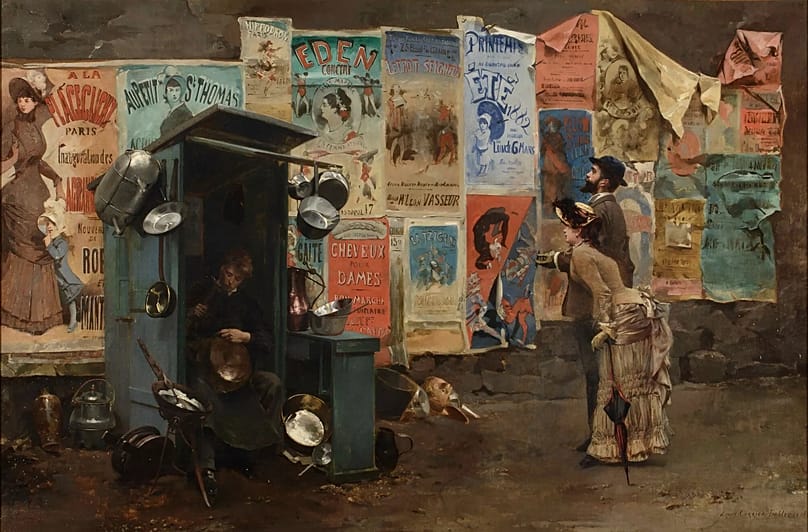
Art is in the Street at the Musée d'Orsay
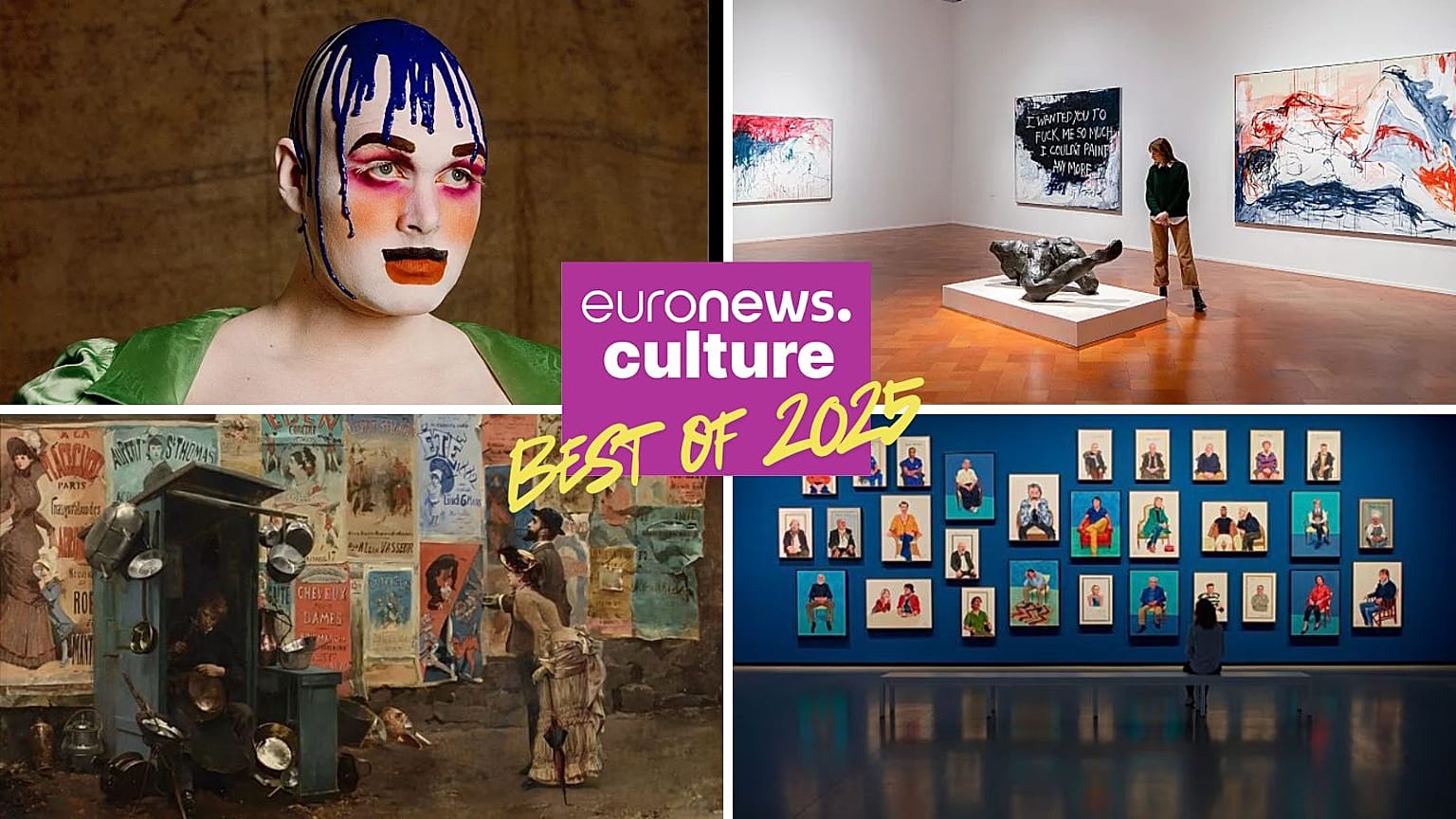
The Musée d'Orsay's deep dive into Belle Époque poster culture felt surprisingly urgent for a show about 19th-century advertising. Bringing together nearly 230 works – Toulouse-Lautrec, Mucha, Chéret and the Nabis – the exhibition traced how illustrated posters transformed Paris into a visual playground. What made it resonate was its attention to the street as both gallery and battleground: those Morris columns and sandwich men weren't just charming historical footnotes, they were the social media of their day. The show cleverly positioned poster art as radical democratisation – "art for all" before anyone was hashtagging accessibility. Organised with the Bibliothèque nationale de France, it was the first exhibition on this scale devoted to the "Masters of the Poster", and it made a convincing case for taking commercial art seriously.
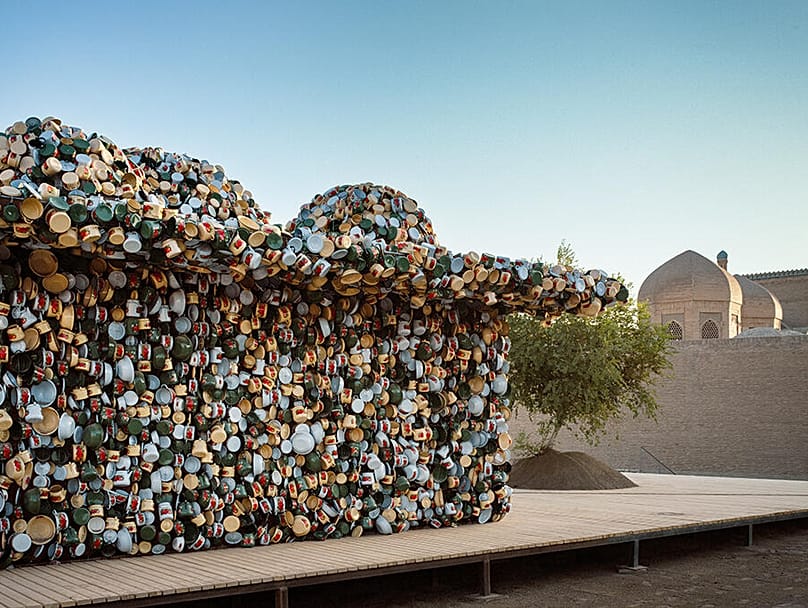
Bukhara Biennial
Central Asia's contemporary art scene announced itself with serious intent when the inaugural Bukhara Biennial transformed the Uzbek city's madrasas and caravanserais into exhibition spaces. Curated by Diana Campbell and titled "Recipes for Broken Hearts", the ten-week event paired over 70 international artists with local Uzbek artisans, insisting on equal billing for both. The concept – rooted in the myth of Ibn Sina inventing plov to cure a lovesick prince – cleverly interrogated who gets credit in collaborative practices. Rather than treating Bukhara's UNESCO-recognised architecture as mere backdrop, the biennial engaged residents and visitors in conversations about heritage and contemporary identity. With Antony Gormley and Slavs and Tatars alongside local makers, and genuine dialogue replacing tokenism, it offered a fresh model for international biennials in an era of event fatigue.
Leigh Bowery! at Tate Modern
Tate Modern's celebration of Leigh Bowery was overdue recognition for an artist who refused categorisation. The exhibition sprawled across performance, club culture, fashion and body art – because Bowery never saw boundaries between them. Those iconic "Looks" (costumes feels too limiting) were presented alongside collaborations with everyone from Lucian Freud to Michael Clark, showing how Bowery reimagined clothing as sculpture and his body as a shape-shifting tool. What emerged was both a portrait of 1980s and 90s London nightlife and a serious consideration of how Bowery's fearless approach to gender, sexuality and aesthetics continues to reverberate. The exhibition didn't sanitise his provocations or his excesses; instead, it celebrated how he challenged norms of decorum whilst creating genuinely groundbreaking visual culture.
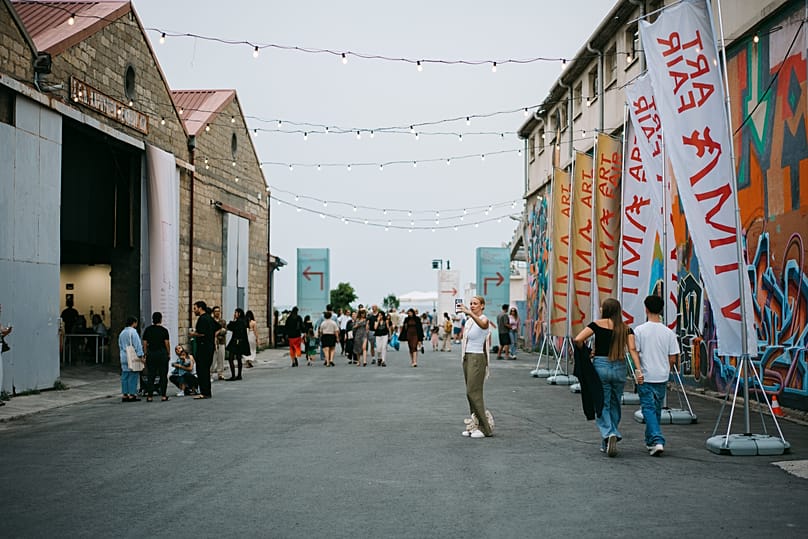
VIMA Art Fair
Cyprus got its moment on the global art scene with VIMA, the island's first international contemporary art fair. Held in a repurposed Limassol winery overlooking the sea, it felt refreshingly intimate compared to the exhausting Basel-Miami-Paris circuit. Twenty-seven galleries from across Cyprus, Greece, Lebanon, the UAE, Nigeria, the UK and beyond made the case for Cyprus as a vital crossroads between Europe, the Middle East and Africa. The roster impressed – The Breeder from Athens, Tiwani Contemporary, The Third Line from Dubai – but what mattered was the genuine dialogue VIMA fostered between regional ecosystems. Curator Ludovic Delalande's major project "The Posterity of the Sun" anchored things conceptually, whilst talks and performances kept energy high. For a debut, it punched well above its weight.
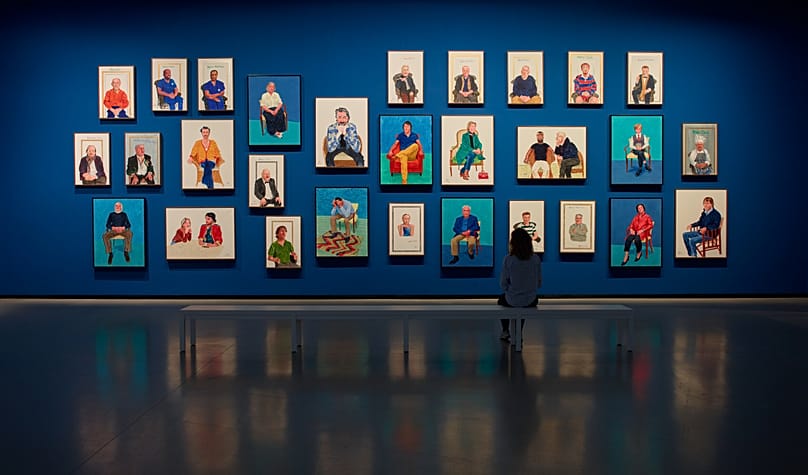
David Hockney, 25 at Fondation Louis Vuitton
Billed as focusing on the past 25 years, this vast exhibition cheekily reached back to 1955, opening with an 18-year-old Hockney's portrait of his accountant father. Over 400 works filled Frank Gehry's Fondation Louis Vuitton building (the architect got his own portrait in the show), spanning paintings, digital work on iPhone and iPad, and immersive video installations. What could have felt indulgent instead demonstrated an artist still experimenting, still curious. The international loans were knockout – institutions from Oslo to Melbourne contributed – and Hockney's personal involvement in every detail showed. It was the artist’s largest exhibition ever, and beyond special – one critic even reported being moved to tears.
Almaty Museum of Arts opening
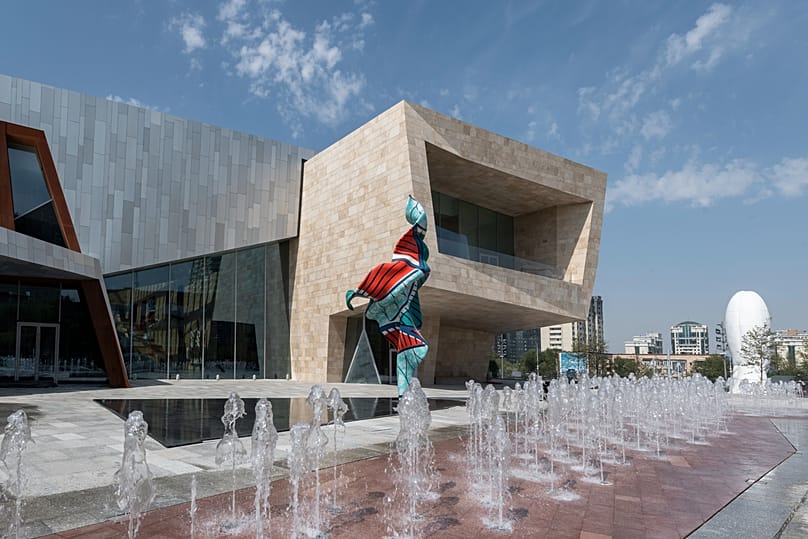
Along with the Bukhara Biennial, September brought another significant moment for Central Asian contemporary art when the Almaty Museum of Arts opened its doors. Funded by entrepreneur Nurlan Smagulov and designed by Chapman Taylor with architectural features echoing the Tian Shan mountains, ALMA became the region's first private modern and contemporary art museum. The inaugural show paired a 700-strong collection of Kazakh and Central Asian work with a solo retrospective of Almagul Menlibayeva, whose exploration of myth, memory and geography set the tone. Outdoor commissions by Yinka Shonibare and Jaume Plensa, plus Artist Rooms featuring Richard Serra and Yayoi Kusama, showed ambition beyond regional focus. Artistic Director Meruyert Kaliyeva positioned it as bringing together generations of artists, from those who risked persecution under Soviet rule to today's practitioners.
Encounters: Giacometti, Barbican
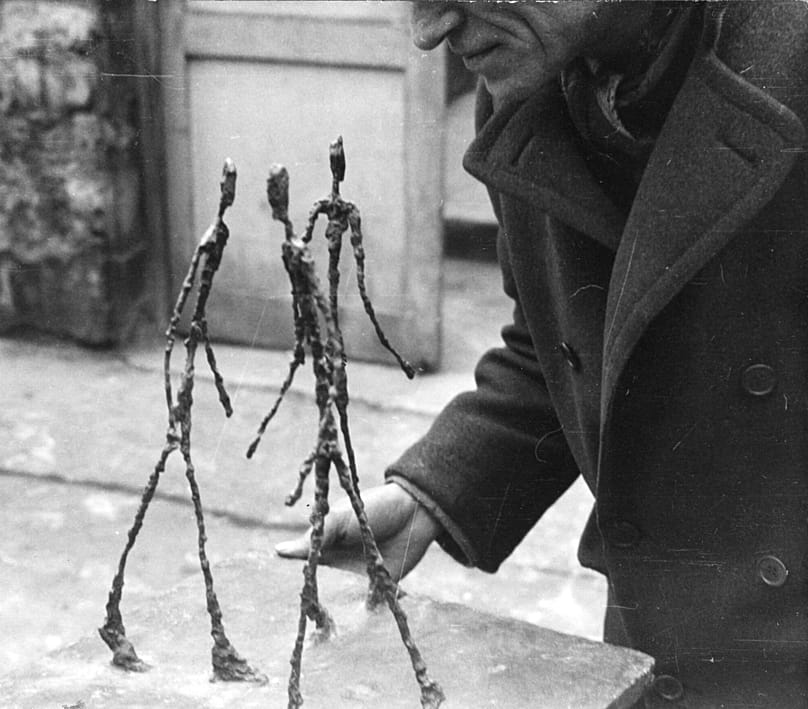
The Barbican's year-long series pairing Alberto Giacometti with contemporary sculptors felt genuinely generative rather than gimmicky. Organised with the Fondation Giacometti, it launched with Huma Bhabha, followed by Mona Hatoum (with Lynda Benglis still to come in 2026), creating intergenerational dialogues around death, fragmentation, memory and trauma. Giacometti's elongated, post-war figures – his response to the devastation of World War II and his meditation on the human form – found real resonance with contemporary artists working through their own moments of crisis. The intimate new space allowed for close looking rather than blockbuster overwhelm.
Tracey Emin: Sex and Solitude at Palazzo Strozzi
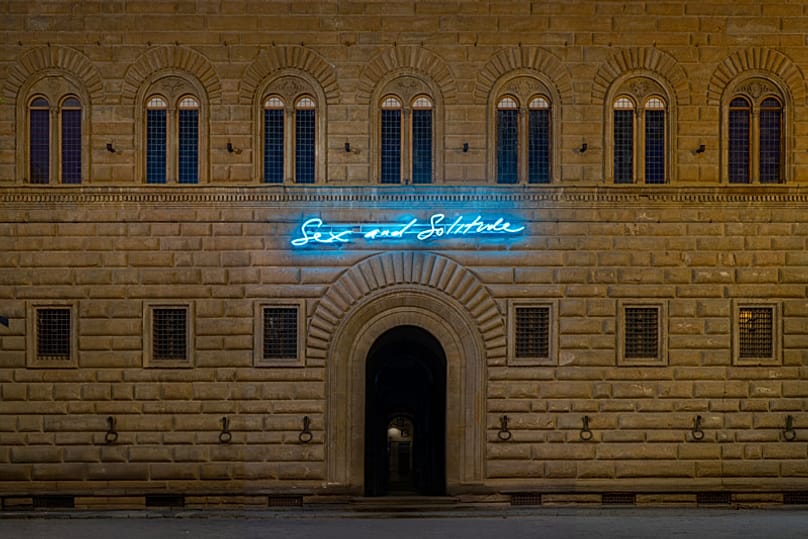
Tracey Emin's first major Italian institutional exhibition brought her confessional intensity to Florence's Palazzo Strozzi. Curated by Arturo Galansino, "Sex and Solitude" presented over 60 works across paintings, drawings, embroidery, neon, and sculpture. The setting mattered: Emin's raw explorations of the body and desire created provocative friction against Florence's Renaissance heritage whilst also positioning her within the city's rich art history. Works spanning love, loss, illness and recovery felt urgent, and at once explicit and exceptionally vulnerable. Although the temporal scope of the works was broad, Emin stressed in an interview ahead of the show’s opening that it was "not a survey". "I don’t like doing survey shows or retrospectives. I like to be living now,” she said.
Kiefer / Van Gogh at Royal Academy
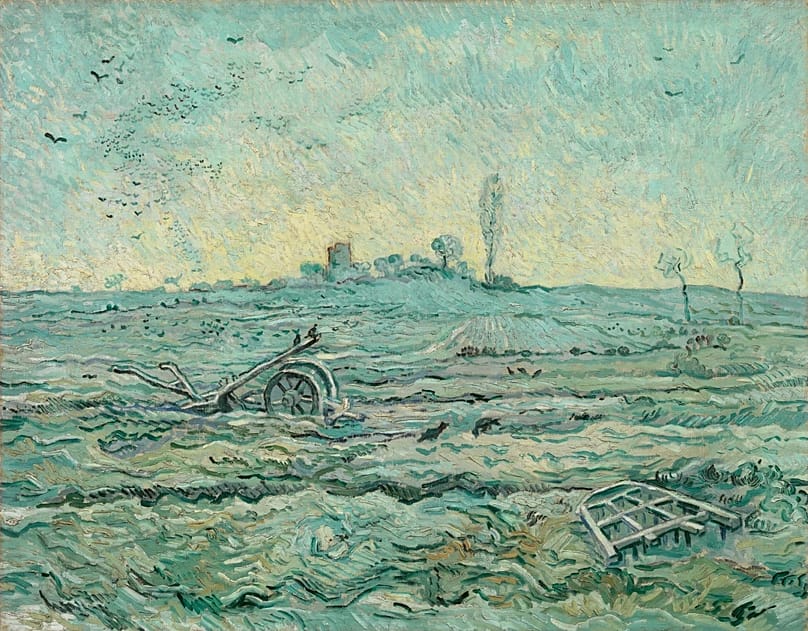
The Royal Academy's intimate three-room exhibition traced how Vincent van Gogh has haunted Anselm Kiefer for nearly 60 years. It began with an 18-year-old Kiefer receiving a travel grant to follow Van Gogh's path from the Netherlands through Belgium to Arles. Developed with Amsterdam's Van Gogh Museum, the show paired both artists' works to reveal shared preoccupations with mythology, philosophy and the weight of history, whilst respecting their distinct approaches. Kiefer's monumental paintings and sculptures – informed by Van Gogh's pioneering Post-Impressionism – gained fresh context, whilst Van Gogh's final 1890 works felt newly alive. New pieces by Kiefer, exhibited for the first time, proved he's still mining that initial encounter. The focused presentation let viewers trace influence without overstating connection.
From the Heart to the Hand: Dolce & Gabbana at Grand Palais
Fashion got its museum moment when Domenico Dolce and Stefano Gabbana took over Paris's Grand Palais to celebrate 40 years of maximalist vision. Following its Milan debut, "Du Coeur à La Main" unfurled across 1,200 square metres and three floors in Paris, with 200 Alta Moda and Alta Sartoria pieces, 300 handmade accessories, and 130 artworks arranged in 12 breathtaking tableaux. Curated by Florence Müller, it aptly positioned D&G's craft within Italy's broader artistic heritage. The close-up view of their artistry (those front-row seats most of us never score) revealed pure craftsmanship beneath the theatrical excess.