


























This is the year of late architect Paulo Mendes da Rocha at Casa da Arquitectura, in Matosinhos, northern Portugal. Two exhibitions dedicated to the Brazilian Pritzker Architecture Prize winner are now open to the public.
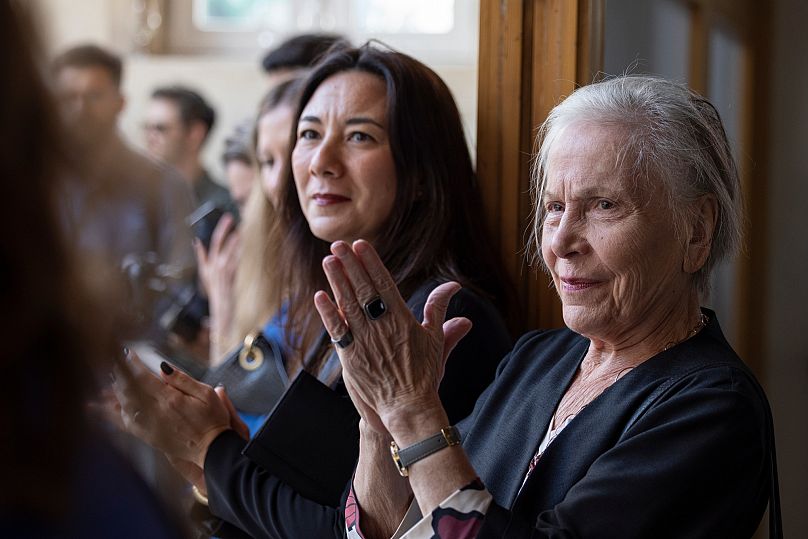
“I think it was the best exhibition I have seen of Paulo's work, because in addition to being complete, it's been very well taken care of... the photos, the models. I have never seen anything like this”, says Helene Afanasieff, the widow of Paulo Mendes da Rocha, one of the greatest Brazilian architects, who died in 2021.
 ADVERTISEMENT
ADVERTISEMENT
ADVERTISEMENT
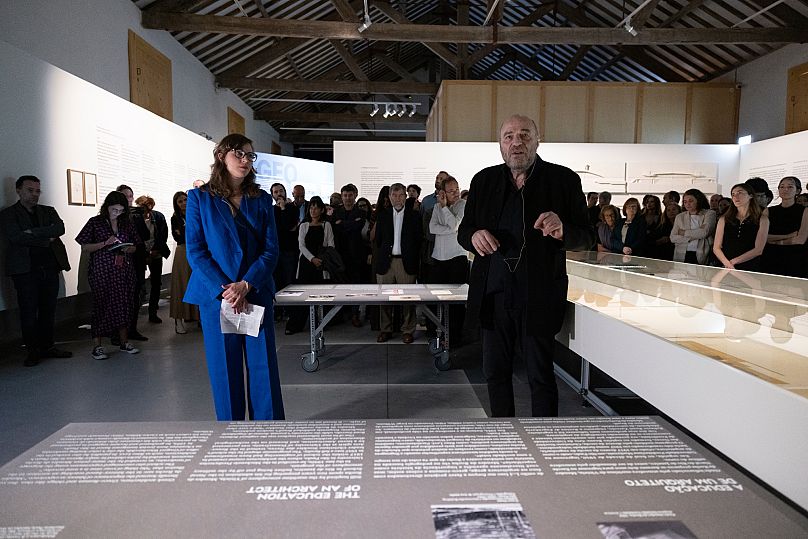
Helene can't hide her emotion. She has just attended, with her children and dozens of guests, the pre-opening of two exhibitions dedicated to the Brazilian Pritzker at Casa da Arquitectura (House of Architecture), in Matosinhos, northern Portugal.
Four years ago, the Brazilian architect donated the totality of his archives to the Casa da Arquitectura.
Helene recalls the controversy caused in Brazil by her husband’s decision: “You cannot imagine. The USP (University of São Paulo), the people in Brazil, were very offended”. But she says that her husband just replied: "I know how the collections are conserved at FAU-USP (The Faculty of Architecture and Urbanism, University of São Paulo). They are kept in tubes in the middle of the corridor. I am sure that Portugal will take good care of it".
Paul is not here anymore, but Helene thinks he wouldn’t regret his decision.
“Geography is the first architecture”
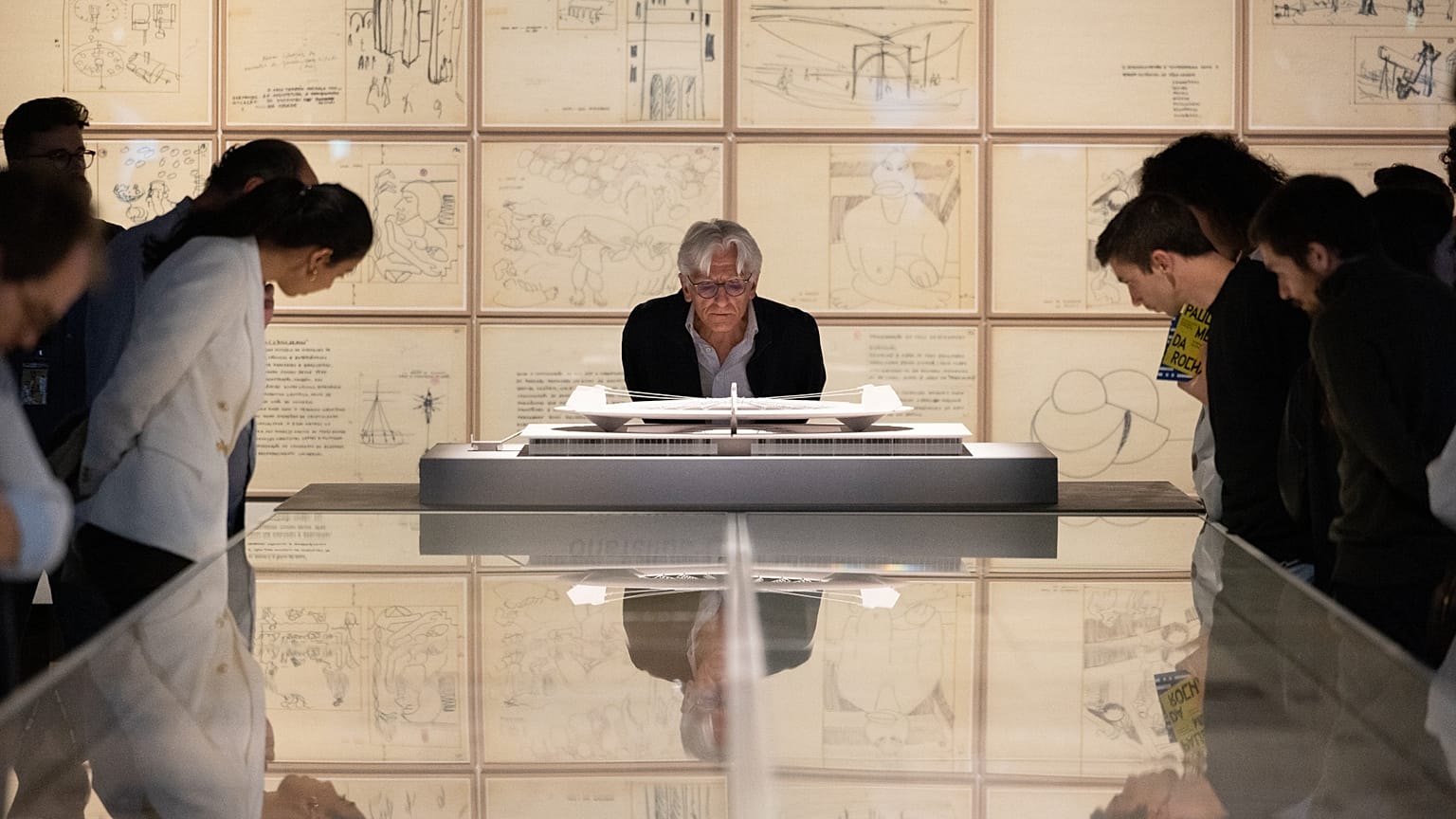
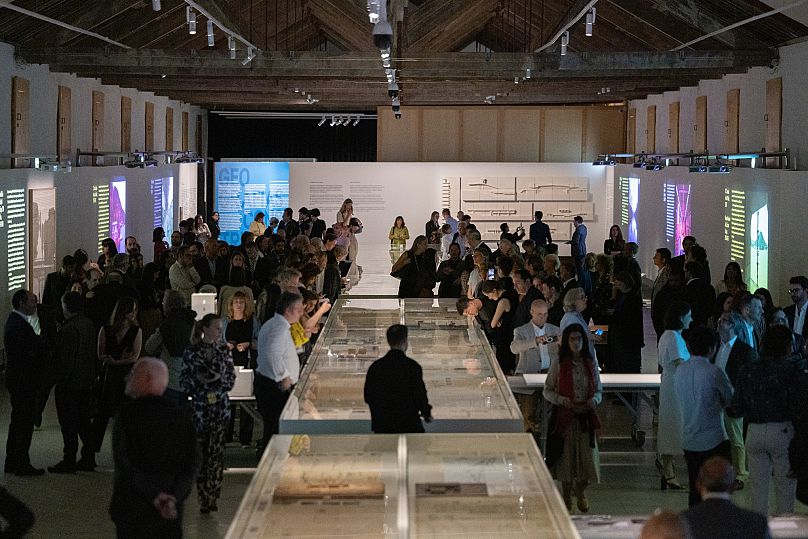
Paulo Mendes da Rocha’s work over seven decades is revealed in the exhibition “Constructed Geographies: Paulo Mendes da Rocha”, in the main gallery of Casa da Arquitectura. An unprecedented extent has been extracted from the immense collection he donated to the Portuguese institution.
“We chose to work on the theme of geography, saying that this is the first architecture. When man arrives at a place and decides to implant his humanity, his daily life, his poetry there, that is the first architecture. All of us are architects in some way”, says Vanessa Grossman, co-curator of the exhibition along with Jean-Louis Cohen.
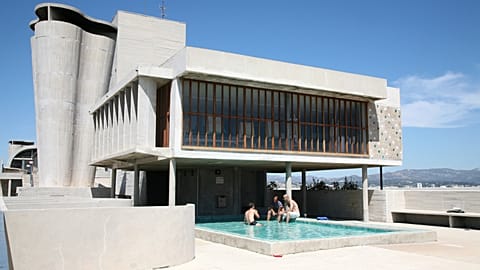
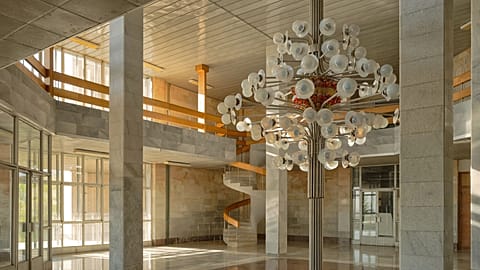
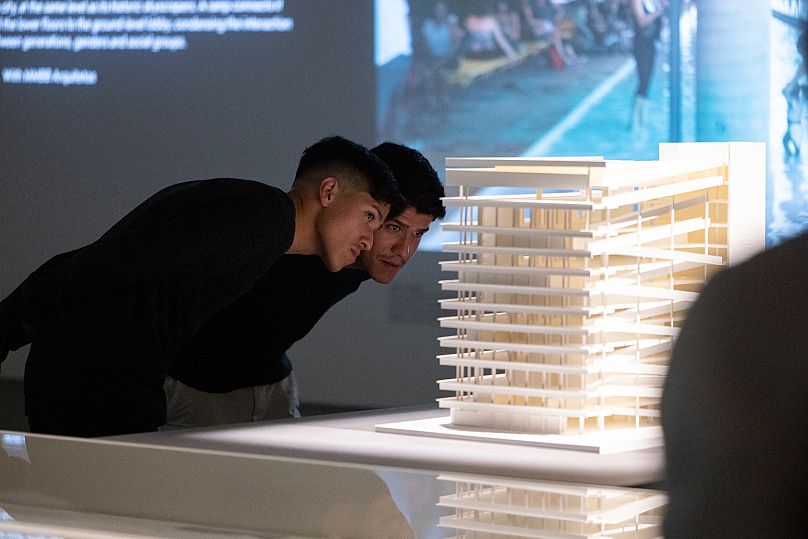
Twelve major projects are featured from their origins to their current state, from Butantã House (1964-1967), in São Paulo, to some of his latest projects, like the National Coach Museum (2008-2015), in Lisbon, or Sesc 24 de Maio (2001-2017), in São Paulo.
“Throughout his troubled career, which was marked by the dictatorship, and despite everything, he managed to make projects that range from true domestic experiments, like the house that became a space of invention for him, to a public school on the outskirts of São Paulo, where recreation gained a very broad dimension, but also apartment buildings and cultural facilities”, says Grossman.
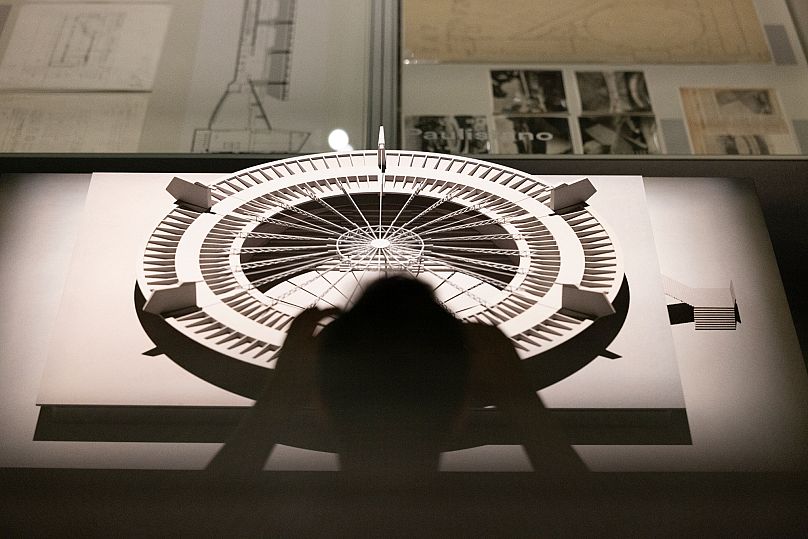
The exhibition features 138 original drawings, original models and eight new models produced for this event, along with ten videos made for the exhibition about the architect’s featured works. There are also 44 original drawings by Flávio Motta related to the exhibition project of the Osaka Pavilion, which were censored by the military dictatorship in Brazil (1964-1985).
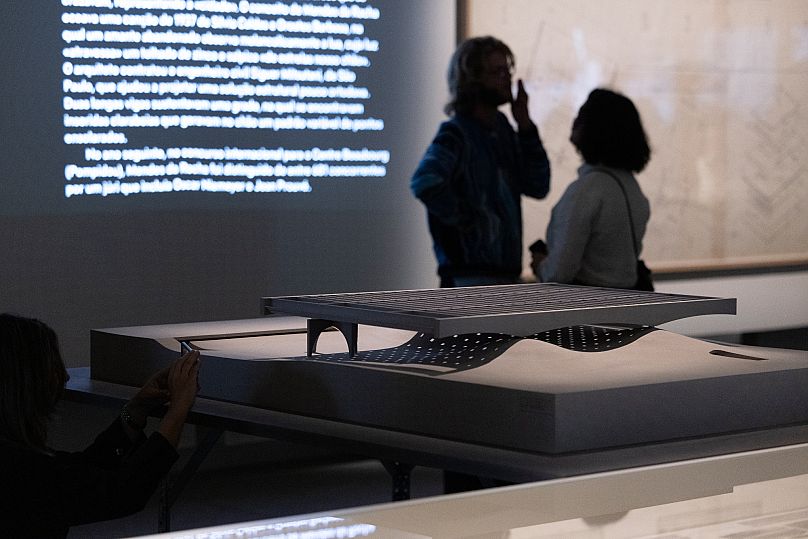
“His architecture was very austere, very respectful of this economy of means, but very poetic. So, there was this tension between poetics and austerity, which I think runs through his work, which is manifested, for example, in the beauty of the drawings, but also in the models he made out of paper”, highlights the curator.
Breaking the association with concrete and metal
“I think he is an architect very much associated with the language of concrete and, later on, he experimented a lot with metal, but I think his work goes beyond this issue of matter and materiality," explains co-curator Grossman. "I think that for him concrete was an opportunity, it was a field of invention, it was a technological field that would bring infrastructure.”
Grossman says that she and her colleague Jean-Louis Cohen “wanted to break this simplistic association between his architecture and concrete” in this exhibition. In fact, she thinks that “the great substance that runs through the exhibition is really water, the water of his childhood, of his father, who was a naval architecture engineer and he was very marked by the port experience, as he was born In Vitória” (on 25 October, 1928).
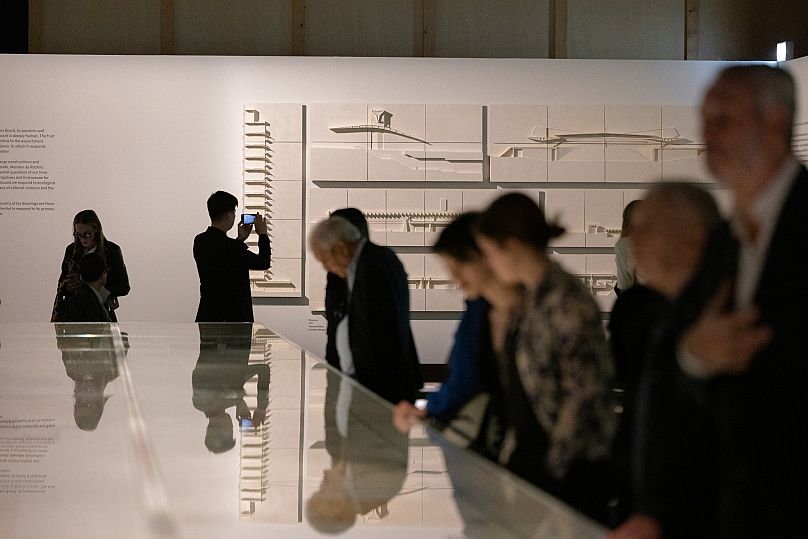
“In Brazil, road transport has created a chaotic urbanism and an occupation of territory that is very irrational. So, he always talked about reversing the course of disaster through this reconciliation between cities and waters, which is somehow ecological thinking," continues Grossman. "For some it is difficult to associate Paulo with ecology, but this issue between culture and nature is really very characteristic of his thinking and his buildings were, shall we say, a critical approach to the world”.
“Anyone who comes here and doesn't know Paulo Mendes da Rocha's work will practically discover the history of Brazil, the history of a very committed architect, who was very anchored in his adoptive city, São Paulo, despite coming from a port city, which is Vitória”, she concludes.
Talking with Paulo Mendes da Rocha
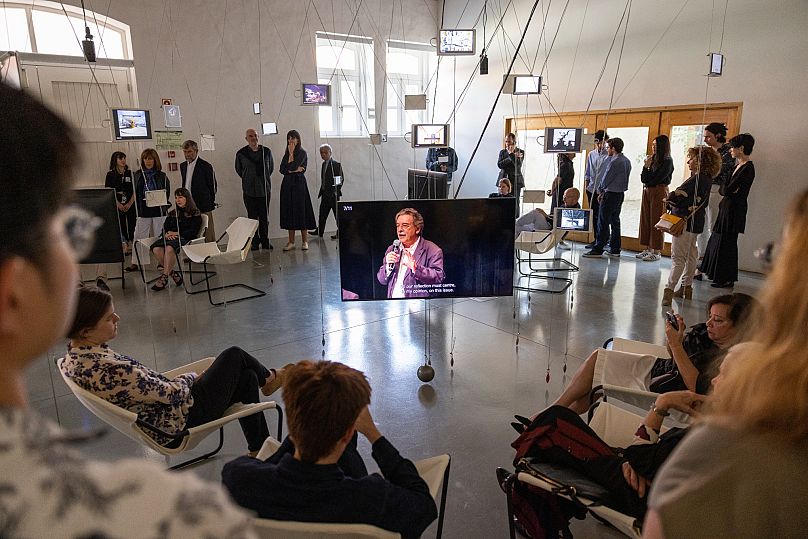
In the Casa da Arquitectura’s Gallery we can find another exhibition entitled “Paulo: Beyond Drawing – Talking with Paulo Mendes da Rocha", curated by Marta Moreira and Rui Furtado.
Moreira shared her "immense joy and emotion" for having worked on what she described as a very rich process, having talked to many people who knew the architect, to get to know "the enchanting universe of Paulo's ideas and work".
“We were concerned with showing people in general that there was a very coherent, very consistent, very constant speech that guided Paulo's life and, therefore, his work,” says Moreira.
“We kept putting together small videos from different moments of Paulo's speeches, whether more formal speeches, classes, or more informal conversations, and that's how the exhibition was made”, she explains.
The Brazilian co-curator says Paulo Mendes da Rocha’s main principle is “the total negation of the exploitation of one person by the other” and this is reflected in his architecture, for example, “in building a city for all”.
“In this exhibition, we wanted people to be able to hear him”, says Portuguese co-curator Rui Furtado. “We wanted people to really hear him talking about what guided his life and what guided his life were very simple things and they were all linked to a concept that was the continuity of the human species on the planet. And he uses this concept as a criterion for the options and choices in his life”.
Parallel Programmes in Lisbon, São Paulo and New York
There is a parallel programme, curated by Nuno Sampaio, Catherine Otondo and Vanessa Grossman, that includes debates, conferences and site visits, with the most diverse personalities from the world of architecture who have crossed paths, directly or indirectly, with Paulo Mendes da Rocha.
The events will take place in Portugal, Brazil and the US.
A 456-page catalogue has been published in two independent versions, Portuguese and English, with critical essays by leading Brazilian, European and North American scholars revisiting the work of Paulo Mendes da Rocha. There is also an interview with the Portuguese architect Eduardo Souto de Moura, by the curators Jean-Louis Cohen and Vanessa Grossman.
The two exhibitions dedicated to Paulo Mendes da Rocha in Casa da Arquitectura (House of Architecture), in Matosinhos, northern Portugal, are open until February 2024.