




























Rheinmetall boss Armin Papperger on empty missile stocks, expanding arms output and future weapons, from Ukraine to Skyranger, drones, combat robots and space. Interview with Germany’s largest defence group CEO.
Germany wants to significantly strengthen its defence capabilities. But it is no longer just about more ammunition and missiles. Air defence, drones and new technologies such as humanoid robots and space systems are also playing an increasingly important role.
 ADVERTISEMENT
ADVERTISEMENT
ADVERTISEMENT
Rheinmetall CEO Armin Papperger talks about the build-up of arms, current bottlenecks, and which weapons systems could be decisive in future.
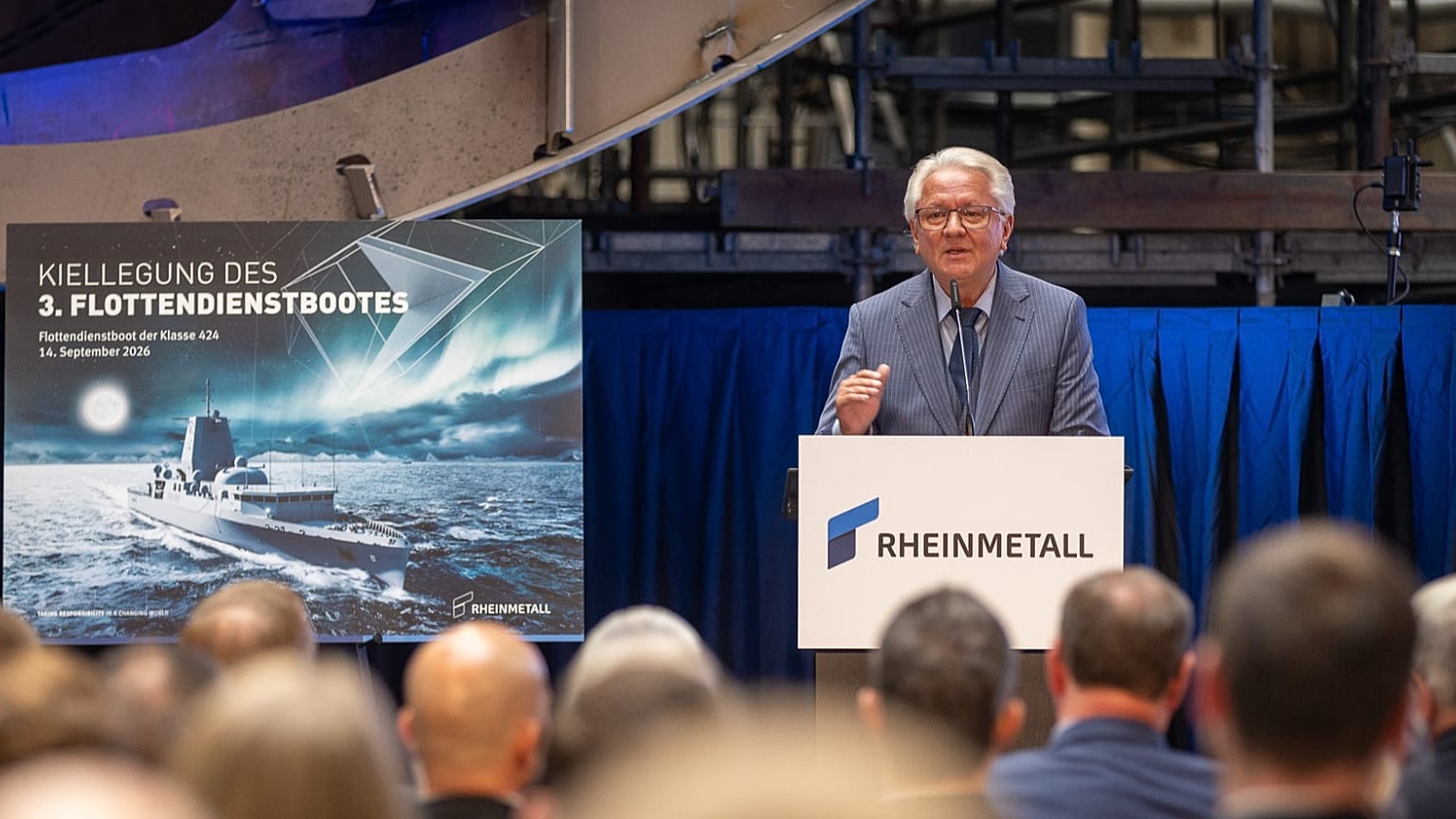
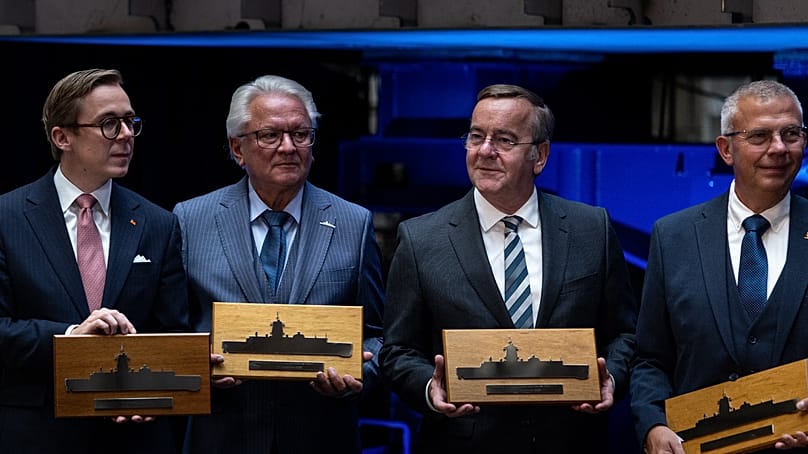
At the keel laying of the third Class 424 fleet service vessel in Wolgast, we spoke to Papperger about Germany's arms production, the role of the Skyranger and the weapons of the future.
Euronews: Mr Papperger, in March you said that missile stocks were worryingly low. What is the situation now?
Papperger: I believe that is still the case. You cannot produce missiles that quickly, and that is why we at Rheinmetall are launching a major investment programme, and not just us but many manufacturers.
And there are enormous bottlenecks in missile motors, but also in warheads, and we need to get much faster here in order to bring Germany, but also Europe and NATO, back up to a target level that is sufficient if we come under threat.
Euronews: Where do we stand with the Skyranger? The systems have been ordered, but will they arrive in time? How fast is it going now?
Papperger: Yes, with the Skyranger, and this is really a narrative that keeps coming up. For Skyranger, the contract stipulates that we have to start series deliveries in 2027. And they will be delivered; at the moment we only have minimal delays.
We have a number of technologies we need to update. That includes the chassis, the radar technology and the missiles that have to be integrated.
But I am firmly convinced that together with the BAAINBw (the Federal Office for Bundeswehr Equipment, Information Technology and In-Service Support), and also with the ministry, we will find a good solution in this area.
Our people are working on it day and night and, as you know, capacity in the Skyranger segment is being massively expanded. We will be building, or be able to build, up to 400 a year from the end of next year. So I see no cause for concern there.
Euronews: There is a joint venture for deep-strike capabilities. Where do we stand with that?
Papperger: The joint venture we have is with Destinus on the one hand and, on the other, the one with Lockheed Martin. With Lockheed Martin we are working on artillery rockets. We are developing the cruise missiles with Destinus. These two joint ventures are in the absolute final phase of signing, and we expect to receive the first order for cruise missiles by the end of this year or the beginning of next year.
Euronews: Shouldn't we be building simpler systems, but more of them? Isn't that what Ukraine shows?
Papperger: We are doing that too, but it only gets us so far in some areas. If you look at the performance of a Skyranger today, it can shoot down a missile flying at Mach 3. You cannot do that with an interceptor and you cannot do it with a simple system.
And if you talk to the inspector of the German Army today, he will tell you: "In two years the threat will look completely different." The Skyranger really is a system with multiple capabilities. We cannot offer that with our interceptor solution or our simpler systems.
We also have, for example, .50-calibre guns with which we can shoot down light drones, category 1 drones. That becomes extremely difficult once you are dealing with, say, jet-powered drones; they are hardly manageable. That is why we believe a sustainable solution is the better option.
Euronews: How big a driver of employment are the defence industry in general and Rheinmetall in particular?
Papperger: I think we are an important engine of employment. At the moment, excluding the civil sector, around 34,000 people work at Rheinmetall. Our net growth is about 10,000 a year, and our goal is to reach 70,000 by 2030, with a supply chain that employs 210,000 people. So if you add that up, that is almost 300,000 people. That is a real job engine.
Euronews: How quickly can arms and ammunition production be ramped up, by companies like Rheinmetall?
Papperger: We are doing it already. We have demonstrated it, for example with ammunition. In medium calibre ammunition we have increased output from under one million to four million rounds. In artillery ammunition from 70,000 to 1.5 million rounds. In tank ammunition to 240,000 rounds, up from 40,000, 50,000, 60,000 rounds, depending on the year. So we are doing it. And what we are doing now is doubling truck production.
The number of logistical vehicles and tactical vehicles will now more than double. So we are doing it. Right now we simply do not have the orders to do even more. Rheinmetall has a six-year investment programme worth 30 billion euros, and the scale of what we are investing at the moment is enormous. That is why it is so important that the signal we have once again sent today is clear: that the minister is here, that he is actively engaged, that we are not only building up capacity but that it will be used sustainably so that people have jobs.
For me that has been a very strong signal, a very positive signal, and it reassures me somewhat that the federal government is truly living up to its responsibilities here.
Euronews: What comes next? Drones have recently been a major topic. What comes after that? Is it space, or is space already a factor, or is it also combat robots, humanoid robots?
Papperger: Robots will come, that is absolutely clear. We have a research centre in Bremen for humanoid robots. We are working on it. We do not yet have any series products, which is why we have not gone public with it yet. But we are investing a lot of money. Space is another field where we are investing heavily, in satellite construction on the one hand and, on the other, in communications processing.
That means all the information we receive from satellites should be processed properly. And drones will remain, and so will everything else. We will still need it. For combined-arms warfare you need artillery, armoured forces, conventional ammunition, drones and missiles.
The only question is how much of each you need. It has to be a mix. And that will change: the quantities in the individual segments will shift.
On a related note: You can also watch the latest Euronews exclusive report on the German tank brigade in Lithuania: