




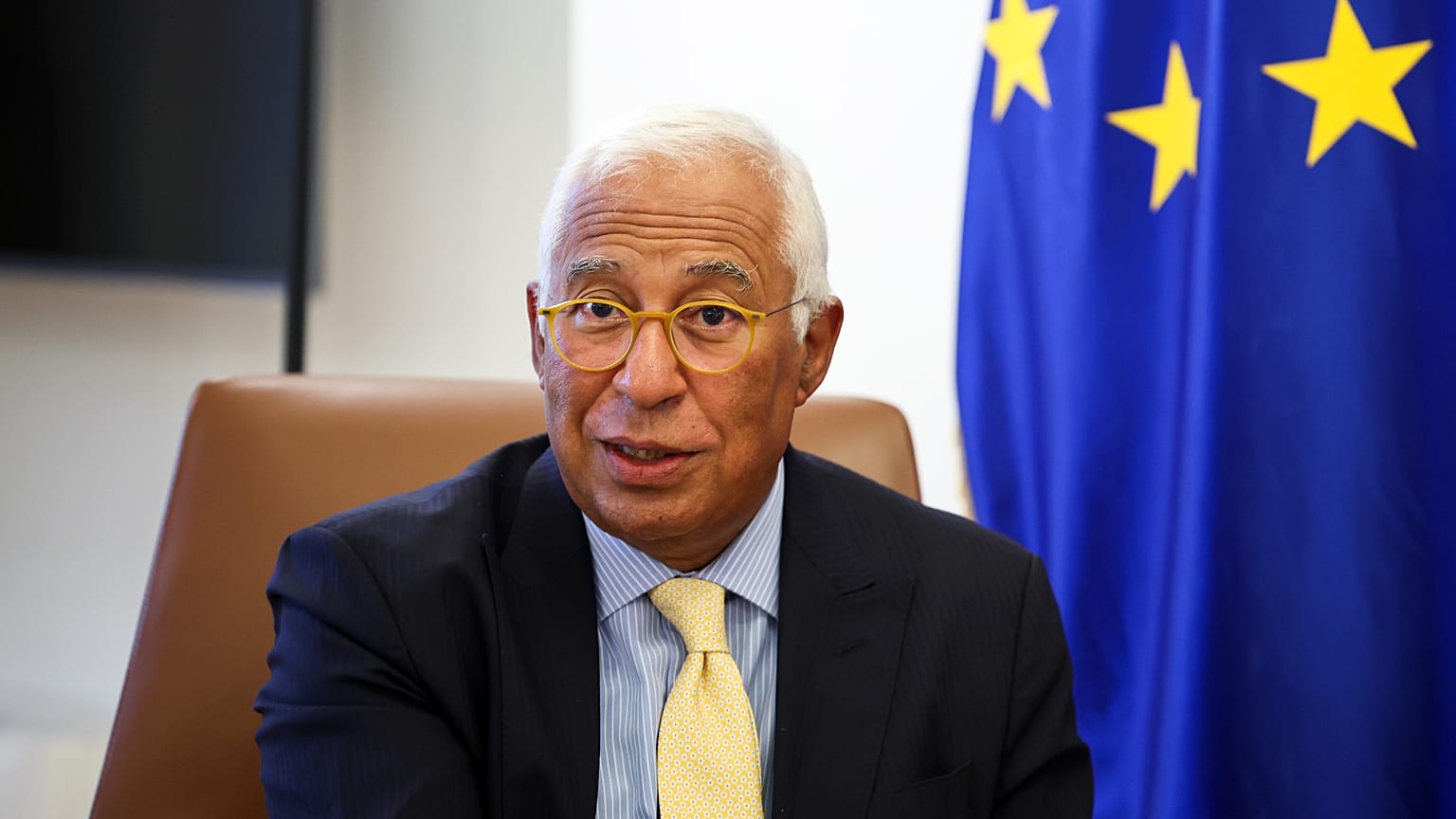













In a message to Euronews, António Costa set out why enlargement is an investment rather than a burden, from the 26 million jobs created since 2004 to Montenegro’s push to join by 2028.
"Distinguished Heads of State and Government, Mister Chairman of Euronews, Ladies and gentlemen, it is a pleasure to speak, for the second time, at the Euronews Enlargement Summit.
 ADVERTISEMENT
Since the beginning of my mandate, I have made enlargement a strategic priority.
I have visited all candidate countries several times and worked closely with their leaders, institutions and civil society to advance a successful enlargement process.
The European Union was built on reconciliation and peace, and enlargement has been essential to advancing those goals.
It is the best geopolitical investment Europe has made for peace, security, democracy, stability and prosperity, helping overcome historic divisions and shape our common future.
In today’s uncertain world, enlargement serves the same purpose: strengthening Europe as a geopolitical actor, a resilient economic power and a force for peace.
But enlargement is not only about strengthening the European Union.
It is also about fulfilling the aspirations of millions of Europeans who have chosen democracy, freedom and cooperation.
These efforts and the difficult reforms they undertake deserve our solidarity and political commitment.
The accession process must remain fair, consistent and merit-based, while the European Union prepares to welcome new members with ambition and responsibility.
Because accession is not simply about aligning legislation and institutions.
It is also about building trust, resolving disputes by diplomatic means and good faith, and creating a future in which cooperation replaces mistrust and divisions.
Overcoming the legacy of the past is a crucial prerequisite for the integration into the European Union.
The ambition to join the European Union must help overcome historical grievances, reject nationalist rhetoric, and encourage countries to move towards genuine cooperation.
Europe’s experience demonstrates that enlargement benefits us all.
The 2004 enlargement is a clear example of this.
Since then, more than 100 million people have joined our Union, and our shared economy has grown by more than 2 trillion euros.
Countries from Central and Eastern Europe that joined 22 years ago have more than doubled the size of their economies.
The new Member States have helped create 26 million jobs, more than 6 million of them in their own countries.
These figures demonstrate that enlargement is not a burden to be managed, it is an investment in our collective and shared prosperity.
It creates opportunities for citizens and businesses across the Union, expands our markets, strengthens our social model and increases our capacity to respond to global shocks.
But the benefits of enlargement should not begin only on the day of accession.
During the accession process, we are already bringing candidate countries closer to the European Union through gradual integration, with visible benefits for all.
In the Western Balkans, the Growth Plan and other European initiatives are supporting investment, economic convergence and closer integration with the Single Market.
Progress includes participation in the Single Euro Payments Area, improvements at border crossings, stronger transport links, digital initiatives and lower roaming costs.
These efforts are delivering tangible results.
In October, the European Union held accession conferences with Montenegro, Albania, Ukraine and Moldova, marking further progress in their respective accession processes.
Montenegro and Albania provisionally closed additional negotiating chapters, while Ukraine and Moldova opened negotiations on new clusters.
This week, Montenegro provisionally closes another negotiating chapter, bringing the country one step closer to completing negotiations across all chapters.
Work remains to be done, but I am confident that Montenegro can deliver.
We stand ready to continue supporting Montenegro as it completes the remaining work.
I believe that Montenegro can be the “28th by 28”.
Moldova and Ukraine have also benefited from closer cooperation with the European Union, including visa liberalisation, lower roaming costs, energy support and investment in infrastructure.
These measures have strengthened the resilience of both countries and brought citizens and economies closer to the European Union.
This progress is particularly remarkable in Ukraine, which has been facing Russia’s war of aggression for almost five years.
In Moldova, the progress made in implementing reforms and the country’s strong commitment to aligning with the European Union acquis mean that it will be able to advance rapidly on its path towards membership once all accession clusters have been opened.
These reforms are not undertaken merely to satisfy European requirements.
They are fundamentally about building societies in which citizens can trust their institutions, corruption is confronted, the media can operate freely, and every person is treated with dignity and fairness.
Serbia’s recent election reflects the desire of Serbian citizens to build a stronger, fairer and more accountable society.
These aspirations are closely aligned with the European Union accession process.
The European Union is ready to support the new Serbian government on its European path, with a particular focus on the rule of law, media freedom and the fight against corruption.
We will engage constructively and openly, while remaining clear about the standards required for membership.
It is my firm conviction that the future of all Western Balkan countries lies within the European Union.
And I believe that North Macedonia, Bosnia and Herzegovina, and Kosovo can still make further progress and accelerate the necessary reforms on their path towards EU membership.
We will discuss this and other issues with all Western Balkan leaders in three weeks, at the fourth EU-Western Balkan Summit to be held during my mandate.
Ladies and gentlemen,
European Union membership is much more than joining an economic area.
It means sharing and upholding the values on which our Union is built.
One cannot walk towards the European Union while moving away from democracy.
With the renewed momentum behind enlargement, we are entering a period in which new members could join the European Union in the coming years.
I look forward to welcoming them, not as newcomers but as equal members of our common European family.
Thank you."