
















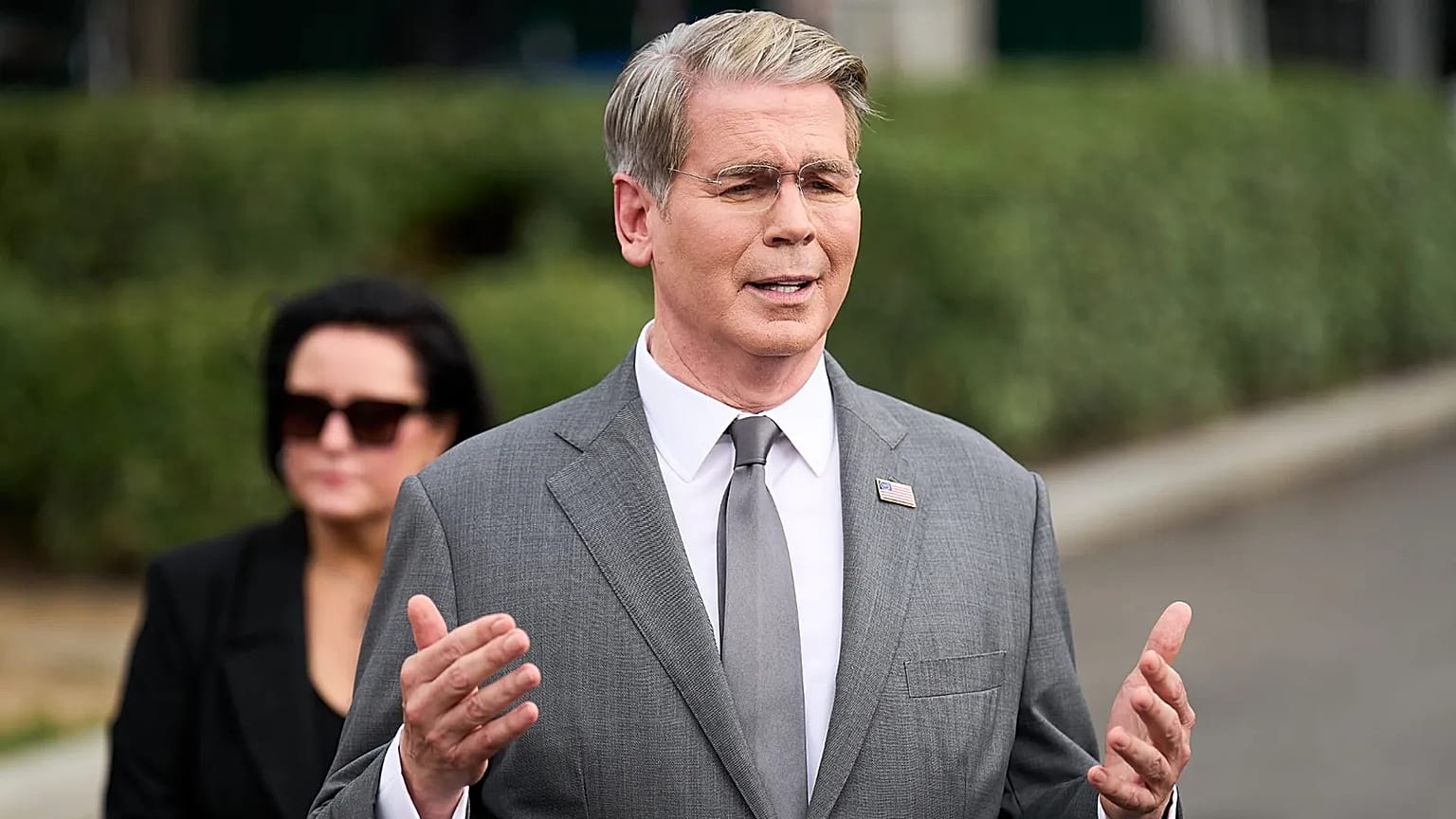













Long-term US Treasury yields climbed back above where they stood before Wednesday's buyback announcement, wiping out the relief that move had briefly delivered, and prompting US Treasury Secretary Scott Bessent to signal that Washington is ready to intervene even more aggressively.
Less than 24 hours after doubling the size of its debt buybacks, the US Treasury found itself needing to reassure markets all over again as yields on the 10-year and 30-year notes erased Wednesday's declines and moved higher than before the announcement.
 ADVERTISEMENT
ADVERTISEMENT
ADVERTISEMENT
The move forced US Treasury secretary Scott Bessent to speak publicly and leave no doubt that Wednesday's $4 billion (€3.4bn) ceiling per operation was a floor rather than a strict limit.
"We routinely do buybacks, and we're going to increase the size of the buyback [...] I would note that it could be more than the $4 billion per issue," Bessent stated.
Pressed on the reasoning, the US Treasury Secretary added: "Part of it is signalling here, and to show that we believe that the yields don't reflect the underlying fundamentals. This Iran conflict, we will get on the other side of this [...] we don't know when."
Bessent pointed to weak liquidity specifically at the 30-year point as the source of the strain, though he stopped short of committing to a figure, saying the Treasury would keep watching how conditions develop.
"All we're trying to do is get people to focus on the fundamentals and not trade the headlines during a quiet period in a thin market," he concluded.
At the time of writing, the 30-year yield is trading at 5.25% after hitting a high of 5.33% on Tuesday, and the 10-year yield is at 4.7% after topping 4.75% on the same day.
A fiscal plan after the US national debt hit $40 trillion
Bessent also used the interview to preview a further announcement.
"We are announcing probably at the end of this week, beginning of next week an increased focus on fiscal consolidation [...] and it's coming from President Trump [...] we will be examining both on the revenue side and the cost side [...] what we can do," Bessent said, adding that the US Treasury has "a big toolkit" beyond buybacks alone.
Reacting to the US national debt crossing a record $40 trillion (€34.4tn), the Bessent downplayed the situation by stating that "there's nothing magic about the $40 trillion number [...] we can grow our way out of that."
Additionally, he pinned the blame on the previous administration by noting that the US had the highest deficit-to-GDP ratio in history under Biden while the Trump administration lowered it by a percentage point last year.
In contrast to the comments, US public spending, and consequently government borrowing, has surged this year due to the Iran war and other policy decisions and despite US President Donald Trump’s vow to stabilise America’s finances.
Not everyone was reassured with several investors publicly reacting to the US Treasury Secretary's remarks.
Krishna Guha at Evercore ISI dismissed the plan as "a weak form of Operation Twist" that risks backfiring if it is read as a sign Washington is struggling to fund itself cheaply, adding that Bessent's appearance itself had barely moved the bond market.
Operation Twist is an unconventional monetary policy tool used by central banks, most notably the US Federal Reserve, to simultaneously buy long-term government bonds and sell short-term Treasury securities in order to balance the yield curve.
JPMorgan's Maia Crook was blunter still, warning the intervention "belies the underlying structural challenges and does nothing to address them," and that it risks a lasting cost of its own: a US Treasury seen abandoning its long-standing pledge of steady, predictable debt issuance in favour of ad hoc market management.