




























Chevron has applied to join a Greek offshore exploration area known as Block 10 in the Ionian Sea, in a move that could strengthen Greece's role in Eastern Mediterranean energy security.
Chevron's bid to join Greece's offshore Block 10 underscores the growing importance of the Eastern Mediterranean in Europe's energy landscape.
 ADVERTISEMENT
ADVERTISEMENT
ADVERTISEMENT
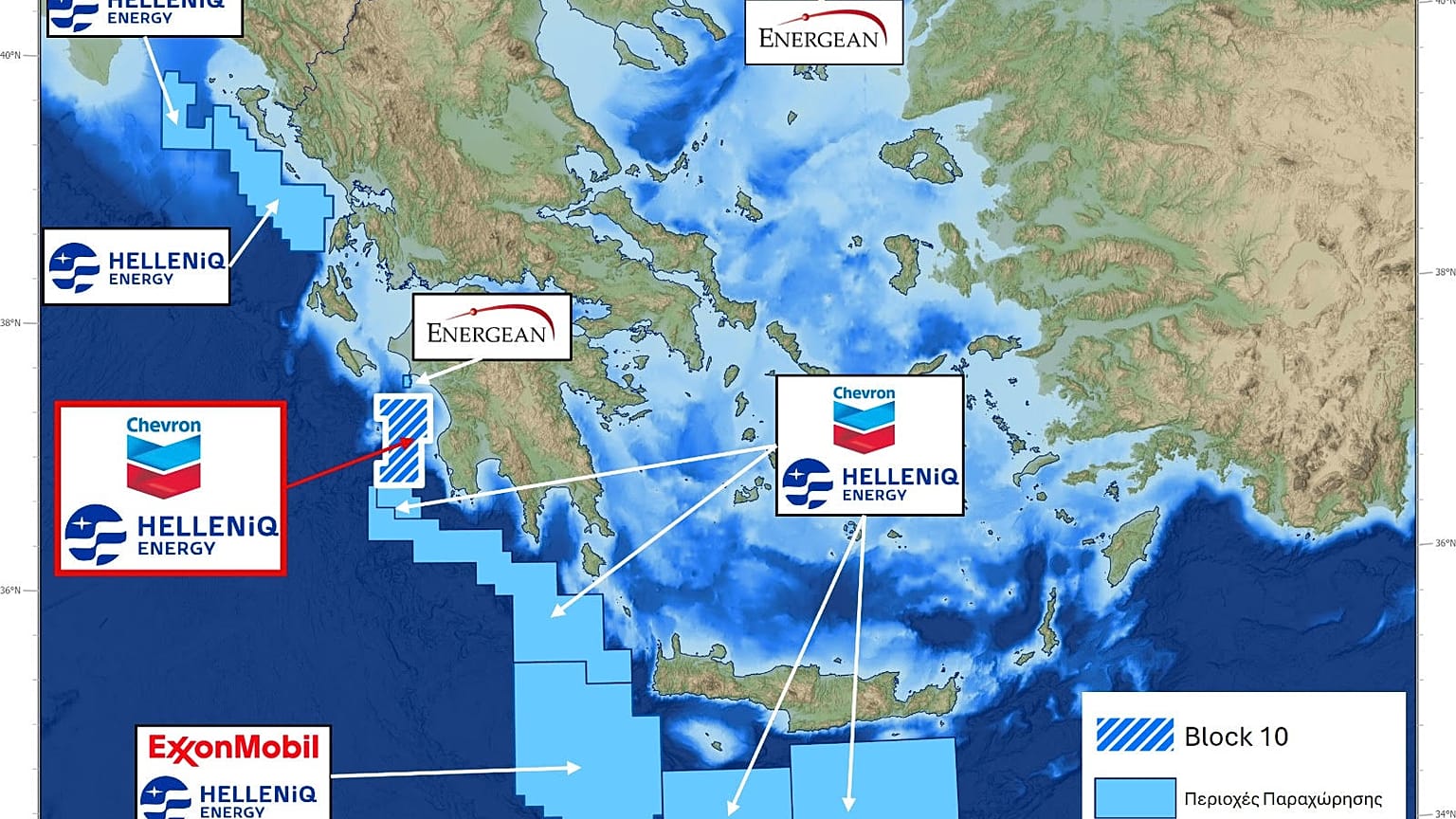
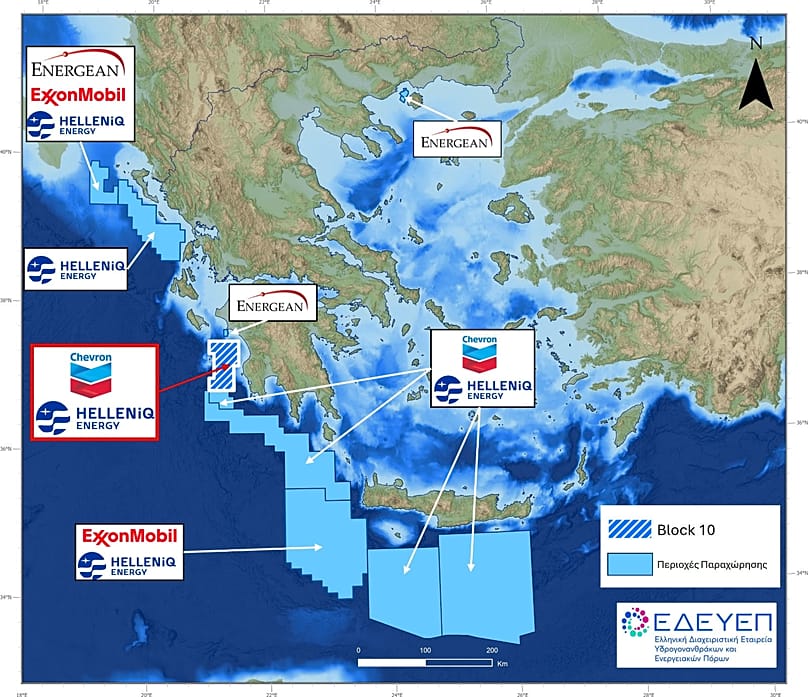
The US energy giant has applied to join the Block 10 concession, located off the Gulf of Kyparissia in the Southern Ionian Sea, in partnership with HelleniQ Energy. The companies have also requested the transfer of the operator role from HelleniQ Energy to Chevron.
The agreement would see Chevron acquire a 70% stake in the concession, with HelleniQ Energy retaining the remaining 30%, subject to regulatory approval. Chevron would also become the operator of the block.
The move comes as international energy companies continue to expand their presence in the Eastern Mediterranean. Chevron already operates the Aphrodite gas field offshore Cyprus and has broadened its exploration portfolio in Greece, reflecting the company's growing focus on the region.
The development further strengthens the presence of major US energy companies in Greece's offshore hydrocarbon sector at a time when the Eastern Mediterranean is attracting increasing interest as a potential source of energy supplies for Europe.
The growing interest of American companies in Greek exploration is linked both to estimates of substantial natural gas reserves and to the geopolitical stability that Greece projects as an EU and NATO member state in a strategically sensitive region.
Chevron and HelleniQ Energy have already signed lease agreements covering four additional offshore areas south of Crete and the Peloponnese, reinforcing Greece's role in the region's evolving energy dynamics.
According to Greece's Ministry of Environment and Energy, the first two exploration phases in Block 10 have already been completed, while a decision remains pending on the third and final phase, which involves exploratory drilling. An 18-month extension of the second phase is also under consideration to allow the consortium to complete its assessment of data gathered through 2D and 3D seismic surveys.
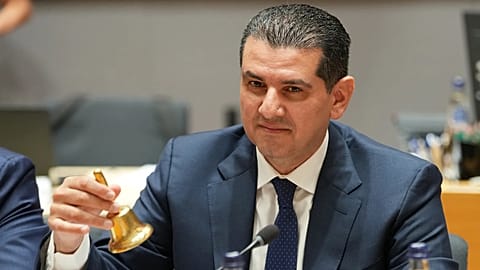
Environment and Energy Minister Stavros Papastavrou described the move as important for the development of Greece's hydrocarbons sector, saying Chevron's participation confirms "that Greece is now at the heart of major energy agreements and investments".
He added that "Greece is constantly strengthening its position on the energy map of the Eastern Mediterranean".
The move comes amid broader changes in Greece's offshore exploration sector. Recently, the ExxonMobil–HelleniQ Energy consortium decided not to proceed to the next exploration phase in the "West of Crete" block.
Chevron's interest in Block 10, however, suggests that international energy companies continue to see opportunities in selected Greek offshore areas, particularly those considered to carry lower geological risk.
Market players believe that international companies are reassessing the Greek offshore blocks as a whole, based both on the geological data and on the increased geopolitical interest in the Eastern Mediterranean region.