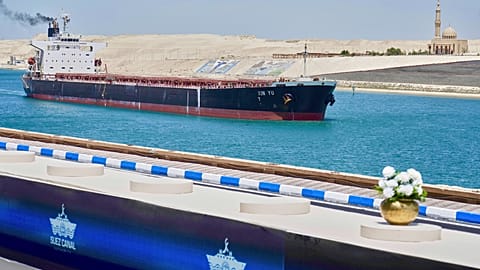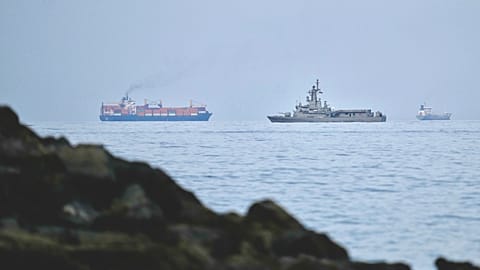






























An Egypt–Italy cargo corridor linking Europe and the Gulf is gaining traction as companies look for alternative trade routes amid disruption to key shipping lanes in the region.
A roll-on/roll-off (Ro-Ro) cargo link between Egypt and Italy is gaining traction as companies look to reroute trade flows amid disruption to key shipping channels in the region.
 ADVERTISEMENT
ADVERTISEMENT
ADVERTISEMENT
The service connects Egypt’s Damietta port on the Mediterranean with the Italian port of Trieste, with shipments then transported across Egypt to Safaga on the Red Sea before continuing by sea to Gulf markets including the United Arab Emirates, Kuwait, Oman and Qatar.
The corridor, which began operations in late 2024, is now drawing increased attention as instability around key maritime routes, including the Strait of Hormuz, has prompted companies to explore alternative logistics options.
The Strait of Hormuz handles around a fifth of global energy flows, making any disruption particularly significant for global trade.
From regional route to global trade workaround
The Ro-Ro model allows trucks carrying goods to move directly between sea and land transport without unloading, reducing transit times and simplifying cargo handling.
Recent shipments have already moved through the corridor, including trucks carrying food products and industrial goods, signalling that the service is scaling up.
The service also benefits from streamlined customs procedures, including exemptions for certain transit shipments and faster clearance supported by digital systems, helping to reduce delivery times and costs.
Egypt has positioned the initiative as part of a broader effort to strengthen its role as a regional logistics hub, leveraging its geographic position between Europe, the Middle East and Africa.
By linking Mediterranean and Red Sea ports, the corridor offers an alternative path for goods moving between Europe and the Gulf, particularly as traditional shipping routes face ongoing pressure.