
















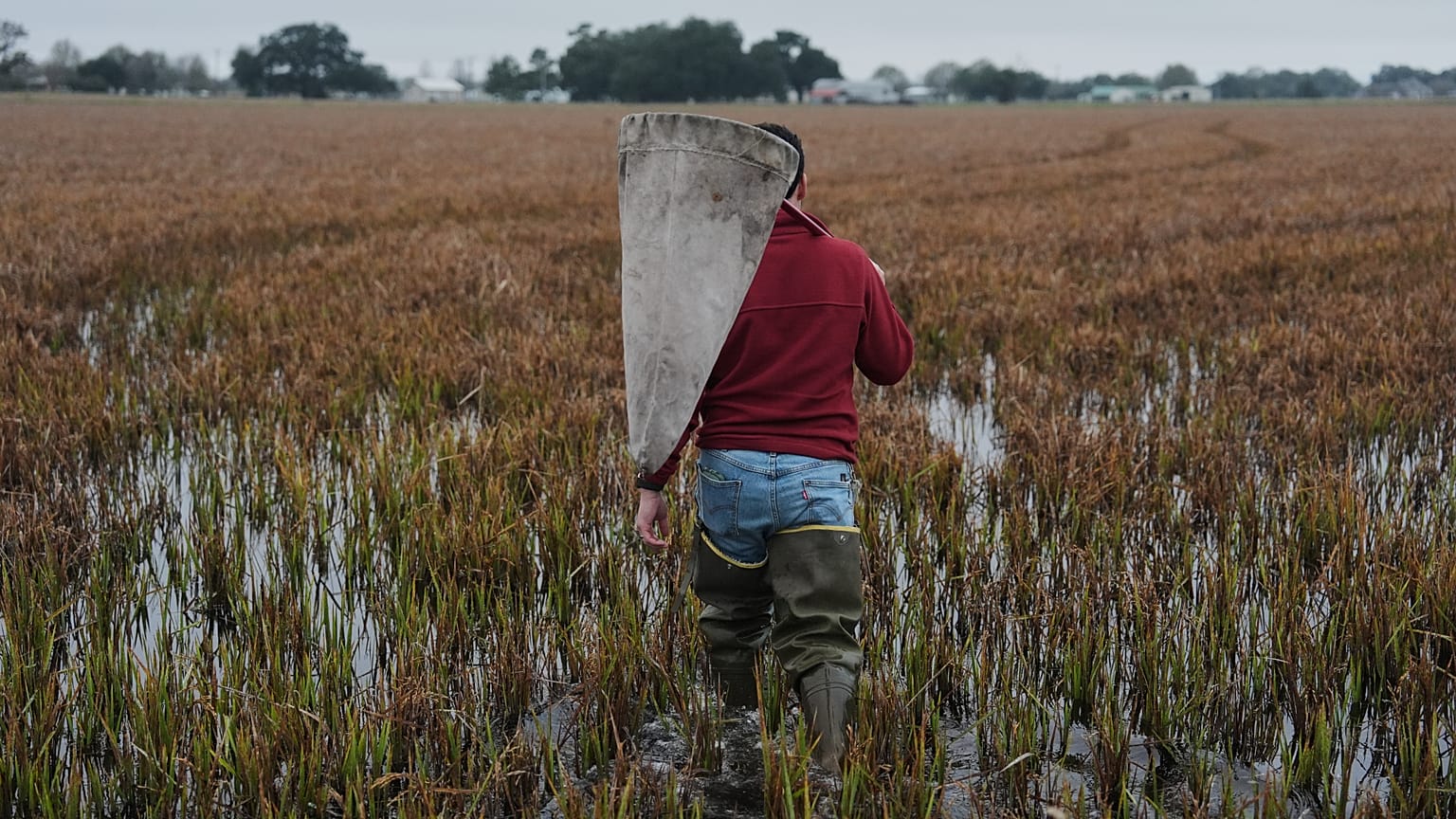













Rising geopolitical tensions are disrupting Central Asian agriculture, boosting global food prices, straining supply chains and pressuring exports. Experts stress regional cooperation, diversification, and innovation as key responses.
Rising geopolitical tensions in the Middle East, including the war in Iran, are beginning to reshape agriculture in Central Asia, affecting food prices, trade flows and export stability.
 ADVERTISEMENT
ADVERTISEMENT
ADVERTISEMENT
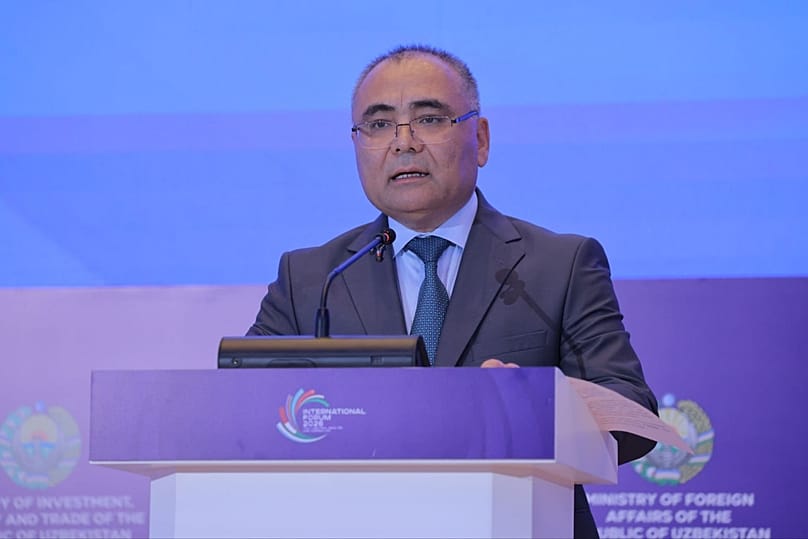
“The impact of conflicts in the region on agriculture is very significant,” said Ibrokhim Abdurakhmonov, the Agriculture Minister of Uzbekistan.
Disruptions to trade routes are already creating economic pressure across the sector.
“If our exports decrease, our income decreases, and the costs of storing products increase,” he said.
Disruptions to trade routes are already creating economic pressure across the sector.
“If our exports decrease, our income decreases, and the costs of storing products increase,” he said.
Governments are also looking inward to reduce vulnerability to external shocks.
“We need to organize our domestic market more effectively,” Abdurakhmonov added, noting that strong internal demand could help offset external disruptions.
Supply chains under strain
Industry representatives say the full impact of the conflict is still unfolding, but early signs of disruption are already visible.
“It has just begun, so we need to wait and understand the consequences in the coming weeks and months,” Matteo Zoppas, president of the Italian Trade Agency, told Euronews during the Italy–Central Asia (C5) + Azerbaijan business forum in Uzbekistan.
So far, the most immediate effects are being felt in logistics. Some shipments are being rerouted, while others are delayed as companies search for alternatives.
“There are some short-term delivery products with short shelf life that have already been impacted,” Zoppas said, referring to perishable items such as fresh fruits, vegetables and leafy greens.
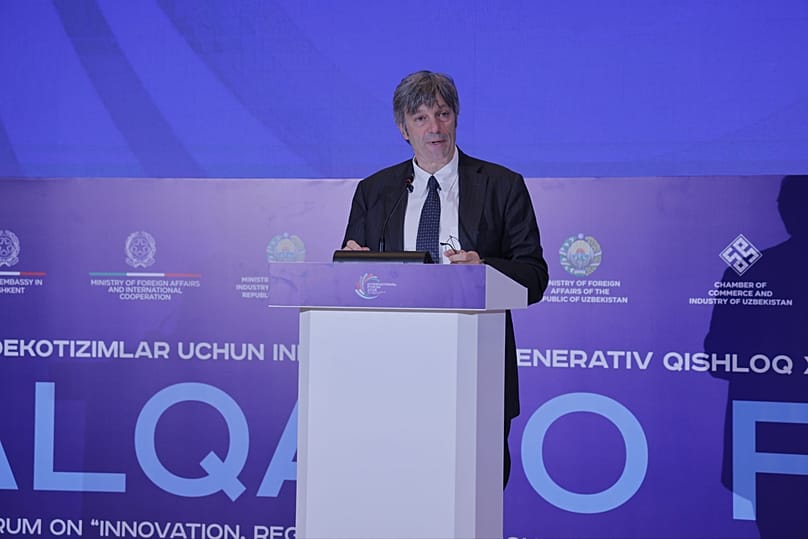
Zoppas described the situation as a temporary slowdown, but one with an uncertain horizon. "There is a window where logistics are searching for alternatives — it's a freezing moment right now," he said, adding that shipping costs and delivery times remain unpredictable.
Rising energy costs are expected to compound the pressure. "With lower supply and steady demand, the market usually raises prices, as we saw during COVID-19 and disruptions in the Suez Canal," he noted.
Searching for solutions
With no quick resolution in sight, both governments and businesses are looking to adapt. For Italian trade, that means pivoting east. "We need to compensate with projects in other regions like Central Asia, Azerbaijan," Zoppas said.
Uzbekistan is pursuing the same logic from the other direction.
Abdurakhmonov said Central Asian countries are working together to deepen regional trade ties and reduce their shared exposure to Middle East instability.
"There is strong demand and a large population in the region. If we organise the internal market properly, we can overcome these challenges," he said.
The region has room to grow.
Only around 10 million hectares of Central Asia's estimated 250 million hectares of agricultural land are currently irrigated and in use, according to Abdurakhmonov, who said international expertise — including from Italy — is being brought in to improve efficiency.
But the war has also exposed how interconnected the region's vulnerabilities are.
"If there is an environmental problem in one country, it affects its neighbours," Abdurakhmonov said.
"We share the same water resources, so challenges in one place impact everyone."