


























Oil prices dropped and stock markets started to climb after comments from US President Donald Trump raised hopes for a quick end to the Iran war.
Relief rippled through financial markets on Monday after US President Donald Trump announced the United States spoke to Iran about a possible end to the war and withdrew his 48-hour ultimatum.
 ADVERTISEMENT
ADVERTISEMENT
ADVERTISEMENT
Oil prices eased and stocks rallied on Wall Street following the statement. This comes after severe losses were marked in other markets in early trading and before Trump’s announcement.
Trump said that Washington would be postponing "any and all military strikes against Iranian power plants and energy infrastructure" for five days.
This comes after Trump warned over the weekend that the US would "obliterate" Iran's power plants if it does not fully open the Strait of Hormuz within two days, prompting Tehran to say it would respond to any such strike with attacks on energy and desalination assets in the region.
Iran's foreign ministry has since denied any dialogue with the US, according to state-affiliated media outlets.
Trump posted on social media on Monday that the US had "productive conversations" with Iran over the weekend, regarding a complete and total resolution of our hostilities in the Middle East".
The US president also hinted that the talks would continue throughout the week.
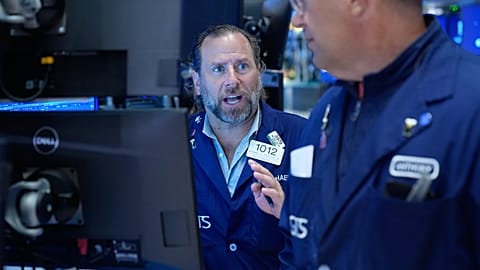
Leading stock indexes on Wall Street opened sharply higher, with the S&P 500 gaining nearly 2%, the Dow Jones Industrial Average edging up by more than 2.1% and the Nasdaq composite trading 2.2% higher at around 15:00 CET.
European stock indexes turned their early losses into strong gains, too.
The DAX in Frankfurt jumped by more than 2.4%, the FTSE in London rose by 0.7%, and the CAC 40 in Paris traded nearly 1.7% higher, while the stock indexes in Madrid and Milano were also up by more than 2% at the time of writing.
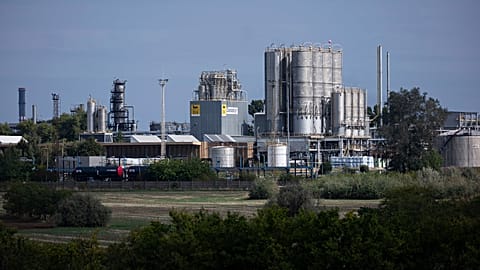
After Trump's comments, benchmark crude prices dropped. The US WTI traded below $89 a barrel, down from above $100 earlier in the same day.
Brent crude, the international standard, lost more than 10% and was trading just above $100 a barrel in the afternoon in Europe, down from highs of as much as $113 a barrel in the morning.
The price of Brent crude has yo-yoed lately from about $70 per barrel before the war began to up as much as $119.50.
Earlier on Monday, the International Energy Agency warned that the global economy faces a "major, major threat" because of the Iran war and that at least 40 energy assets across nine countries were damaged.
In Europe, the benchmark natural gas futures also fell after Trump's comments, trading below €55 per MWh from €60 at the European stock market open.
In Asia, stock markets closed with significant losses, impacted by the uncertainty around the Middle East crisis, with Japan's benchmark Nikkei 225 dropping 3.5%. In Taiwan, the Taiex shed 2.5%, South Korea's Kospi dropped 6.5%, Hong Kong's Hang Seng slipped 3.8%, and the Shanghai Composite declined 3.6%.
Financial markets have gone through vicious swings since the war began, largely due to uncertainty over how long it may last.
The fear is that the war could keep so much oil and natural gas from the Persian Gulf off global markets, sending a debilitating wave of inflation crashing through the global economy.
That in turn could keep the Federal Reserve and other central banks from resuming their cuts to interest rates.
Treasury yields also eased in the bond market following Trump’s announcement. But like oil prices, they nevertheless remain well above where they were before the war began.
The yield on the 10-year Treasury fell to 4.38% from 4.39% late Friday. But it remains solidly above its 3.97% level from just before the war.
In currency trading, the dollar lost against the euro after Trump's comments. One euro traded at $1.1625 in the afternoon in Europe, up by more than 0.4%.
The pound was up by nearly 0.9% against the greenback at $1.3457, while the yen also gained, trading ¥158.27 against the US dollar in the afternoon in Europe.
In other dealings, gold was trading at $4,489.60 after the news, nearly 1.9% down.