












Oil prices are climbing, albeit at a slower pace, as the US and Israel's war with Iran enters its fifth day, with little to ease concerns over the safety of the Strait of Hormuz — a vital artery for the global energy supply.
Global oil prices continue to rise, though at a slower pace than the sharp 5-8% increases seen in previous days, as markets brace for a potential energy shock stemming from the Middle East crisis.
 ADVERTISEMENT
ADVERTISEMENT
ADVERTISEMENT
WTI crude was traded slightly up by 0.2% at 1 pm CET on Wednesday and traded just below $75 a barrel, while Brent rose more than 1%, averaging out at more than $82 a barrel.
Natural gas prices put a break on their recent surge on Wednesday, following a New York Times report that Iranian operatives reached out to discuss terms for ending the conflict with the US and Israel.
Europe’s benchmark Dutch TTF futures dropped as much as 12% by 1 pm CET to below €48/MWh from as high as €56/MWh before.
The pullback follows an extraordinary bout of volatility that saw prices nearly double over 48 hours.
The spike was driven by concerns over liquefied natural gas supplies after production in Qatar was halted following reported attacks on energy facilities, raising fears of tighter global supply and renewed pressure on European markets.
Although prices have now edged lower, they remain significantly elevated compared with levels seen before the conflict broke out, underlining the market’s sensitivity to geopolitical disruption.
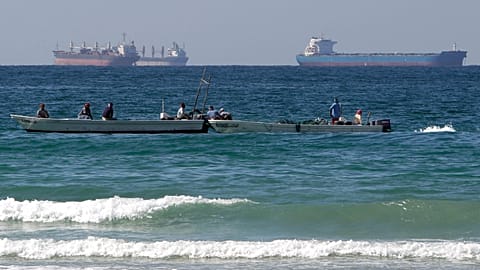
Following the launch of Operation Epic Fury — a coordinated US-Israeli campaign targeting Iranian leadership and nuclear infrastructure — the Strait of Hormuz, a strategic chokepoint through which roughly one-fifth of global oil and LNG shipments pass, has effectively become a no-go zone.
Iran controls the narrow channel linking the Persian Gulf to the Gulf of Oman, and transits through the waterway have fallen sharply since coordinated strikes began on Saturday, 28 February.
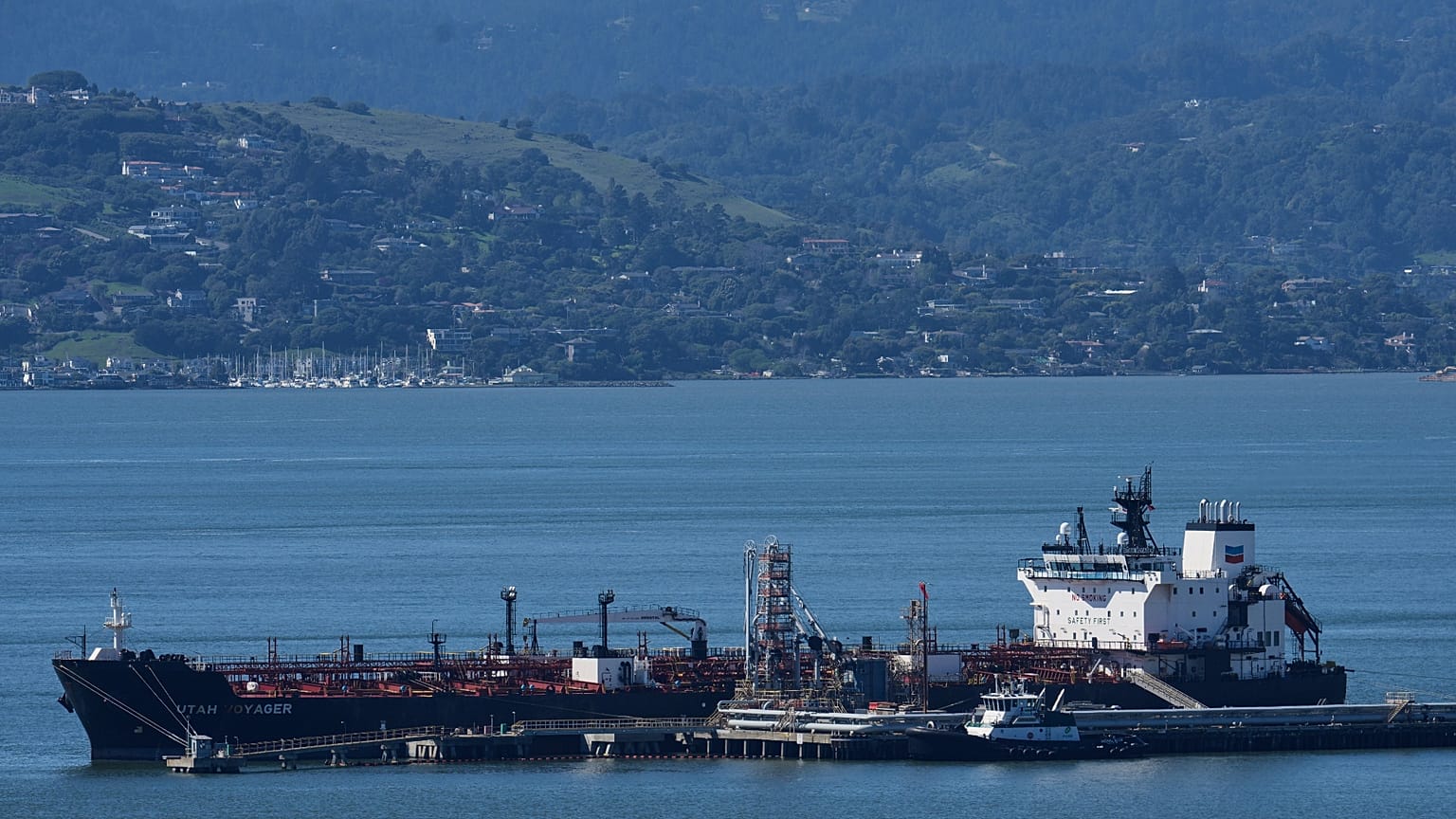
Several tankers have reportedly been hit by projectiles near the strait, further deterring shipowners from attempting passage.
Crude tanker transits through the Strait of Hormuz dropped to four vessels on Sunday, 1 March, compared with an average of 24 per day since January, according to energy markets intelligence company Vortexa. Three of the four were Iran-flagged.
Data from Lloyd’s List Intelligence suggest that around 200 internationally trading crude and product tankers are effectively stranded in the Gulf as the strait has become highly dangerous to navigate.
On Tuesday, President Donald Trump said he had ordered the US International Development Finance Corporation to provide political risk insurance and financial guarantees for maritime trade.
“If necessary, the United States Navy will begin escorting tankers through the Strait of Hormuz as soon as possible,” Trump said in a message posted by the White House on X.
However, steadily rising prices indicate that the president's promise has done little to assuage markets.
“Trump’s assurances that the US will underwrite shipping insurance against Middle East conflict risks, and even provide naval escorts, only mitigate — but do not eliminate — enduring upside risks to oil prices,” Mizuho Bank said in a note.
The bank added that higher insurance costs could add between $5 and $15 per barrel, meaning the “war premium” remains firmly intact.
Wider implications of the Middle East crisis
Fears that the conflict — which Trump has suggested could last a month or longer — may escalate have unsettled global markets, raising concerns that sustained energy price spikes could weigh on economic growth and corporate profits.
“I think the Iran situation is getting out of hand, and I think that US President Donald Trump miscalculated enormously,” said Francis Lun, chief executive of Venturesmart Asia.
“The situation is very grim.”
Meanwhile, on Wednesday, Goldman Sachs raised its oil-price forecast for the second quarter.
They expect the international benchmark Brent crude price to average $10 more than before at $76 per barrel in the second quarter of 2026. Their WTI forecast is increased by $9 to $71.
The bank based this projection on five more days of very low exports via the Strait of Hormuz, and then a gradual recovery over the following month. However, they warned that if there are five weeks of disruption from the Strait of Hormuz, the price could be as high as $100 for a barrel of oil.
Persistently higher oil prices are threatening the interest rate policy of the main central banks, including the Federal Reserve, as high energy prices fuel inflation, limiting the scope to cut interest rates in the coming months.