













Gas prices in Europe are rising as Middle East tensions disrupt global energy flows, fuelling fears of tighter LNG supplies. Analysts warn that if the conflict persists, higher wholesale costs could feed through to household bills and weigh on the wider economy.
Gas prices kept climbing at a blistering pace in Europe on Tuesday as US and Israeli strikes on Iran rattled global energy markets and revived fears of an extended shock.
 ADVERTISEMENT
ADVERTISEMENT
ADVERTISEMENT
“This has triggered immediate fears of reduced LNG availability to Europe, prompting a rush in spot markets and heightened risk premiums,” Yousef M. Alshammari, the president of the London College of Energy Economics, told Euronews Business.
Europe’s benchmark gas contract, the Dutch TTF, climbed to more than €60 per megawatt hour (MWh) at around 12:30 CET on Tuesday, a significant jump from the low €30s at the end of last week.
"This situation remains highly fluid, with markets pricing in significant uncertainty," Alshammari continued, highlighting that LNG flows from Qatar, shipping through the Strait of Hormuz and diplomatic efforts could significantly move prices.
Europe’s prospects
For Europe, the key question is how a renewed energy shock would hit an already-fragile recovery and supply system that is still more exposed to disruption than it was before 2022.
The continent has steadily emerged from the crisis triggered by Russia’s full-scale invasion of Ukraine, slashing its reliance on Russian pipeline gas and replacing it with seaborne LNG.
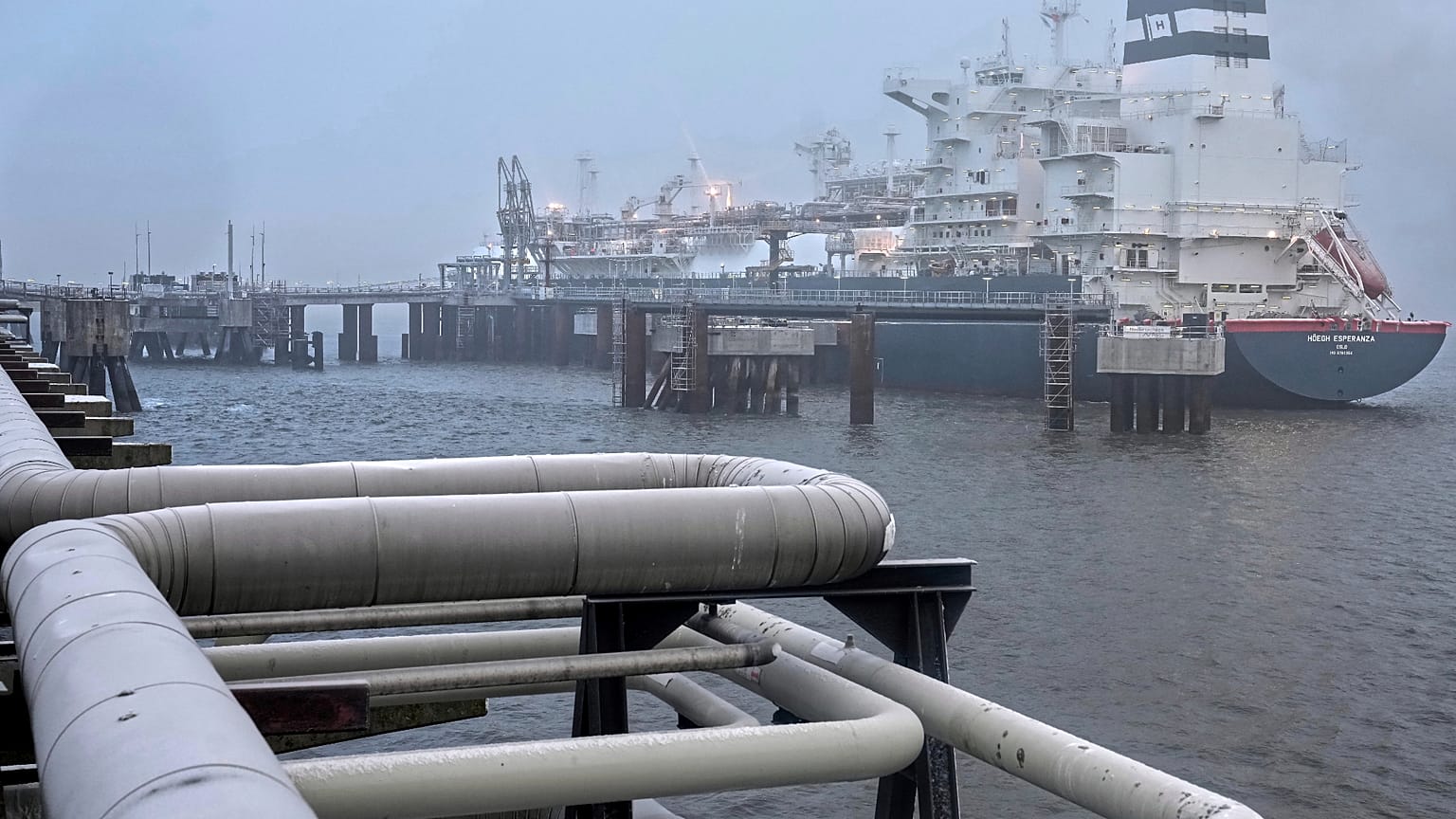
That shift has helped stabilise supply, but it also means Europe is more dependent on global shipping routes, spot cargoes and import terminals, all of which can tighten quickly when geopolitics flares.
Qatar is a key part of that mix, providing an estimated 12–14% of Europe’s LNG imports, leaving traders watching the Gulf and its chokepoints for any sign that flows could be squeezed.
“Europe is far less dependent on Gulf oil and LNG than China, India, Japan or South Korea, but it is not insulated,” according to a report from Bruegel, a Brussels-based think tank.
Any blockage of the Strait of Hormuz could trigger immediate price spikes in global oil and LNG markets, hitting Europe regardless of its relatively limited direct imports from the region, as the bloc competes with Asian buyers for flexible cargoes on the spot market.
The think tank warned that higher prices would come at a time when Europe began 2026 with lower gas storage levels than in recent years.
EU gas storage is around 30% full, below last year’s level. Germany’s inventories were about 21.6% in late February, while France is also sitting in the low-20s.
Alshammari said a significant rise in retail prices could not be ruled out, depending on the “duration and severity of any supply constraints”.
“If the current disruptions persist for weeks or months, we could see meaningful pass-through to retail energy bills,” he said.
However, many households and small businesses are on fixed or regulated tariffs that adjust with a lag, meaning any price shock would likely materialise over the coming months rather than immediately.
He warned that a sustained price above €50–60/MWh could lead to notable increases in electricity and heating bills, particularly if combined with a late cold spell or renewed pressure to refill storage ahead of next winter.
Who is most exposed?
A prolonged period of elevated prices would weigh heavily on energy-intensive industries such as chemicals, fertilisers, steel, glass and paper manufacturing.
Countries including Germany, Italy and the Netherlands could see competitiveness eroded further, potentially leading to production cuts or plant closures, Alshammari said.
Lower-income households, particularly in Central and Eastern Europe — including Poland, Czechia and Hungary — as well as southern countries such as Italy and Spain, could also be vulnerable due to a higher reliance on gas for heating and cooking and less energy-efficient housing stock.
Small and medium-sized enterprises across the continent may struggle, lacking the hedging capabilities and bargaining power of larger corporations.
Governments may once again need to consider targeted support measures to shield vulnerable consumers, Alshammari concluded.