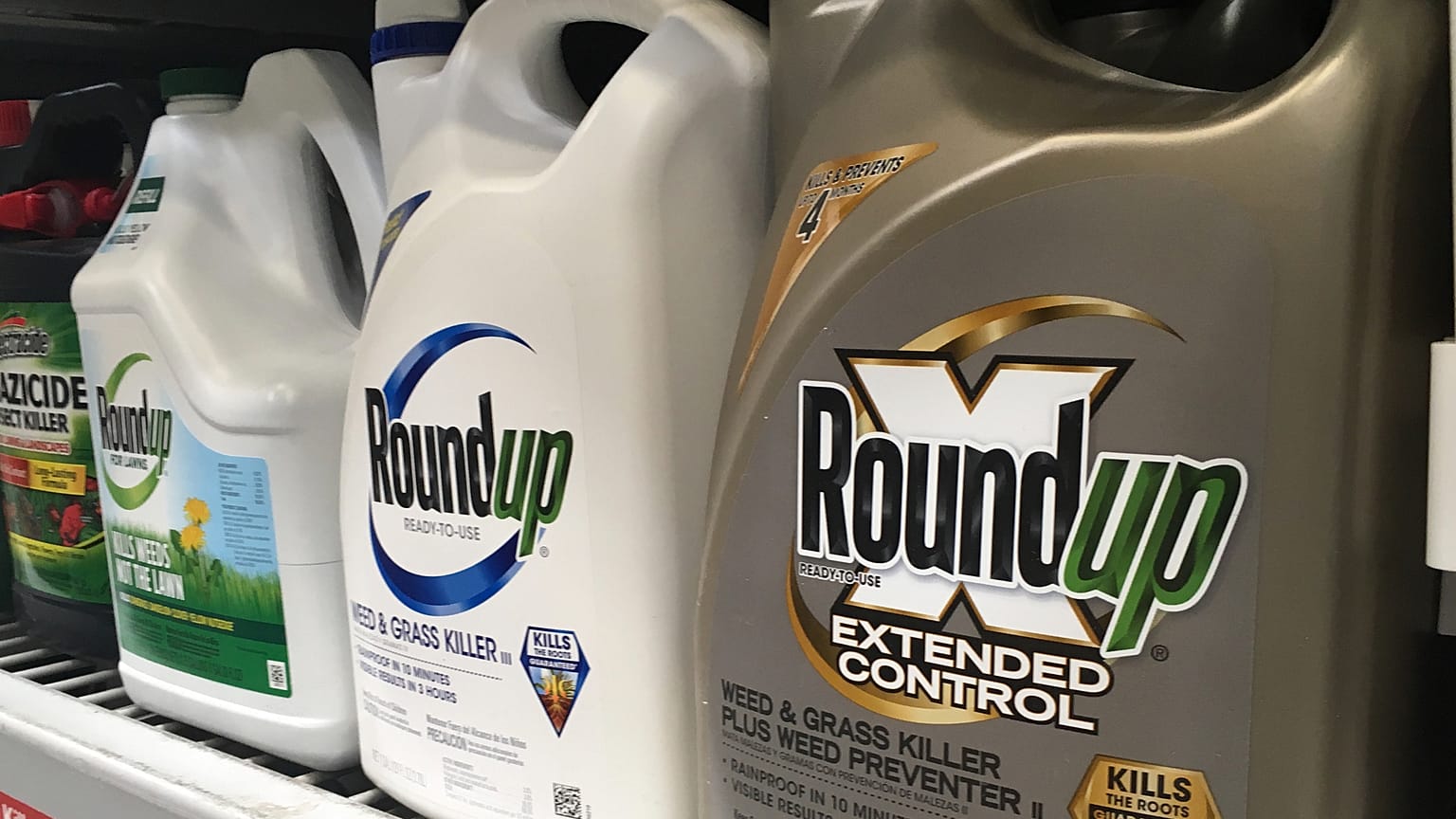













The biotech giant is facing over 67,000 US lawsuits over allegations that its Roundup weedkiller causes cancer — a claim Bayer denies.
Shares in Bayer rose over 9% during Tuesday morning trading in Frankfurt after a show of support from the US government.
 ADVERTISEMENT
ADVERTISEMENT
ADVERTISEMENT
Amid years of legal battles regarding product safety, the Trump administration urged the US Supreme Court to review a Bayer appeal concerning its Roundup weedkiller.
The German firm is currently trying to quash around 67,000 lawsuits in the US based on the claim that the weedkiller causes cancer — a claim Bayer denies. The product contains glyphosate, an ingredient deemed “probably carcinogenic to humans” by the International Agency for Research on Cancer.
US Solicitor General D. John Sauer, a government lawyer, said in a brief on Monday that the Supreme Court should agree to hear Bayer’s challenge to a $1.25 million (€1.09mn) jury verdict reached in Missouri.
The Missouri court decided in late 2023 that Bayer should award damages to claimant John Durnell, who argued that his diagnosis of non-Hodgkin's lymphoma was linked to Roundup exposure. Durnell’s lawyers claimed that the company failed to warn consumers about the product’s risks.
Bayer’s appeal is based on the argument that federal law should take precedence over state law in these cases. Sauer urged the Supreme Court to iron out this ambiguity, adding that upholding the Missouri verdict would undermine the authority of the federal US Environmental Protection Agency (EPA).
"EPA has repeatedly determined that glyphosate is not likely to be carcinogenic in humans, and the agency has repeatedly approved Roundup labels that did not contain cancer warnings," Sauer said in the brief.
The Supreme Court had sought Sauer’s advice on whether federal law should trump state law in June this year.
In a separate statement, Bayer’s CEO Bill Anderson said: “The support of the US government is an important step and good news for US farmers, who need regulatory clarity.”
He added: “The stakes could not be higher as the misapplication of federal law jeopardises the availability of innovative tools for farmers and investments in the broader US economy.”
The Supreme Court is likely to make a formal decision on whether to review the case by January.
Bayer acquired Roundup when it took over agrochemical firm Monsanto in 2018. In 2022, it started to replace the home-use version of Roundup with a non-glyphosate formula, although the company has still paid more than $10 billion (€8.62bn) to cover verdicts and settlements related to the product.
The brief from Sauer also comes against the backdrop of the "Make America Healthy Again" (MAHA) movement, led by US Health Secretary Robert F. Kennedy Jr.
The controversial strategy, which often flies in the face of scientific advice, is based on the premise that the US is gripped by a health epidemic — partially linked to the poor decisions of public-health institutions, corruption within the pharma industry, and over-medicalisation.
Although US President Donald Trump and Robert F. Kennedy Jr. pledged on the campaign trail to reduce the use of dangerous pesticides, the EPA is actually accelerating pesticide approvals, creating tensions within the MAHA camp.