













In the Maldives, farmers grow crops on nutrient-poor coral sand. Thousands of kilometres away, Uzbekistan monitors farmland from space. Despite their different environments, both countries are finding ways to tackle a major challenge: producing food with limited resources.
On a tropical island in the Indian Ocean, banana trees, papayas and chillies are thriving where farming seems almost impossible. The soil is little more than coral sand, freshwater is scarce, and most of the country's food arrives from overseas.
 ADVERTISEMENT
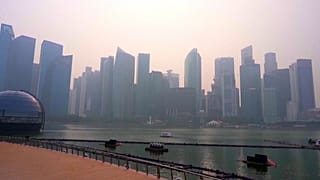
This is the Maldives, an archipelago famous for its white-sand beaches and luxury resorts. But beyond the postcard coastline lies a serious problem: how to feed a nation with almost no land fit for farming.
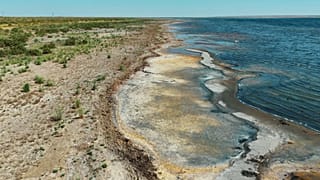
In landlocked Uzbekistan, the problem is reversed: there is land in abundance, but the water to farm it is running short.
Their solutions differ sharply, but both are tackling a question that reaches far beyond their borders: how to keep food on the table as environmental pressures intensify.
A farm in paradise
According to the United Nations, nearly 90% of the Maldives' food is imported, and just 27 square kilometres of land across the archipelago can be cultivated.
That leaves the island nation at the mercy of global supply chains and rising food prices.
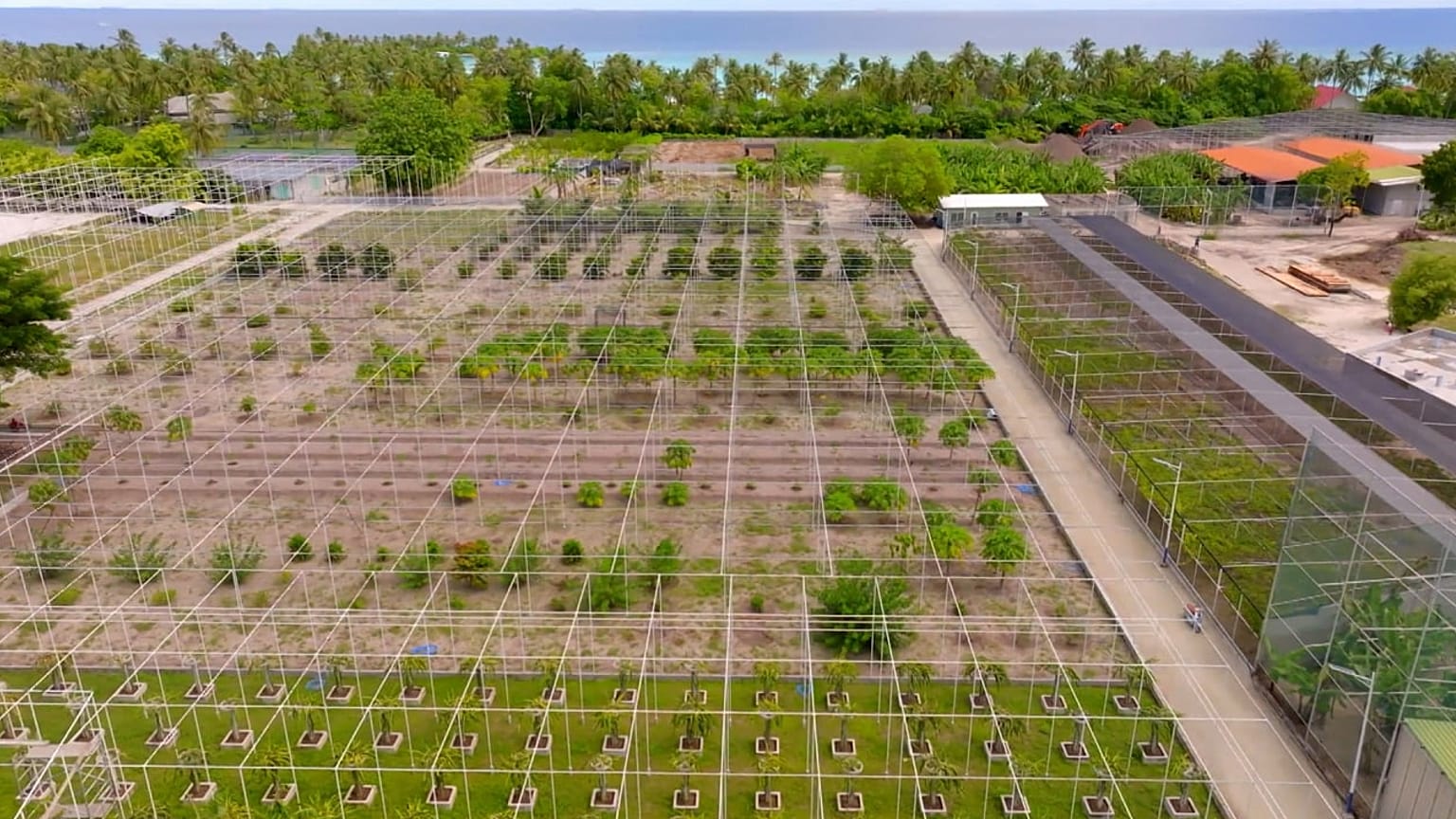
Coral sand is naturally alkaline, contains few nutrients and lets water drain straight through, making conventional farming a constant struggle. On South Ari Atoll, the Villa Park resort is proving it can still be done.
On three to four hectares, some of it once underwater, the resort has built a farm producing bananas, papayas, chillies, curry leaves and more. Some of the harvest even reaches local markets several times a week.
One of the secrets to turning barren sand into productive ground is surprisingly simple: compost.
"We grow the things in here with the sand, but we have enriched the sand with our own compost," says Raminda Premaratne, Director of Culinary at Villa Park.
For Premaratne, the benefits go beyond the farm itself. Fruit and vegetables imported into the Maldives often travel long distances, and not all of it survives the journey.
"When we import lots of fruits and vegetables from other countries, we get a lot of wastage and spoilage at the end," Premaratne says.
Growing on the island shrinks the journey from farm to plate to a short walk and cuts the resort's reliance on shipments.
The Villa Group, which owns the resort, is even experimenting with apples and oranges, pushing the limits of what the island can grow. For its chairman, Qasim Ibrahim, local food production is both an environmental ambition and a response to the vulnerabilities of island life.
Yet the project has limits. Villa Park is large by Maldivian standards, and on many resort islands there simply isn't enough space for agriculture on this scale.
Still, it shows that even the most unpromising land can help build a more resilient food supply.
Monitoring agriculture from space
Agriculture accounts for around 90% of Uzbekistan's water consumption. The World Bank projects that water availability could fall by 30 to 40% in some river basins by 2050, while irrigation demand in summer could rise by as much as 25%.
To keep a closer eye on its farmland, Uzbekistan's space agency, Uzcosmos, is turning to satellites.
Its satellites have surveyed more than four million hectares, allowing specialists to identify crops, follow their development and detect changes in individual fields without setting foot in them.
A second project follows the water itself.
"In this project, we digitise the entire irrigation network, from the main water sources down to smaller irrigation and drainage channels, and link them to the fields being irrigated," says Sharof Boltayev, Chief Specialist at Uzcosmos.
The agency is also estimating how much water each plot consumes. More than ten ground-monitoring devices in the Fergana and Samarkand regions verify the satellite estimates against readings taken on the ground.
The aim is to pinpoint where water is being wasted and give farmers a clearer picture of their land.
Farming without soil
Near Tashkent, scientists at the Research Institute of Vegetable, Melon Crops and Potato are testing hydroponics, a technique in which plants grow without any soil at all.
Instead, crops are held in a growing substrate, while water and dissolved nutrients are delivered directly to their roots through drip irrigation.
According to Fakhriddin Rasulov, the institute's Scientific Secretary, the main advantage is precision: growers can control exactly how much water and fertiliser their plants receive. The method can also be used on rocky terrain or other land unsuitable for conventional cultivation.
Researchers are testing locally developed strawberry and tomato varieties, with the aim of developing methods that could eventually be recommended to farmers. In separate experiments, the institute is studying how unheated greenhouses can deliver two or three harvests a year from the same plot.
Such systems still require investment, energy and specialist expertise. But where traditional farming is running up against its limits, they offer another way forward.
Different challenges, a shared future
Neither compost on coral sand nor satellites over Uzbek farmland is a universal solution. But together, they point to a broader shift: the future of food may depend less on growing more, and more on making the most of what each environment can offer.
Read more