































From desalination in the UAE to modernising irrigation systems in Uzbekistan, countries facing water pressure are finding ways to secure supplies and reduce losses.
Roughly half the world's population experiences severe water scarcity for at least part of the year, according to the UN's Intergovernmental Panel on Climate Change, a figure climate change, population growth and rising demand are expected to push higher.
 ADVERTISEMENT
ADVERTISEMENT
ADVERTISEMENT
The pressures vary by location. In the UAE, where rainfall is scarce and no permanent rivers exist, most drinking water comes via desalination of seawater. In Uzbekistan, agriculture depends on irrigation networks moving water across dry landscapes. Both countries are turning to technology and infrastructure to stretch limited supplies further.
Securing water in an arid climate
In the UAE, limited rainfall and the absence of permanent rivers have long shaped how communities obtain and use water.
Efforts to manage scarce resources predate modern desalination by centuries. Traditional falaj irrigation systems channelled water through settlements and agricultural areas allowing communities to sustain local economies.
Abdulla Balalaa, the UAE's Assistant Minister of Foreign Affairs for Energy and Sustainability, said such systems were engineered over 1,000 years ago.
Today, much of the country's drinking water comes from desalination. Balalaa said the UAE has achieved universal access to water and is also applying newer technologies, including artificial intelligence, to the sector.
As populations and cities grow, limiting water use and reusing existing supplies are becoming increasingly important.
Few places demonstrate that principle as clearly as the International Space Station.
Emirati astronaut Dr Sultan Al Neyadi spent six months aboard the station, where water is needed for drinking, hygiene, food preparation and oxygen production.
“Every drop on board the International Space Station is accounted for,” Al Neyadi said. “We recycle about 95% of our water.”
Water passes through several stages of filtration before being used again, providing an example of how a limited resource can be repeatedly recovered rather than discarded when there are no other options.
The UAE is also seeking to push water higher on the international agenda. It will co-host the 2026 UN Water Conference with Senegal in Abu Dhabi from 8 to 10 December. The event will bring together governments, international organisations, businesses and other stakeholders, with investment, technology and innovation among the areas under discussion.
Balalaa said solutions will vary by location. Technology and innovation can help bridge gaps, he said, alongside financing and cooperation needed to turn ideas into active projects.
In Uzbekistan, the pressures are different. Much of the country's agriculture relies on moving water over long distances, limiting losses along the way and ensuring it reaches farmland when it is needed.
Getting water to Uzbekistan's farms
Canals, reservoirs and pumping stations carry water across Uzbekistan's dry landscapes. In some areas, scarcity is therefore also a question of whether available water can reach agricultural land at the right time.
In the Fergana Valley, a World Bank-backed project launched in 2017 has modernised irrigation infrastructure.
At one site, water from local springs is collected and pumped around nine kilometres to areas where access has historically been difficult. The pumping station and pipeline are expected to improve irrigation for around 9,740 hectares of farmland.
More reliable irrigation has also allowed previously difficult-to-cultivate land to be farmed.
At one orchard in the valley, drip irrigation is used to deliver water to peach trees planted in 2024. The farm harvested around 200 tonnes of fruit the following year.
Moving water across the desert
Farther west, water from the Amu Darya is pumped across the desert through the Amu-Bukhara Machine Canal. The wider network irrigates more than 350,000 hectares across Bukhara and Navoi regions and supplies drinking water to Bukhara and Kogon.
The new Amu-Bukhara-1 pumping station replaced older infrastructure as part of a wider modernisation effort. Its digital control system tracks water and electricity use, and the new equipment has cut energy use by up to 15%.
Moving water over long distances is only one part of the process; preventing it from disappearing before reaching farms is another.
In parts of Bukhara, water losses through seepage previously reached around 37%, according to Sherzod Sharipov, a representative of the regional water delivery service. Canals are now being lined with concrete to reduce losses and provide steadier flows to farmers.
Farmer Hikmat Nazrullayev said large amounts of water once disappeared before reaching wheat and cotton fields. Since canals were lined, he said, irrigating crops has become easier.
Water beyond the fields
The irrigation network also connects agriculture with the wider environment.
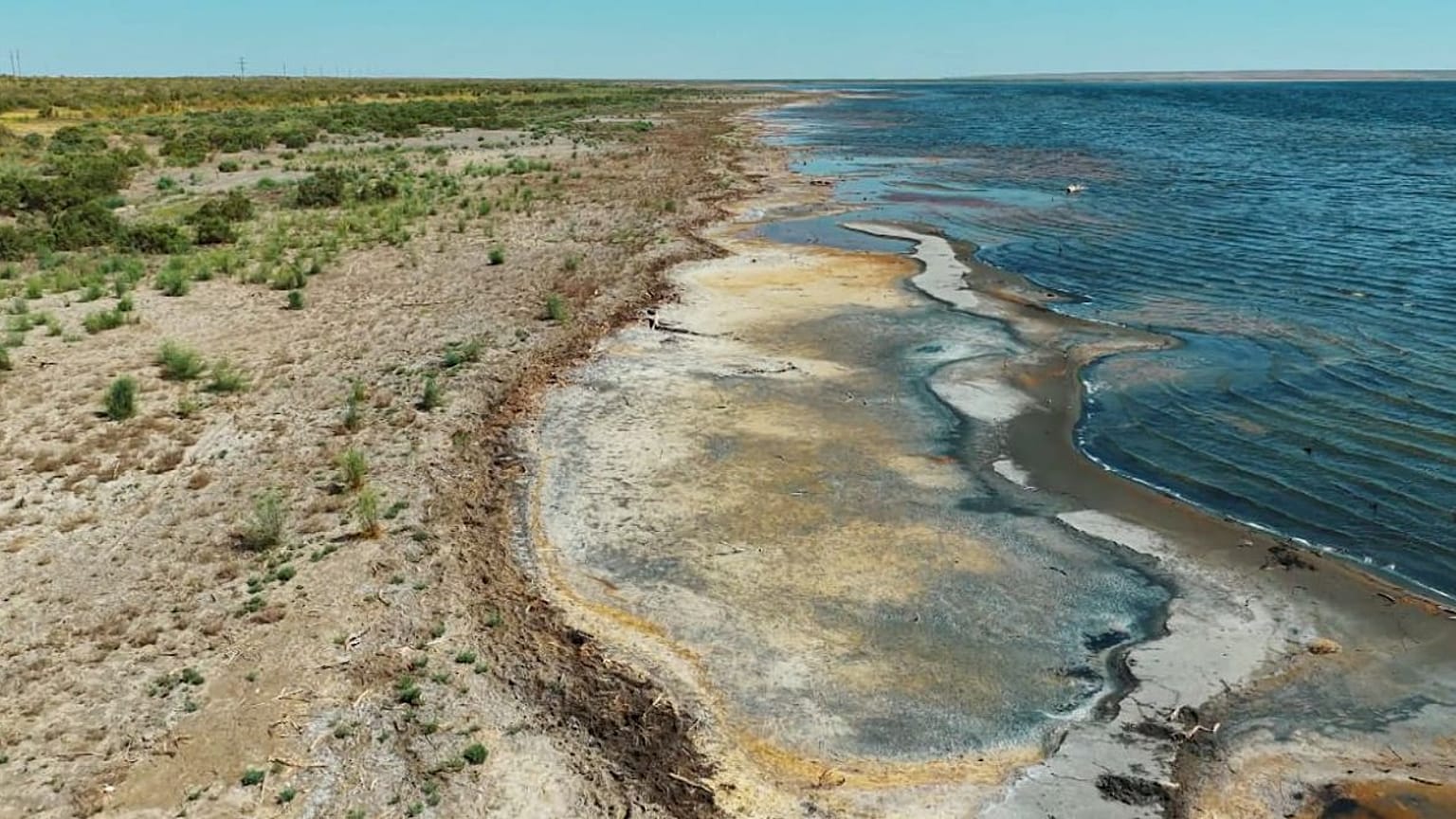
Drainage and return flows from farmland feed Dengizkul, a wetland of international importance in Bukhara region and an important resting and wintering site for migratory birds.
Professor of Water Engineering Malika Ikramova said the lake receives water from precipitation and groundwater as well as drainage returning from irrigation systems. Its water is highly mineralised, but supports fisheries and provides habitat for migratory birds.
As populations grow and climate conditions change, Ikramova said reducing losses, improving water accounting and expanding water-saving irrigation will remain important.
“We are going to have to adapt,” she said.
From desalination in the Gulf to irrigation canals in Central Asia, the methods differ considerably. But the underlying task is similar: reducing losses and making limited water supplies go further.
Read more