













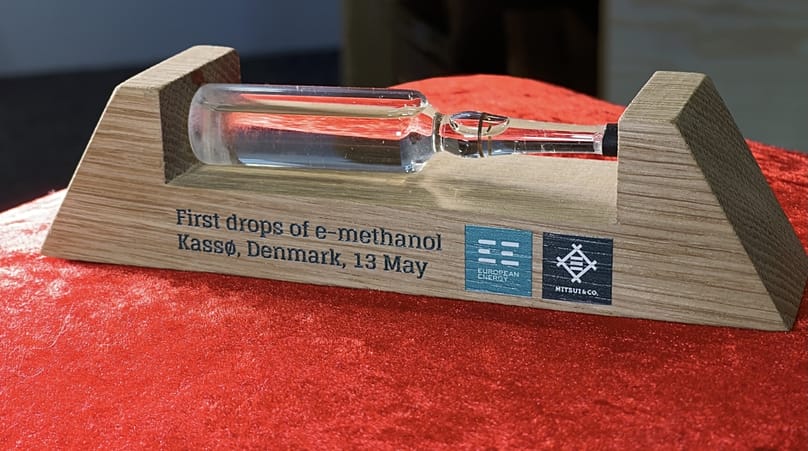
Euronews gained access to the world’s first industrial plant that produces e-methanol on a large scale. The Kassø site in Denmark paves the way for a climate-friendly energy transition — even within hard to abate sectors.
When it comes to decarbonisation, some industries, such as maritime shipping and plastic production, are faced with serious problems. e-methanol could solve some of them.
 ADVERTISEMENT
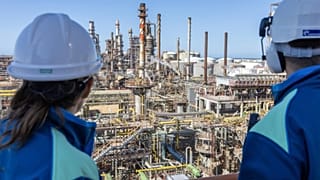
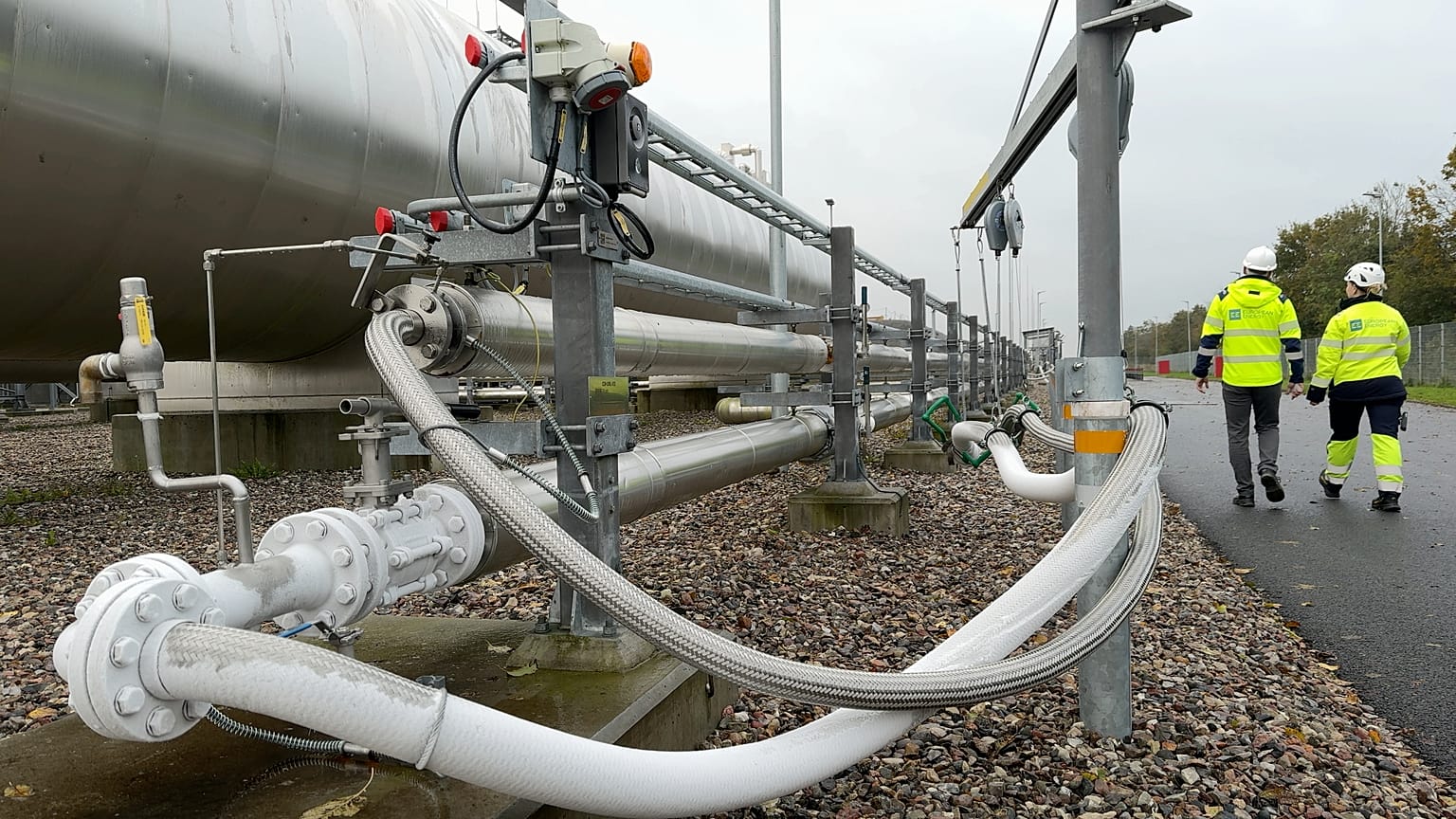
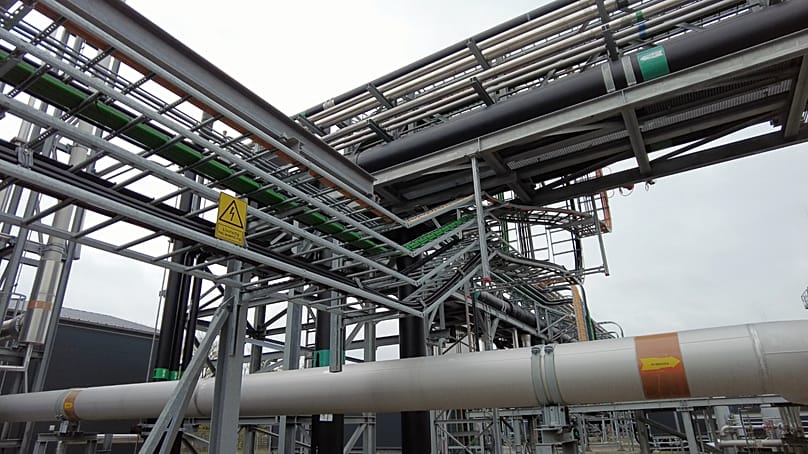
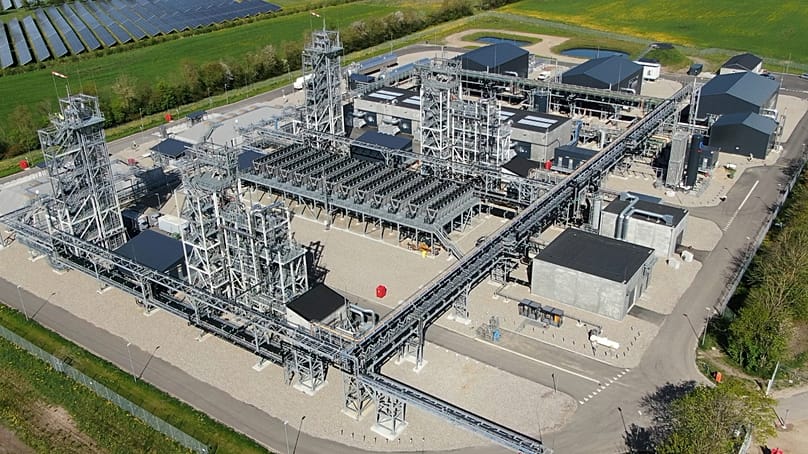
Biogas from slurry, sustainable electricity from solar panels, water from a well; these are the ingredients needed to synthesise e-methanol. These are all processed within an impressive industrial jungle, made from intermingled steel tubes, imposing distillation towers and curiously flat storage tanks.
The first of its kind
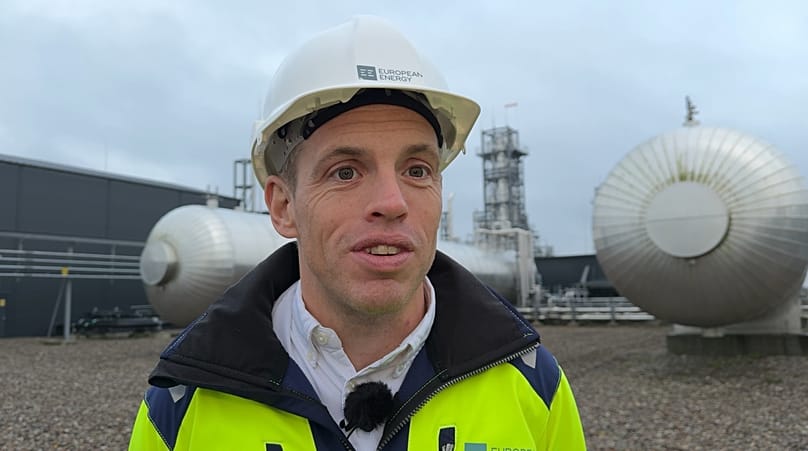
While adjusting my hard hat, a huge truck enters the site. “Every day we receive 5 trailers with biogenic CO2”, Lars Dyrholm explains. Lars is not just one of those hardy Danish “Ironmen”, capable of running for many kilometres without losing breath. He is also the CEO of the Kassø site, supervising the upscaling of production in this first of its kind industrial plant.
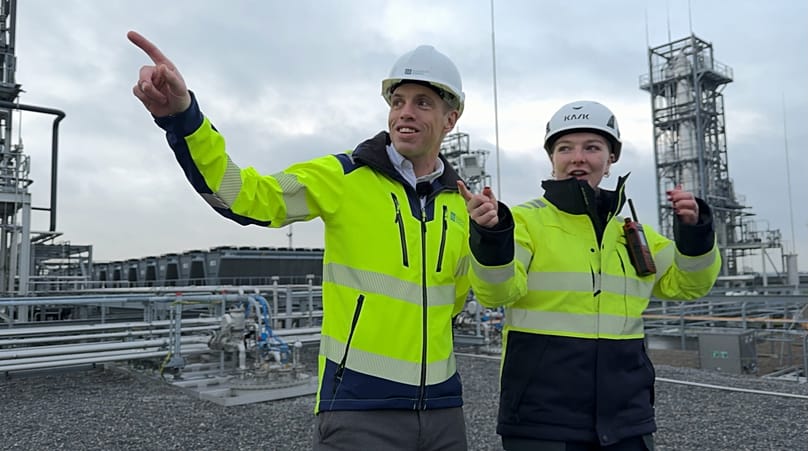
Mia Amalie Jochimsem, an on-site employee, joins us. “We have so much agriculture around here”, she says, adding: “We capture the CO₂ from the biogas plants.” Dyrholm and Jochimsem take me on a tour of discovery through the innovative jungle of steel and pipes.
A European flagship project
But let’s start from the very beginning: “In here we have the electrolysers”, Jochimsem explains. “This is where water is separated into hydrogen and oxygen.” Once biogenic CO₂ is added, e-methanol is created.
The plant is a European flagship project. European Energy — a world-leading company in sustainable energy generation — is proving that methanol can be produced on a large-scale industrial basis without using fossil fuels. This, in turn, can be used for making plastics or fueling vessels.
“We are replacing the fossil-based fuels with something that’s green and renewable”, Lars Dyrholm says.
There’s more in the pipeline
The Kassø plant is built to produce 42,000 tonnes of e-methanol per year. “Right now, we are producing around 100 tonnes per day”, the Kassø CEO says. “So, we have two trucks of e-methanol leaving the site every day now.”
European Energy has ambitious plans. If the Member States of the European Union agree on a stable regulatory framework, further e-methanol plants could be built. A first step is the implementation of the EU’s Renewable Energy Directive.
The journey towards full decarbonisation
“A portion of the fuel used in road transportation first will be replaced with something that is renewable”, Lars Dyrholm explains. “This is driving up demand and also prices, enabling us to make further investments in plants like this in the future. And this is the journey right now towards decarbonisation by 2050, to be 100% fossil-free.
“But we also need regulatory certainty, long-term, that Europe sticks to these commitments and ambitions so that we can continue to produce renewable energy fuels in this journey towards full decarbonisation.” The EUFuel Maritime Regulation helps in this regard.
Negotiations at the International Maritime Organisation (IMO), on the other hand, have been at a standstill since October 2025, after the Trump administration threatened to impose punitive tariffs on countries should they back the proposed Net-Zero Framework.
Huge ships and tiny hands
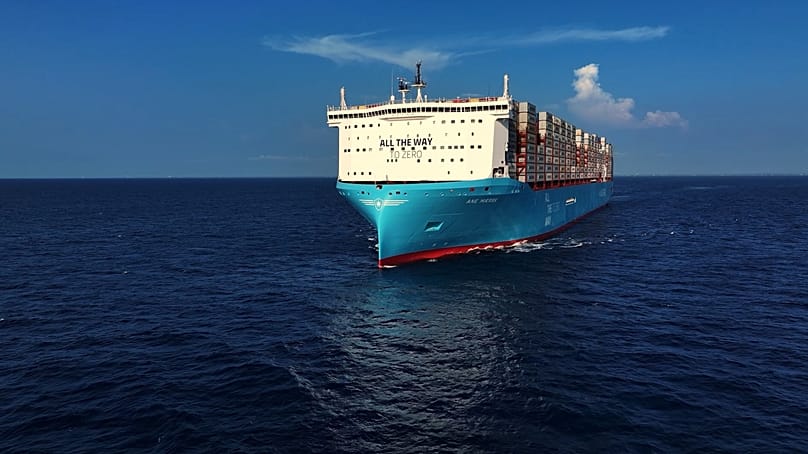
One of the biggest buyers of ‘green methanol’ is the Danish logistics group A.P. Moller-Maersk, which is converting parts of its fleet to sustainable fuels. But e-methanol can do more than just power ships across the world’s oceans.
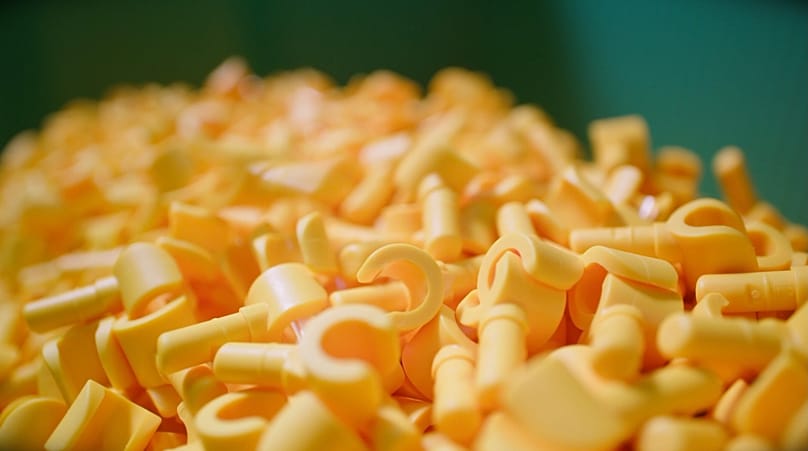
I drive over to Billund, the Danish HQ of LEGO, the global toy giant. e-methanol is a raw material used to produce ePOM, a climate-friendly plastic, and is already being used to manufacture LEGO figurine’s tiny hands, small wheels, and connector elements.
There is still a long way to go
At industry conferences, European Energy presents a LEGO model of its e-methanol plant. I meet Knud Erik Andersen in the Danish capital, Copenhagen. He co-founded the company in 2004.
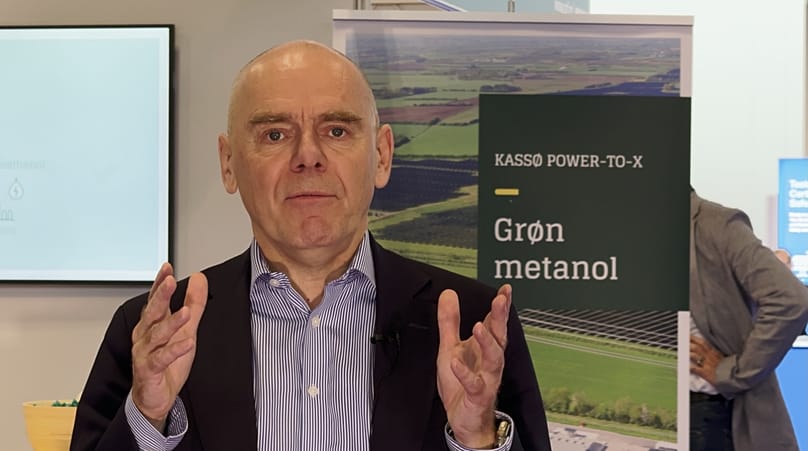
“Europe is a very strong continent”, he says. “But we still import around 60% of our energy. So, there is still a long way to go for replacing imports with home-grown energy from primarily renewable sources, so that we can be resilient and totally independent from foreign nations.”
Andersen has some strong ideas about how to create a flourishing market for green hydrogen and e-methanol: “The public sector in Europe could start to act as a customer by buying e-fuel for naval ships, for the defense industry.”
Half a million solar panels
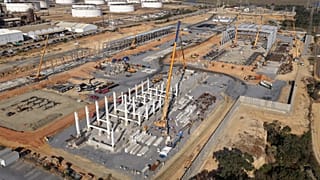
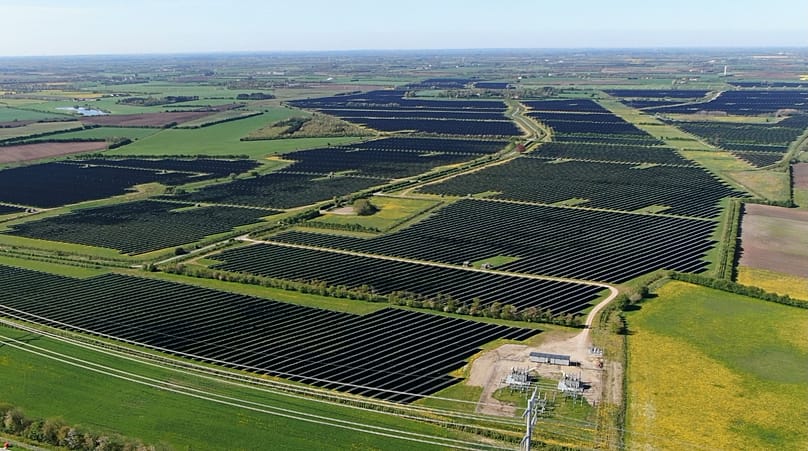
Electrolysis requires enormous amounts of electricity. That is why European Energy has built its e-methanol plant right next to a massive solar park. “This is one of the biggest solar parks in Northern Europe, with a capacity of 300 MW”, European Energy manager Kristian Tilsted says.
Half a million solar panels generate the ‘green electrons’ needed to produce e-methanol. Not all of them are used in the facility, the rest are fed into a high-voltage grid.
Kristian Tilsted: “Our national grid is a kind of energy highway connected to the rest of Europe. Those green electrons can be used all over Europe in households or for industries. We are aiming at 100% green transition both here in Denmark, but also all over the world. And to be able to deliver on that, we need to build out the infrastructure — both locally but also in Europe.”