














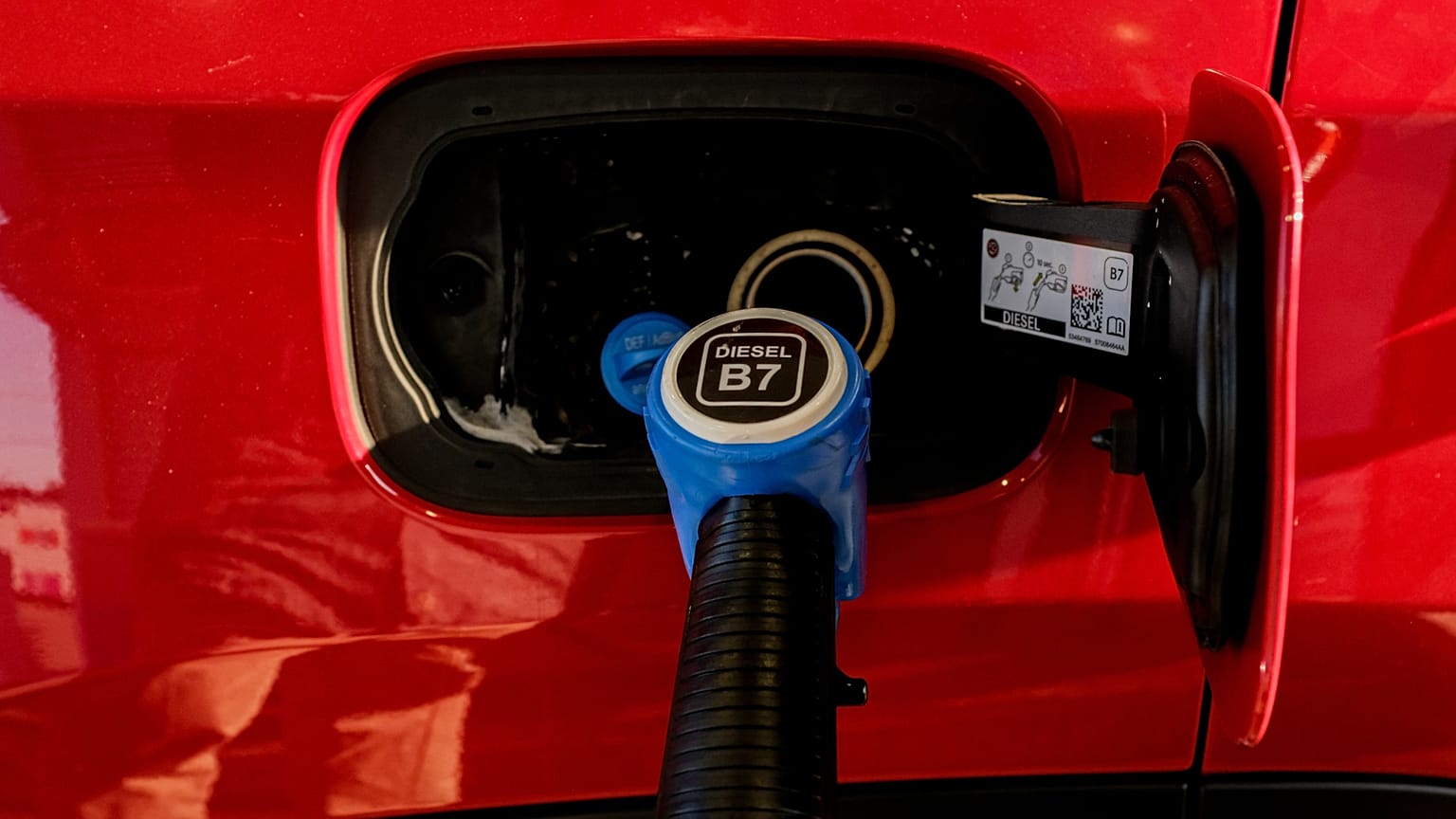













The Meloni government has neither renewed the fuel excise discount nor launched the mooted tax rebate scheme. Brussels awaits the 15-16 October European Council, while EU capitals move ahead in a haphazard fashion.
On the morning of Wednesday 7 October, Italian motorists were met with an unpleasant surprise. The cut in fuel excise duty that in previous months had partly limited the rise in diesel prices was not renewed (source in Italian), resulting in immediate price increases at the pump.
 ADVERTISEMENT
ADVERTISEMENT
ADVERTISEMENT
Eni price cap effectively stripped of its impact
By the time it expired at midnight, the measure was worth only 6.1 cents per litre, having fallen over time from the initial discount. In its place, the Meloni government had floated the possibility of introducing a system of tax rebates that would be financed without weighing on the public finances. This was meant to take the form of a new decree involving the ministries of the Economy and Energy Security. For the moment, however, no new measure has been approved.
The oil company Eni itself, 33% owned by the Ministry of Economy and Finance and by Cassa Depositi e Prestiti, has said that the failure to renew the excise discount in practice cancels out the temporary price cap on fuel that the company announced in recent days.
Von der Leyen floats joint purchases and flexibility on climate rules
In recent days the G7 has decided to release 100 million barrels of crude oil from national reserves, with the aim of increasing supply on the market and, all else being equal, trying to counter the rise in the price of the raw material. At the same time, European Commission president Ursula von der Leyen has suggested joint purchases, again with the aim of responding to sectoral inflation.
The head of the EU executive in Brussels also wants to give exporters an extra year of flexibility on rules requiring suppliers to declare the greenhouse gas emissions linked to their production. This obligation could therefore be pushed back to 2028.
Meloni presses for ETS extensions and asks Europe for "concrete guidance"
In any case, attention now turns to the European Council meeting (source in Italian) scheduled for 15 and 16 October. Giorgia Meloni for her part has already called on Europe to provide "clear and concrete political guidance, in particular to reduce the cost of energy and protect the competitiveness of industry". In a statement (source in Italian), she added that she had "referred back to the joint contribution drawn up with Czech prime minister Andrej Babiš with proposals to ease the costs linked to the ETS system, support the most exposed industrial sectors, limit the impact of the cost of CO2 on the price of electricity and postpone further the entry into force of ETS2".
This is the Emissions Trading System, the mechanism under which, on the one hand, a price is set for each tonne of CO2 equivalent, which companies can buy or sell according to their needs; and on the other a cap on total emissions is imposed on a range of sectors, in order to ensure an overall reduction.
Another measure on the table is a possible ad hoc tax on the extra profits of oil and gas companies. The idea is also backed by Economy Minister Giancarlo Giorgetti and is viewed favourably by other European governments. While awaiting details of the measures that will actually be adopted at EU level, European governments are nonetheless moving ahead in an uncoordinated fashion.
France, support for those driving long distances. In Germany a 17-cent cut per litre
In France, a support scheme (source in Italian) for those who have to travel long distances for work has recently been extended and broadened. In particular, 100 euros will be paid to each of the 5.5 million French beneficiaries of the measure, plus a discount on the price at the pump. In addition, up to 1,000 euros, company aid granted to employees who need to use a private vehicle to get to work will be tax-free.
A rule has also been introduced that prevents the state from "profiting" from fuel price increases: any surplus tax revenue (VAT and excise duty) will be used to fund support schemes in the face of the crisis. Overall, these measures are expected to cost 450 million euros to the French public purse.
In Germany, from 1 October the Merz government introduced a temporary cut in excise duty (source in Italian) on fuel of 17 cents per litre, both on diesel and petrol. The reduction will remain in force until the end of the year.
Spain, 20-cent discount extended but reduced until December
The Spanish government has also announced support measures for households and businesses, extending until 31 December and adapting decisions first adopted in March. In particular, the Madrid government has said it will maintain the 20-cent-per-litre discount (source in Italian) on fuel during October. The aid will then fall to 13 cents in November and to 6 cents in December.
This is an urgent necessity for the now caretaker government of Pedro Sánchez, which is contending with inflation that has reached 4.9% year-on-year, according to figures published at the end of September by the National Statistics Institute. For Madrid, the overall cost of the package in force since March has been around 5 billion euros, from which 20 million households and three million businesses have benefited.
In Belgium, record high of €2.501 per litre for diesel
In Belgium there has been, since the 1974 oil crisis, a mechanism allowing price caps (source in Italian) to be imposed on hydrocarbons. Fuel stations cannot therefore exceed a ceiling set on the basis of a contract between the state and the industry association representing producers and distributors. The system does, however, provide for exemptions, and it is also for this reason that prices nevertheless reached a historic high at the end of September, with a cap set at €2.501 per litre for diesel.
In the United Kingdom, the price at the pump has likewise reached an all-time high, at 199.52 pence per litre (2.35 euros), surpassing the previous record set in 2022. Faced with this situation, a 5-pence-per-litre cut in fuel duty (source in Italian) was introduced some time ago and will remain in place until 31 December.