















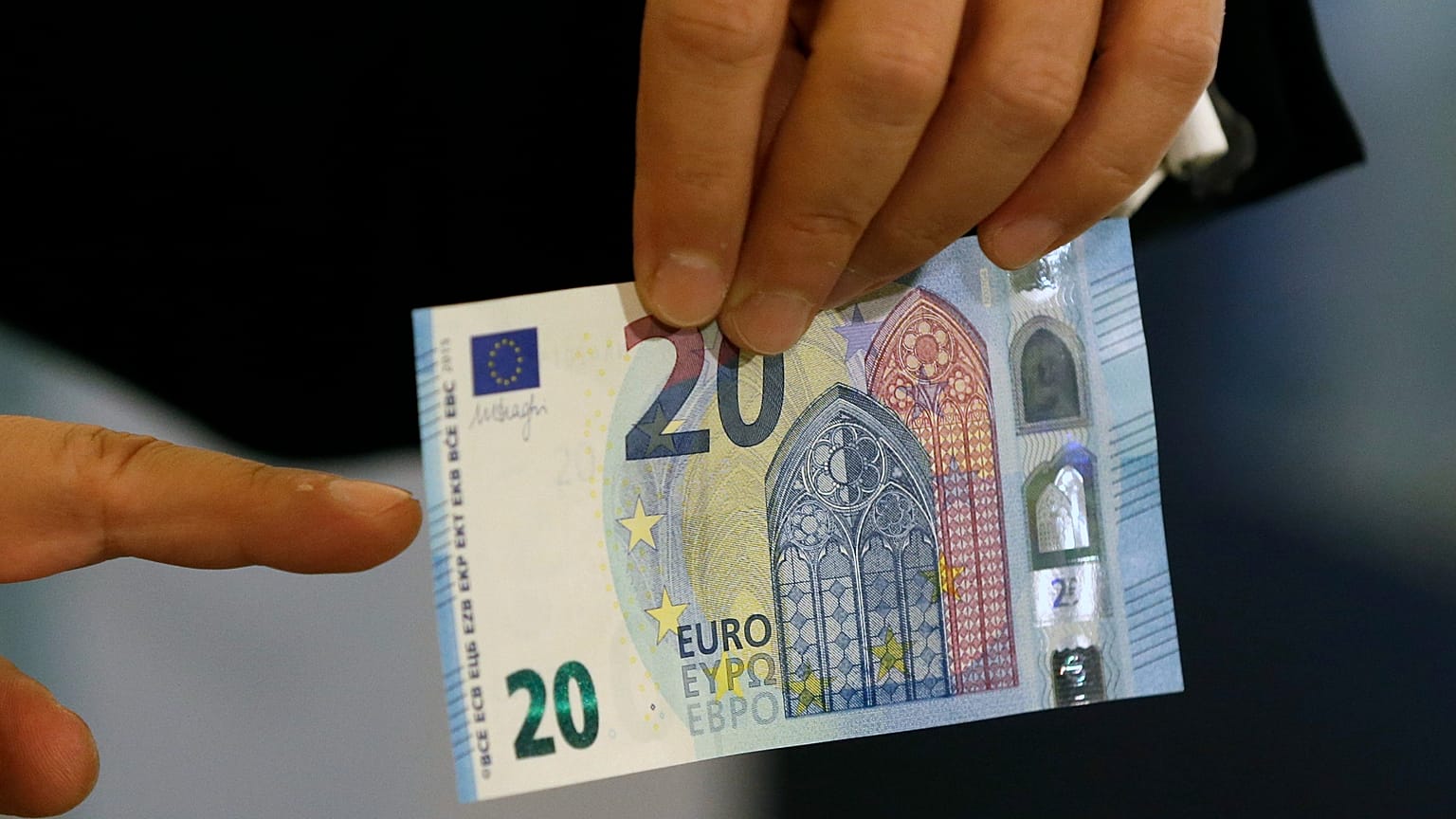













The euro hit a 17-month low as French debt fears and Europe's energy shock weigh on the currency. Bond market stress could limit further ECB rate hikes, while analysts see scope for the euro to fall to $1.10 if the pressure intensifies.
At the start of this year, the euro was one of the most popular trades in global markets. Investors expected the European Central Bank to keep raising interest rates while the dollar lost its shine, and in late January the single currency climbed above $1.20.
 ADVERTISEMENT
ADVERTISEMENT
ADVERTISEMENT
Nine months later, that confidence has drained away.
The single currency recorded four straight weekly losses and earlier this week fell to as low as $1.116, its weakest level against the dollar since May 2025.
Behind the fall are two crises arriving at the same time: an energy shock Europe cannot control and a French budget nobody seems able to pass.
Together they have changed how investors see the euro, and they are now betting against it on a scale never seen before.
So why is the euro falling, and how much further could it go?
A gas bill that keeps rising
The first problem is energy, and it starts at the Strait of Hormuz.
Shipments of liquefied natural gas through the strait have been largely blocked since the war with Iran began in late February.
Europe imports most of the gas it burns, so it has had to compete for the remaining cargoes.
The benchmark Dutch TTF gas price was around €73 per megawatt-hour this week. That is roughly 120% higher than a year ago.
Storage gives little comfort.
European gas reserves were 71.5% full on 2 October, against 82.6% a year earlier, with winter only weeks away.
Brent crude, the global oil benchmark, traded near $100 a barrel on Tuesday. Since the start of the year, it has risen by more than 60%
Higher energy prices are now feeding into consumer prices.
Eurozone inflation jumped to 3.8% in September from 3.2% in August, its highest level since September 2023, according to Eurostat. Energy prices alone rose 18.8% from a year earlier.
When higher inflation stops helping a currency
In normal times, that would have helped the euro.
Higher inflation pushes a central bank to raise interest rates, and higher rates attract investors looking for a better return on their cash.
This time the logic broke.
At the end of September, markets priced in roughly three and a half more ECB rate rises. They now price in about two and a half.
Last week, ECB President Christine Lagarde poured cold water on those bets.
She indicated that rising borrowing costs were already slowing the economy, and that there was still no sign of energy prices feeding into wages.
She called for a measured ECB response.
Enrique Díaz-Alvarez, chief economist at Ebury, said the September inflation surprise "did nothing to help the common currency," especially after Lagarde's remarks, "which have made clear that the bar for an October rate increase from the Governing Council is now very high indeed."
That left the euro with the cost of high inflation, but without the reward of higher interest rates.
For European households and businesses, the consequences extend beyond currency trading. A weaker euro increases the cost of dollar-priced imports, potentially amplifying the energy shock already squeezing purchasing power.
How France's budget reaches the currency
The second blow came from Paris.
Investors now want much more to lend to France than to Germany.
Last Friday, the gap between the two countries' 10-year borrowing costs closed above 1.4 percentage points, the widest since the eurozone debt crisis of 2011-2012.
Prime Minister Sébastien Lecornu's 2027 budget, which includes €43 billion in savings, still lacks majority support in parliament.
Banque de France governor Emmanuel Moulin warned on Tuesday that the country risks being “strangled by interest rates” unless it addresses its public finances.
Francesco Pesole, FX strategist at ING, describes two ways in which this hurts the euro.
The first is direct.
When a large eurozone country looks riskier, investors ask for a little extra return to hold anything priced in euros, and some simply choose to hold less of it.
"With fiscal uncertainty elevated, political rhetoric becoming more challenging, and policy scenarios that would normally sit at the margins now being discussed more openly, the market has more room to demand a higher yield," said Ken Egan, KBRA’s head of European sovereign credit.
The second is indirect.
The more stress there is in government bond markets, the less likely the ECB is to keep raising interest rates and add to that stress.
Ana Munera, director of global markets strategy at BBVA, described the ECB's choice as a "clear dichotomy" between tightening policy further after the inflation surprise and the need to pause to calm risks on the eurozone's periphery.
"An ECB pause would weigh on the EUR from a rates-spread perspective, although the stabilisation of debt markets would return flows into the currency," she said.
Spain added a second layer of political risk this week, when Prime Minister Pedro Sánchez called a snap general election for 29 November.
A record bet against the euro
The clearest sign of how far sentiment has turned comes from US futures data.
Every week, the US Commodity Futures Trading Commission (CFTC) publishes how investors are positioned on the euro. A short position is a bet that the currency will fall.
In the week to 29 September, speculative traders held 301,439 short contracts on the euro, the highest number on record in CFTC data.
Each contract is worth €125,000, so the bets add up to about €38 billion.
Their net position, bets on a fall minus bets on a rise, was 63,256 contracts short. That's the weakest positioning since April 2025.
How low could it go?
Banks are divided between those who see more pain ahead and those who think the selling has gone too far.
ING's Pesole sees room for further losses if the French bond market deteriorates again.
"The fiscal risk premium is still relatively limited, leaving scope for EUR/USD to test 1.110 or even 1.100 if bond market stress intensifies," he said.
Danske Bank expects the decline to last.
"EUR/USD hit our 12M target of 1.12 ahead of schedule, but we think the downward trend will persist towards 2027," the bank said.
It argues that Europe's struggle with high energy prices leaves the ECB caught between protecting public finances and fighting inflation.
BBVA's Munera is less pessimistic in the short term.
"The EUR punishment has been too severe, in our view, and levels are starting to look stretched," she said. Even so, she expects the euro to trade well below its recent highs, because investors' view of the currency "has clearly worsened."
Heavy short positioning can also fuel a rebound. Better news may prompt traders betting against the euro to buy it back, accelerating any recovery.
A credible French budget agreement, calmer bond markets or falling energy prices could therefore interrupt the slide.
A lasting recovery would require more than short sellers taking profits: investors would need to see Europe’s fiscal and economic outlook improve.