












'We're constantly surrounded by people and we sleep very little, five hours a night at most.'
The adrenaline and excitement are building behind the scenes at the UN climate talks in Türkiye, negotiators say, as envoys from nearly 200 nations clash over every word and comma ahead of hoped-for agreements on Friday (20 November).
 ADVERTISEMENT
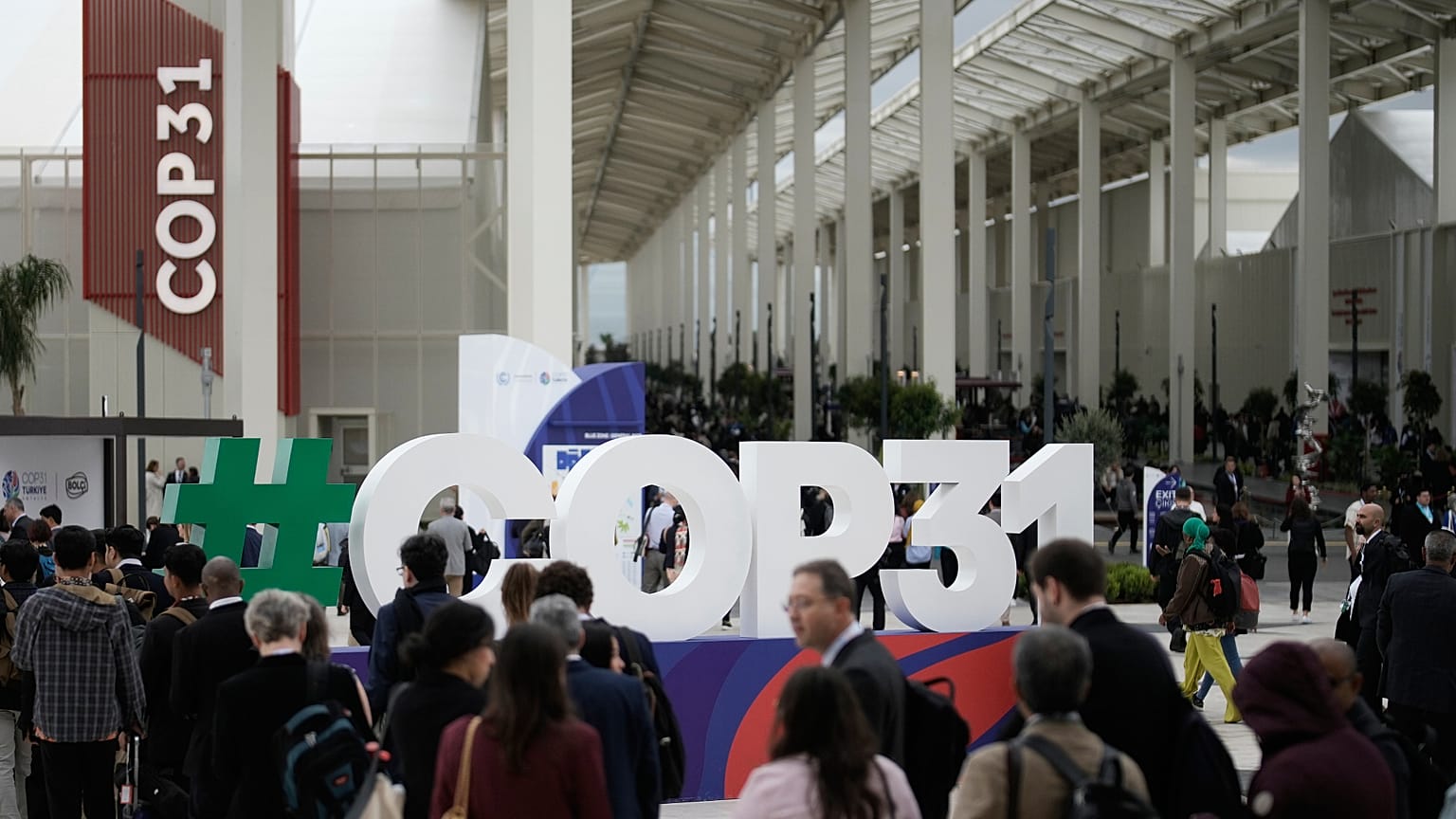
Alliances are being built, AI is being wielded as negotiators from around the world navigate a melting pot of languages, and sneakers are the preferred footwear at the vast COP31 conference venue in Antalya, Türkiye.
"There's a crazy rush of adrenaline because we're in a real bubble of excitement. We're constantly surrounded by people and we sleep very little, five hours a night at most," Belgian negotiator Catherine Windey told news agency AFP.
"At the last two COPs, I ended up getting sick due to fatigue and the air conditioning in the negotiating rooms."
The annual talks aim to bring together countries to review, develop and implement major climate change agreements.
On Monday (16 November), co-host Australia unveiled the first draft of a broad political deal setting out sharply divergent positions on climate policy while calling for a faster phase-out of fossil fuels.
The sweeping 18-page proposal underscores the gulf that nearly 200 nations must bridge to reach consensus on Friday.
And the pace only intensifies as things progress – especially for smaller and poorer countries who are often those most impacted by climate change, and who are faced with the daunting task of rising above the clamour.
"It's exhausting, but we are here to ensure Africa's voice is heard," says Hamda Amin, a representative from Djibouti.
'Genuine emotional bonds are formed' at COP
As ever, alliances are key – and artificial intelligence is proving a crucial tool.
English is the language of COP, and negotiators who speak other languages are harnessing online translators.
The German development agency GIZ developed an AI-based tool called 'NegotiateCOP' to sift through voluminous documents, summarise them, and pinpoint potential allies who share their positions.
Personal ties matter enormously. Negotiators often come from their countries' climate ministries and are deeply committed to the cause.
"Genuine emotional bonds are formed," says Laurence Tubiana, one of the architects of the 2015 Paris COP.
'Geopolitics plays a huge role in the negotiations'
That year saw participating nations adopt the Paris Agreement to keep global warming "well below" 2°C above pre-industrial levels, while pursuing efforts to limit it to 1.5°C to avert the worst impacts of global warming.
Expectations for this COP are more limited, with oil-producing nations such as Saudi Arabia opposing a phase-out of fossil fuels.
"Geopolitics plays a huge role in the negotiations. The atmosphere can be a bit disheartening, but there are pockets of hope," says the Belgian negotiator Windey.
She specialises in the process of supporting populations as they face the financial challenges of the ecological transition.
It is a specific field, and one in which the negotiators all know one another, she says – allowing for progress that may not be reflected in the final, official declarations, Windey argues.
"We can speak frankly during informal talks," she says.