



























Good morning, I’m Mared Gwyn. Welcome to your Thursday newsletter. Today: NATO Secretary-General Mark Rutte tells Euronews that Russia should stop issuing nuclear threats, and the UK Prime Minister puts EU membership back on the table.
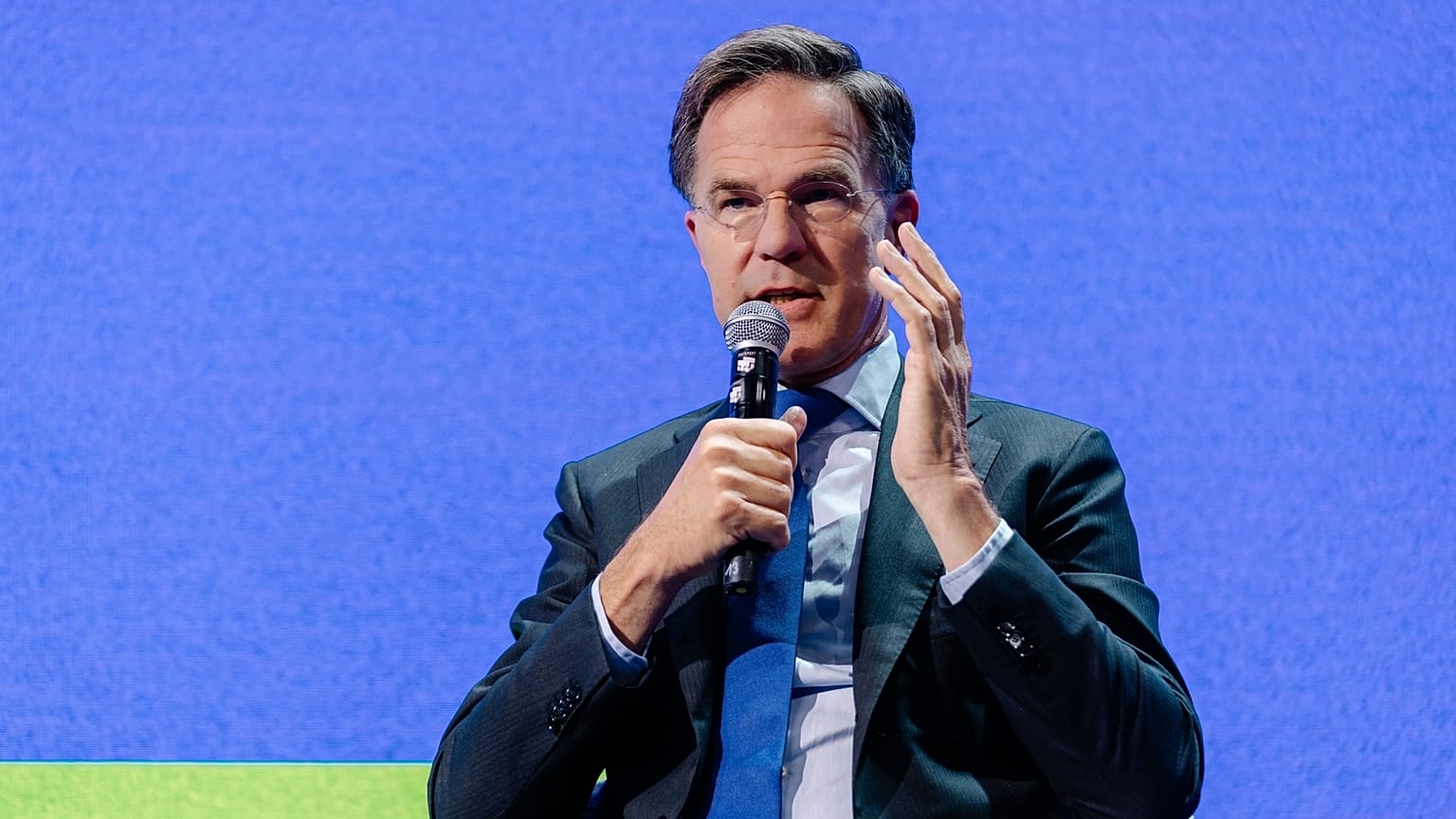
Nuclear tensions: In an interview with Euronews, NATO Secretary-General Mark Rutte has told Russia to stop issuing nuclear threats, after Moscow sent a letter to the alliance saying it is prepared to deploy its nuclear arsenal if its territory – including the enclave of Kaliningrad – comes under attack.
 ADVERTISEMENT
ADVERTISEMENT
ADVERTISEMENT
‘Stop’: "We are a defensive alliance. Stop the nuclear threats. This is absolutely not called for and not helpful," Rutte exclusively told the Euronews Defence and Space Summit on Wednesday, at a moment of heightened tension between Russia and the West.
Rutte, however, dismissed the immediate threat to the alliance’s members, saying "we will defend every inch of NATO territory”.
“That threat is not there, and if anything happens, we are ready to counter it,” he explained.
Reuters first reported that Russia had warned NATO in a document that it could resort to nuclear weapons if the alliance attempted to annex the Russian enclave of Kaliningrad, while also threatening strikes on “decision-making centres” in NATO member states from the outset of a conflict.
‘Worst-case scenario’: Earlier on Wednesday, Bulgarian Prime Minister Rumen Radev – also speaking at Euronews’ summit – called for European dialogue with Russia to avert a nuclear attack. While rejecting the Kremlin’s escalatory rhetoric, Radev reminded his European counterparts of the “nuclear card”, noting Russia would be prone to play it if weakened or cornered.
"We cannot close our eyes (to the fact) that there are nuclear weapons on our continent, there are nuclear weapons in the arsenal of Russia. And this is part of the game calculation,” Radev said.
Making Putin feel that ‘war is coming’: The European Commissioner for Defence, Andrius Kubilius, rejectedRadev’s call for diplomatic engagement, warning it could embolden President Putin and undermine Ukraine.
"Russians are standing with their position very clear: Ukraine needs to surrender - that is their diplomacy position," Kubilius told Euronews, adding that Putin needs to “feel that war is coming to Russia itself”.
‘Made in Europe’ under fire: A push from Brussels to prioritise domestic European companies in defence contracts was also front and centre of the debate on Wednesday. NATO chief Rutte described the debate as a “luxury”, warning that the initiative ignores a basic problem: Europe's defence industry cannot produce enough.
Earlier on Wednesday, the US Ambassador to the EU, Andrew Puzder, slammed the EU’s “Buy European” weapons push as “self-interest”, saying it could disrupt the transatlantic defence industrial base and benefit Europe’s "enemies".
"One attack by a powerful adversary on a member state, and we’ll all be glad that we focused on weapon superiority rather than regional economics," Puzder told the summit audience.
My colleagues and I have more takeaways from the summit for you inthis debrief.
Migration talks: Home Affairs Ministers are meeting in Luxembourg with migration top of the agenda. Ministers are expected to discuss proposed measures to tackle irregular arrivals under the European Emergency Response Framework, expected to be unveiled by the Commission next month.
EU sources tell my colleague Vincenzo Genovese that the proposal is expected to include a temporary suspension of asylum rights.
Italy extends border controls: The meeting comes as tensions between Italy and Spain escalate again, after Rome extended aerial and maritime border checks with Spain by another 15 days in response to the situation in the enclave of Ceuta, where 80,000 migrants entered in an unprecedented mass entry in July.
Meanwhile, a delegation of MEPs visited the Spanish exclave on Wednesday, denouncing the attacks and smear campaigns directed against activists and organisations working on the ground by far-right groups.
French and Spanish leaders welcome Andy Burnham’s suggestion UK could go ‘all the way’ and rejoin the EU
French President Emmanuel Macron and Spanish Prime Minister Pedro Sánchez have welcomed Prime Minister Andy Burnham’s suggestion that the UK could look to rejoin the EU, with Macron saying “welcome back” when asked about the prospect during a press conference in Madrid.
“If the British want to come back and if the Prime Minister is moving in that direction, I think that is very good news, both for his country and for the Europeans,” Macron said, speaking alongside Spain’s Pedro Sánchez, who also said the UK would be welcome back in the bloc.
UK Prime Minister Andy Burnham on Wednesday floated going “all the way” and rejoining the EU, as he vowed to scope out options for future EU-UK ties.
“We could stay as we are. We could look at what George Osborne has said about a customs union, we could look at what the Liberal Democrats said about the (EU) single market, or we could go all the way," Burnham said.
The UK leader also said that the EU-UK summit postponed in July amid Starmer’s resignation would be held in November.
Burnham has so far been perceived as much less focused on international and EU affairs than his predecessor Keir Starmer, leaving EU officials second-guessing his intentions for resetting relations with the bloc. But his statements now offer the clearest indication yet that his government is prepared to consider a much more ambitious overhaul of post-Brexit ties with Brussels. More.
More from our newsrooms
Methane is responsible for 30% of global warming – so why is the EU trying to delay rules to cut it? The EU has proposed to delay new rules to cut planet-warming emissions from methane, saying a delay would “relax” pressure on energy markets and therefore cut oil and gas prices. But will the new regulation really push up oil and gas prices, and how harmful are methane emissions? Ruth Wright explains.
Hundreds held, dozens wounded as protests over conditions in French schools escalate. French security forces detained more than 600 people while dozens of police and gendarmes were wounded as protests that have seen blockades of high schools and violent clashes escalated, the interior minister said on Wednesday. Christina Molle and Gavin Blackburn havethe details.
Israel says pilot tried to crash Tel Aviv-bound plane during cockpit fight, before safe emergency landing. Flydubai flight FZ1073 to Israel made an emergency landing in Saudi Arabia as passengers describe harrowing scenes of a fight between the pilots, with one of them stabbed. Israeli Prime Minister Benjamin Netanyahu said a pilot "attempted to crash the plane," as Israeli security services investigate.More.
We're also keeping an eye on
- European Commission President Ursula von der Leyen continues her Western Balkan tour in Kosovo and Montenegro.
- European Commissioner for the Economy Valdis Dombrovskis visits Chișinău, Moldova, and delivers a keynote speech at the National Bank of Moldova’s annual conference.
- EU home affairs ministers gather in Luxembourg.
- EU health ministers gather for an informal meeting in Dublin, Ireland.
That’s it for today. Vincenzo Genovese contributed to this newsletter.