

















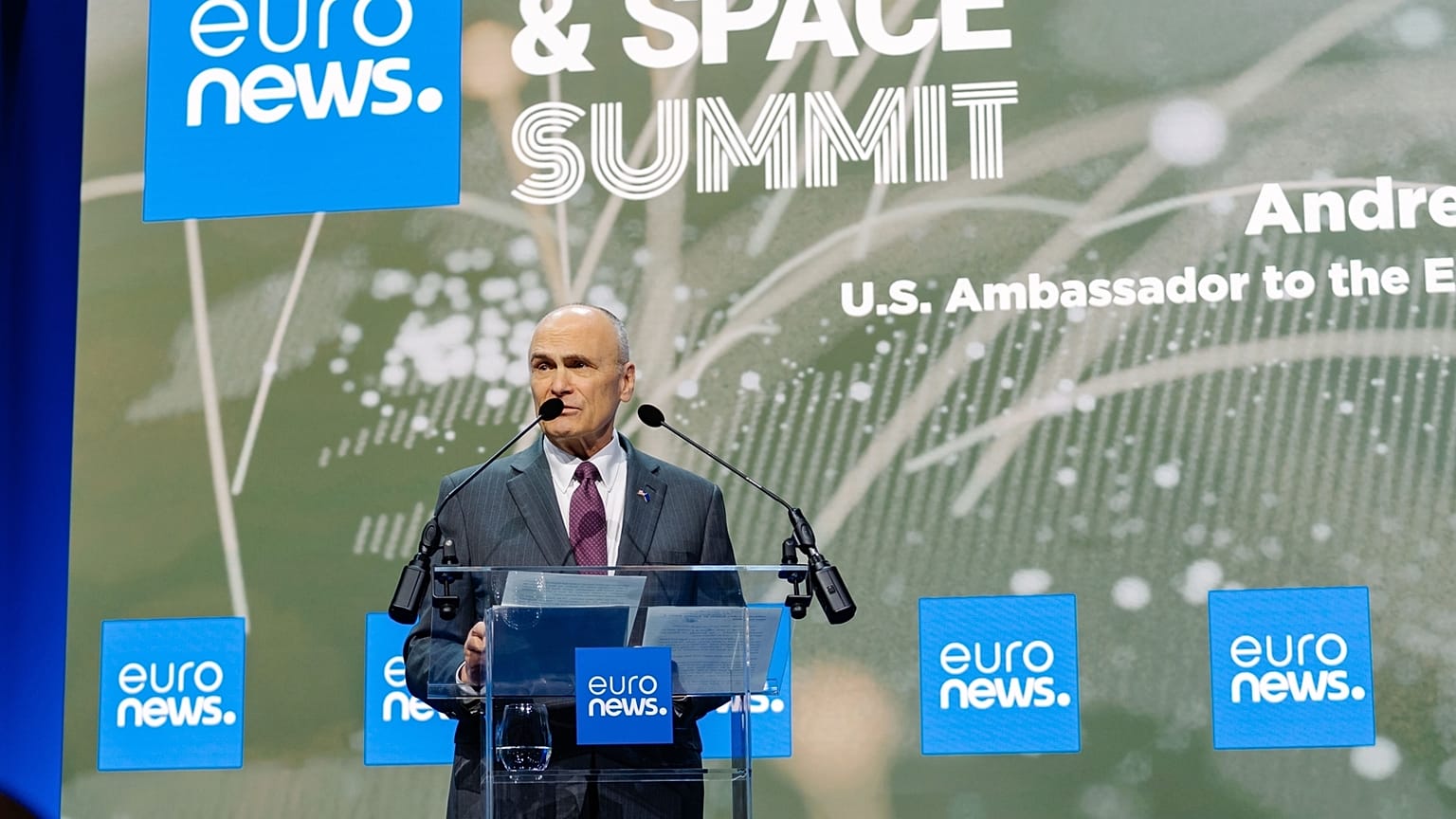













Preference for European-made arms could disrupt the transatlantic defence industrial base and benefit Europe’s "enemies", Ambassador Andrew Puzder warns.
The European Union's push to favour its domestic arms industry risks "alienating allies" and fragmenting the transatlantic defence industrial base, the US's Ambassador to the EU, Andrew Puzder, has told Euronews.
 ADVERTISEMENT
ADVERTISEMENT
ADVERTISEMENT
Speaking at Euronews' Defence and Space summit in Brussels on Wednesday, Puzder said: "Only our enemies benefit when we lose focus on making sure we have the most effective weapons, supporting our mutual defence.
"One attack by a powerful adversary on a member state, and we’ll all be glad that we focused on weapon superiority rather than regional economics," he added.
Puzder also said that when lives are at stake, "capability and availability should determine the solution, not geography."
The European Commission and EU states have tabled proposals to favour domestic arm manufacturers in order to reduce European reliance on US-made arms amid signs of fractures in the transatlantic alliance under Donald Trump.
The Pentagon has fiercely opposed the move, despite the US administration heaping pressure on NATO's European allies to become more independent in their self-defence.
Trump's threats to forcibly seize Greenland as well as the dramatic retreat in financial and military support for Ukraine have added momentum to the EU's push to prioritise European-made weapons.
The proposals have nonetheless split member states, with some EU governments warning against over-protectionism, especially given the US's arms manufacturing power.
On Tuesday, NATO’s top military commander Alexus Grynkewich cautioned that “codifying preferences as to where military hardware is made” only benefits Europe's "adversaries", while speaking to the European Parliament’s defence committee.
Puzder praised the Commission for allowing American defence material to be procured for Ukraine as part of the bloc's recent €90 billion loan to Kyiv, saying that the US would lobby for the same provisions in upcoming defence policies.
"We’ll keep having candid conversations. Sometimes we’re going to disagree. Generally, I believe we will agree," Puzder said.
He also said that the EU executive had indicated it had "no intention" of preventing EU member states from using national funds to buy US weapon systems.
"An alliance which faces our adversaries with unity and strength rather than division and self-interest," the ambassador added.