

















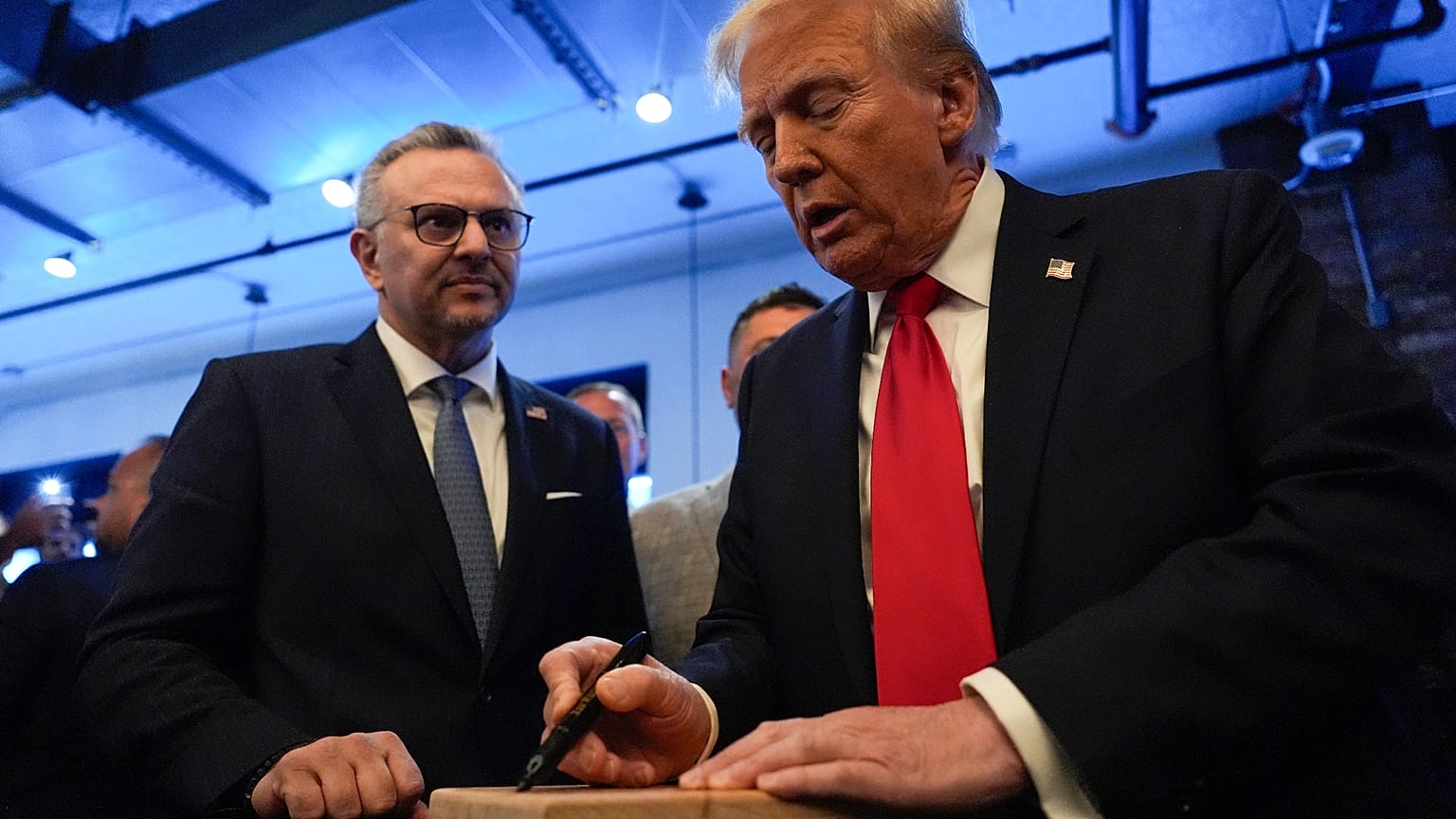














In an interview with Euronews, the US administration's adviser for Arab and African affairs, Massad Boulos outlines the US president's views on the war with Iran, the US ties with Gulf states, Sudan and the political stakes ahead of the midterm elections.
US President Donald Trump is determined to bring the war in the Middle East to a swift end and remains firm that Iran cannot have a nuclear weapon, according to his senior adviser on Arab and African affairs, Massad Boulos.
 ADVERTISEMENT
ADVERTISEMENT
ADVERTISEMENT
Speaking to Euronews at the Arab Media Forum in Dubai, Boulos declined to give a timeline but said the US president was giving negotiations a chance, stating that “the president believes that it's going to end soon".
"He's determined to make it end. And he's working towards that," Boulos said.
Asked when that might happen, he said “that will be for the president to determine, but we are very hopeful, and we are absolutely solidly behind him and behind his leadership.”
Boulos said Trump had been “very, very clear” that Iran must not obtain a nuclear weapon, while keeping the door open to talks.
“Now he's giving negotiations and talks a chance; he's being extremely patient, and we hope that ultimately peace will prevail," he said, adding: "Just imagine a world, just imagine this region with a nuclear Iran. Just imagine that for a moment,” he said.
He described a nuclear-armed Tehran as a threat that went beyond regional intimidation.
“Nobody wants to see a bully in the region. And if you have a nuclear power, if you're a nuclear power, it's way above and beyond being a bully. It's much more dangerous than that," Boulos said.
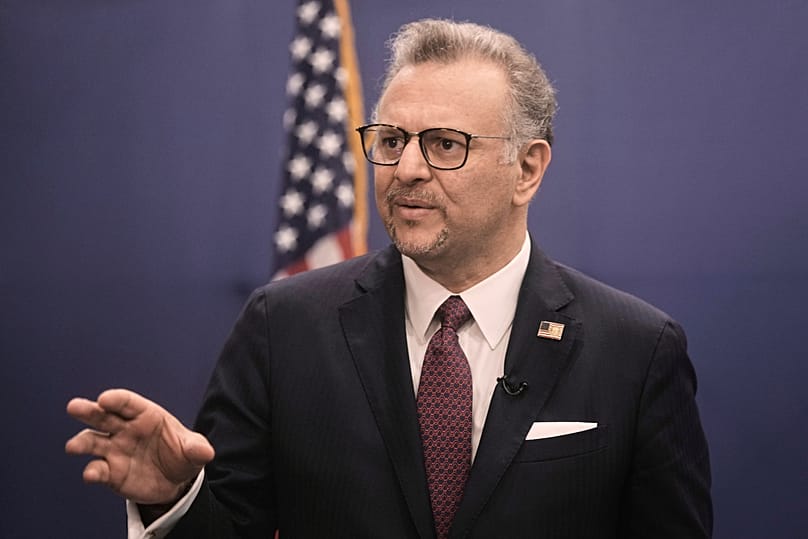
He continued that the Iranian issue “has to be dealt with once and for all” before Washington could return its focus to wider peace efforts, including the Abraham Accords.
He said four agreements were signed during Trump's first term and that more countries had been lined up to join. “We do believe that this should be addressed soon, and then we can go back to our peace initiatives," he said.
He also credited Trump with having “solved eight conflicts and eight wars so far” and said the US president was working on a ninth and tenth. He claimed Washington's intervention in the conflict between India and Pakistan had saved at least 4 or 5 million lives.
Pressed on whether Gulf states still regard the US as a reliable security guarantor, after the UAE and Qatar signalled that US support was not enough on its own, Boulos said relations with Arab capitals remained strong.
“These are true partners, they are true allies, and he has an excellent relationship, including a personal relationship with them and excellent rapport and chemistry with these leaders,” Boulos said.
He said Trump was in continuous contact with leaders in the UAE, Qatar, Saudi Arabia, Egypt and Jordan, and that coordination across US government departments was “working out quite well, just like any good partners.”
Asked what the Middle East gets wrong about the president, he replied: “I don't think they get anything wrong about him.”
Boulos said Trump was also focused on the war in Sudan, where he said 35 million people are in dire need of aid and 25 million are living in famine-like conditions.
“Sudan today is the world's biggest humanitarian catastrophe. And President Trump spoke clearly about that. He wants this war to end. He wants it to end quickly. We cannot allow the Sudanese people to continue to suffer.”
“From the beginning of this war to date, we've contributed more than three billion dollars in humanitarian aid,” Boulos said, adding that the US remains the country's largest humanitarian donor.
On the US midterm elections, Boulos said the war was unlikely to weigh heavily on voters. “Probably not directly, there are many domestic issues usually that are predominantly in terms of priority with the average US voter,” he said.
He pointed to the first midterm convention, held in Dallas, and said the president was travelling across the country to support Senate and House candidates. “We all know how tough midterms can be, but he's focused and he's determined to win,” he said.
For now, Washington is working on two fronts: talks over Iran's nuclear programme, and a push at the UN Security Council for an arms embargo on Sudan.