
















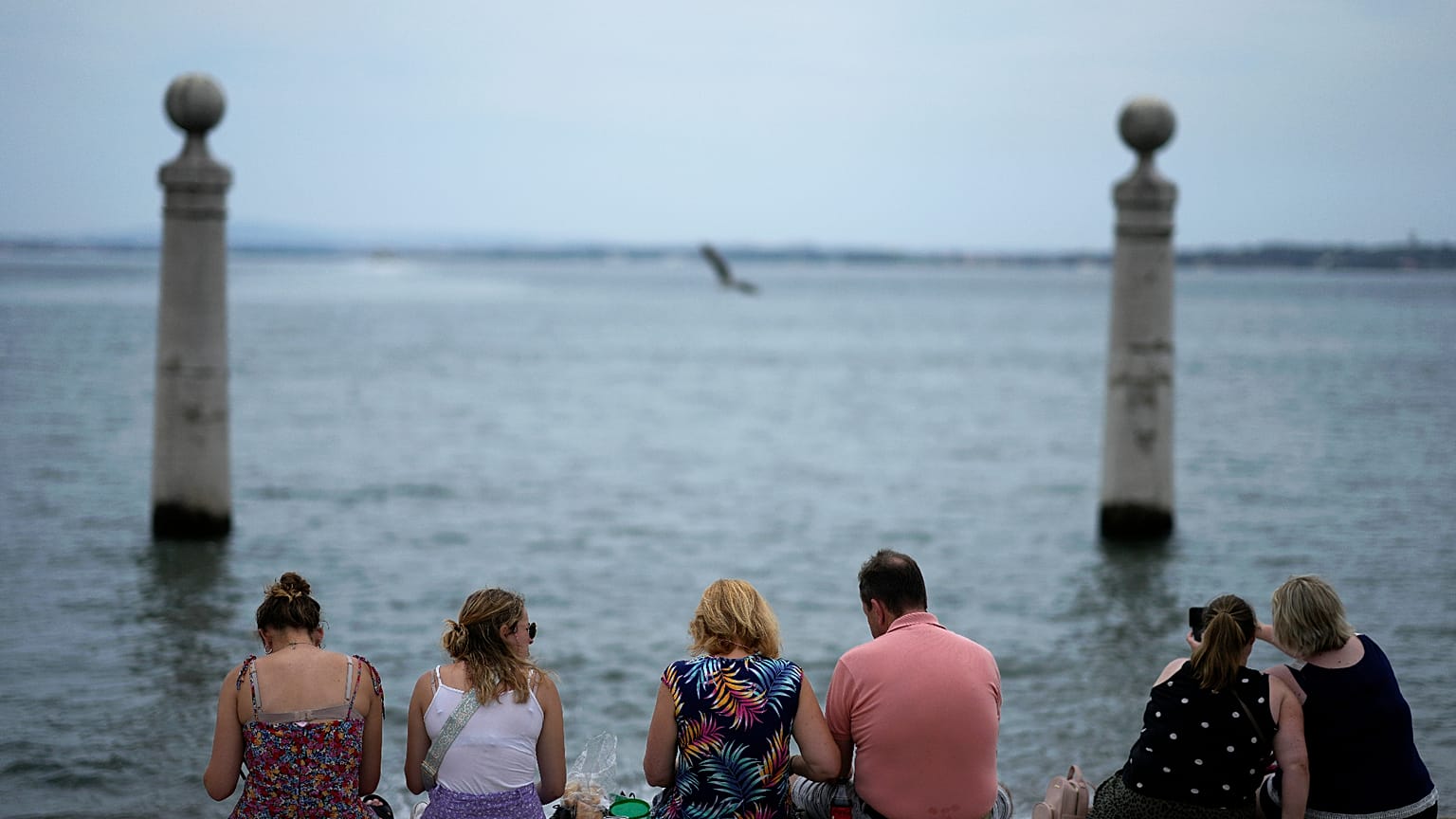













In Portugal, temperatures could climb close to 38°C in the Alentejo and the Tagus Valley, driven by an anticyclone positioned north of the Azores.
Portugal is set to see a gradual rise in temperatures from this Saturday. The Portuguese Institute for Sea and Atmosphere (IPMA) has raised a yellow warning for nine districts (source in Portuguese).
 ADVERTISEMENT
ADVERTISEMENT
ADVERTISEMENT
For this Saturday three districts are under a yellow warning: Coimbra, Leiria and Lisbon. On Sunday, the warning is extended to Setúbal, Santarém, Aveiro, Porto, Braga and Viana do Castelo. The alert will remain in force in these nine districts at least until eight o'clock on Monday evening.
The yellow warning is the lowest level of risk on a scale that also includes orange and red alerts. According to the institute's website, it indicates a "situation of risk for certain activities".
The IPMA says there is a likelihood of a heatwave:
"This spell of hot weather will be defined mainly by its duration, with a high probability of meeting the criteria for a heatwave across much of the territory", the institute said in a statement (source in Portuguese).
The document explains that a heatwave occurs when "over a period of six consecutive days, the maximum air temperature is 5 °C above the average value of the daily maximum temperatures".
Temperatures are therefore expected to reach above 30 °C on the mainland. In some areas, such as Lisbon and the Tagus Valley, they could even approach 38 °C.
Minimum temperatures will also rise, staying above 20 °C in some parts of Alto Alentejo, Beira Baixa, the Tagus Valley and the eastern Algarve.
"Although the forecast maximum temperatures are lower than those recorded in some episodes this summer, they will be substantially above the average values for the second half of September", the statement adds.
The hot weather is due to "the influence of an anticyclone located to the north of the Azores, extending in a ridge as far as the Bay of Biscay". This will bring "a mass of air of continental origin (hot and dry) over the Iberian Peninsula".
In July, Portugal had already experienced anomalous temperatures, with red warnings in most of the country and the government declaring an alert situation. That situation extended to the rest of continental Europe during July.
A report by the non-profit organisation Climate Central concluded that the continent was "the most abnormally warm region on the planet". Almost nine in ten Europeans lived through an entire month of "dangerous heat".