












Economic losses from coastal erosion exceed €1 billion per year across 28 European countries
Nearly one in two Europeans live near a coastline, but their future remains uncertain.
 ADVERTISEMENT
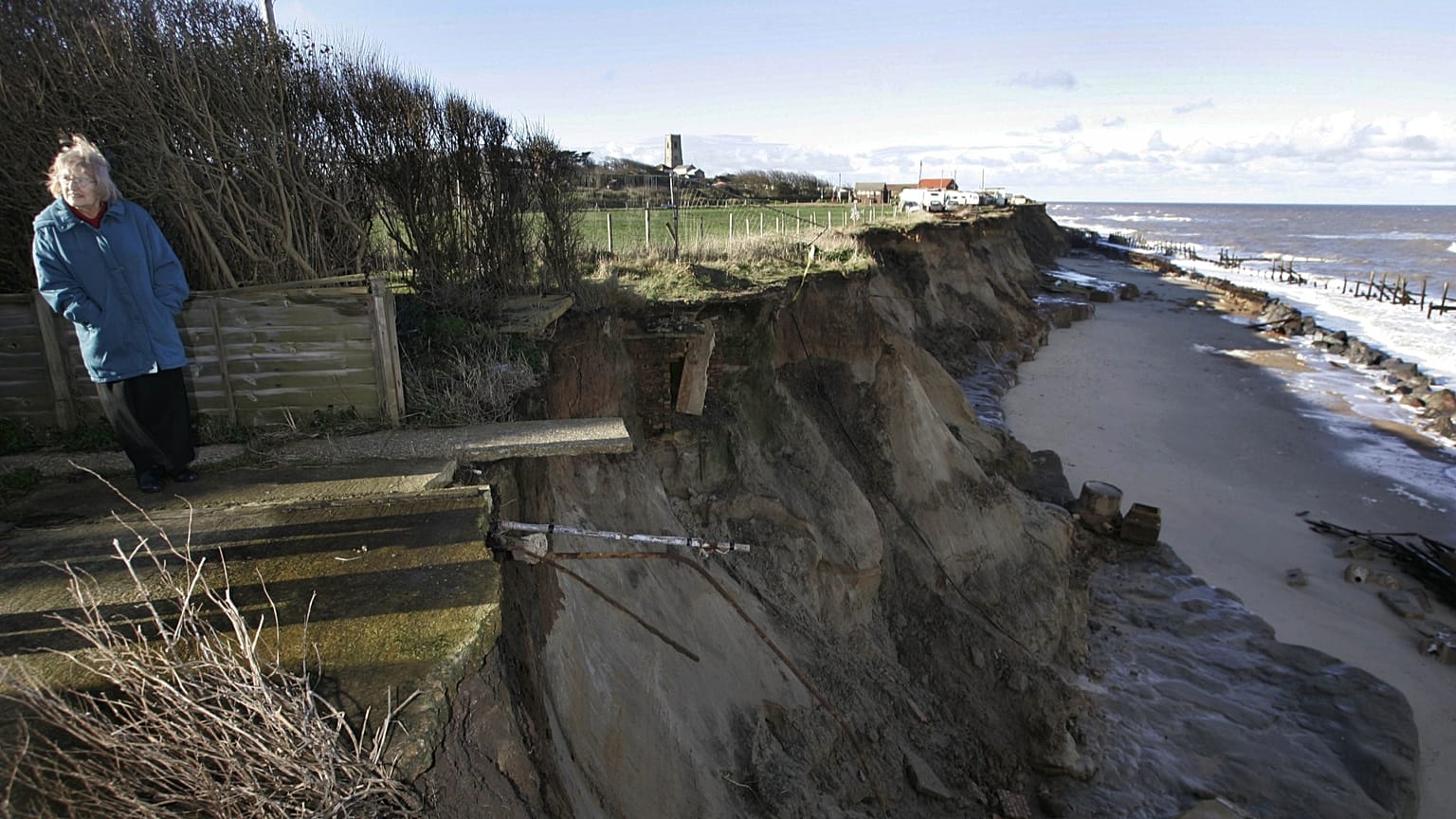
Rising sea levels, largely caused by human-induced global warming, are gnawing away at vital infrastructure, family homes and heritage around the world.
Across 28 European countries, economic losses due to coastal erosion exceed €1 billion per year and could escalate to €800 billion annually by the end of the century if effective action is not taken.
It’s why a new report urges Europe to prepare to relocate homes, businesses and infrastructure from coastlines before it’s too late.
Should Europe’s crumbling coastlines be relocated?
The report by The Council of Europe argues that many of Europe’s coasts should urgently move towards “planned retreat”.
This means new development would be banned or restricted and homes, businesses and assets – including road and rail – would be moved to more climate resilient places inland.
For example, France estimates that around 900 kilometres of mainland coastline are receding, with more than 500 municipalities affected.
In Quiberville-sur-Mer in the Normandy region, a €9 million investment moved a public campsite inland. Municipal revenue subsequently increased by 25 per cent.
Of course, moving a campsite is a much easier feat than relocating entire residential villages or heritage structures. However, relocating coastal communities may be the only resort if alternative solutions fail.
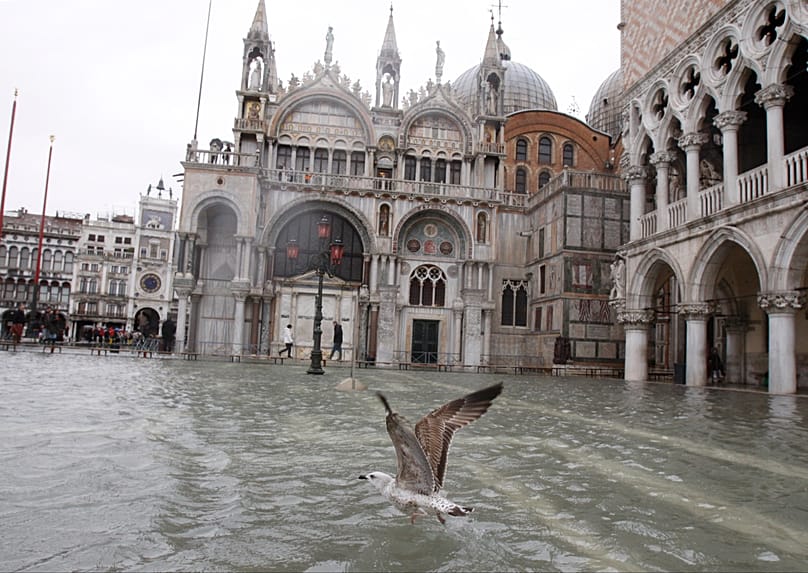
In Venice, for example, experts predict that engineered banks called dikes may be necessary beyond 0.5 metres of sea level rise, which may occur by 2100 even if emissions are kept low. This would cost up to €4.5 billion, but would not be a permanent solution.
Closing the lagoon with a super levee (a wide reinforced embankment) could also be viable beyond 0.5 metres of sea-level rise, and could protect the city against sea level rise of up to 10 metres. However, the initial cost for this could exceed €30 billion.
Relocating the city, its residents and historic landmarks may be necessary beyond 4.5 metres of sea-level rise – which is projected to occur after 2300 – at a cost of up to €100 billion.
More than a quarter of Europe’s coastline is eroding
The report, titled ‘How can we cope with coastal erosion?’, also calls for authorities to update risk maps, introduce and periodically review no-build and buffer zones, and make adaptation plans that assess the legal, social and financial consequences of different choices.
This planning needs to be done in conjunction with those most directly affected: transparent consultation, public information and sustained political support are essential, alongside measures to protect livelihoods, coastal heritage and vulnerable communities, the report states.
40 per cent of Europe’s GDP comes from coastal regions and 80 per cent of low-elevation coast is at risk of future erosion. Better planning and relocation now, therefore, would save significant money later.
“Europe’s coastlines are among our most valuable assets,” says Greek politician and co-author of the report, Fanis Spanos. “They host major infrastructure, support vital economic activity and are centres of cultural and natural heritage.”
More than a quarter of Europe’s coastline is eroding, and the continued occupation of “high-risk zones” puts livelihoods at risk, Spanos adds.
Anthony Buchanan, co-author of the report, argues that defending Europe’s coasts with traditional methods such as building sea walls is becoming less sustainable due to the drastic rise in sea levels.
“Sea level rise has doubled in recent years and is on course to rise by another 44 cm by 2100, while storms are becoming more intense and frequent and extreme storm surges are likely to occur 20-to-30 times more often by 2050,” he explains.