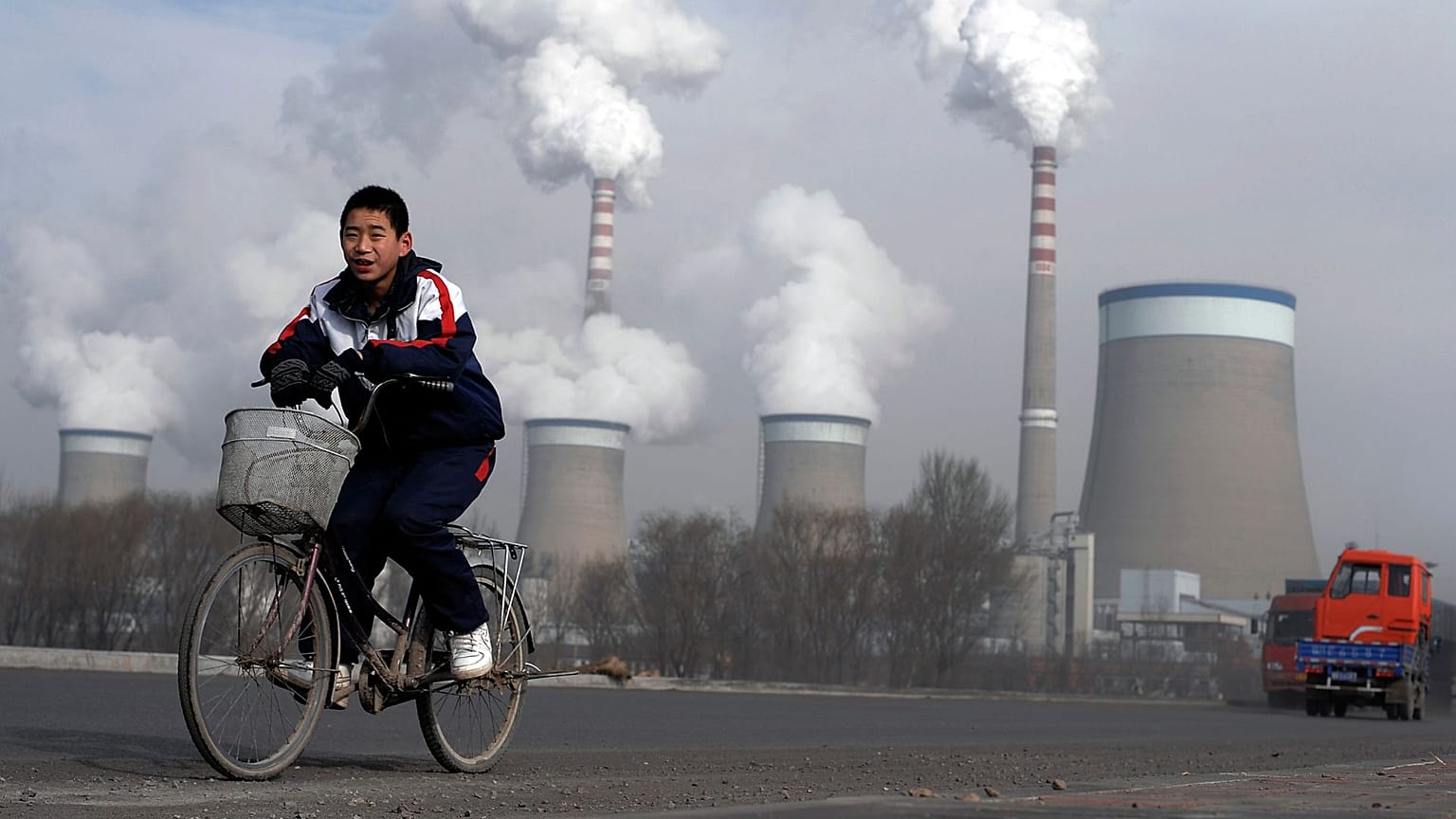













This is the first time that reductions in oil consumption – rather than coal – have been responsible for a drop in China's CO2 emissions.
China's carbon dioxide emissions fell in the second quarter of the year, new analysis shows.
 ADVERTISEMENT
ADVERTISEMENT
ADVERTISEMENT
The country's emissions have fallen before, but this was the first time it was driven by lower oil consumption – with a "dramatic fall" in China’s demand for oil imports following Middle East shipping disruptions linked to the US-Iran war.
Planet-warming CO2 emissions were down one per cent in the April-June period, according to the Centre for Research on Energy and Clean Air (CREA) analysis published by Carbon Brief.
Oil use fell nine per cent overall and 16 percent for transport, based on assessments of Chinese government data.
The situation "has very clearly validated China's energy security strategy and especially the role of electrification as a part of that strategy", says CREA co-founder and lead analyst Lauri Myllyvyrta.
Restricted oil imports have sped up electrification in China
Severe disruption to traffic through the crucial Strait of Hormuz – which was previously used to transport 20 per cent of the world's oil and gas – has heavily impacted shipments of oil to China, the world's second-largest economy and the top importer of crude.
Now, more than six months into the US-Iran war, China has weathered the complications more smoothly than many experts initially anticipated.
Myllyvirta says that the crisis has accelerated adoption of electric fleets in China across traditionally gas-guzzling industries including construction and mining.
"These kinds of changes are highly likely to prove sticky," he says.
Electric heavy-truck sales rose by about 77 per cent in the second quarter year-on-year, while the number of EVs on the road grew by 33 per cent and charging volumes rose by 60 per cent, indicating increased utilisation of existing EVs.
Previous drops in China's emissions have been driven primarily by lower coal consumption, rather than oil, according to the CREA.
Solar has surpassed coal in the world's biggest emitter
China is the world's biggest emitter, responsible for over 30 per cent of global greenhouse gases.
Its leaders have promised to step up efforts to reduce CO2 and boost the green transition, aiming for carbon neutrality by 2060.
While emissions fell in the second quarter, they rose two per cent in the first, according to the CREA data, leaving levels "up marginally across the first half of the year".
Earlier this week, Chinese authorities said that the country's installed solar energy capacity had surpassed that of coal-fired power for the first time.
China has seen explosive growth in renewable installation, with coal's share in its energy mix edging down in recent years.
Still, emissions from the power sector rose between April-June due to increased coal use, while gas-fired generation fell. This is despite strong growth in wind and solar capacity, with “wasted” power a persistent problem linked to a grid not adapted to increasing shares of variable renewable generation.