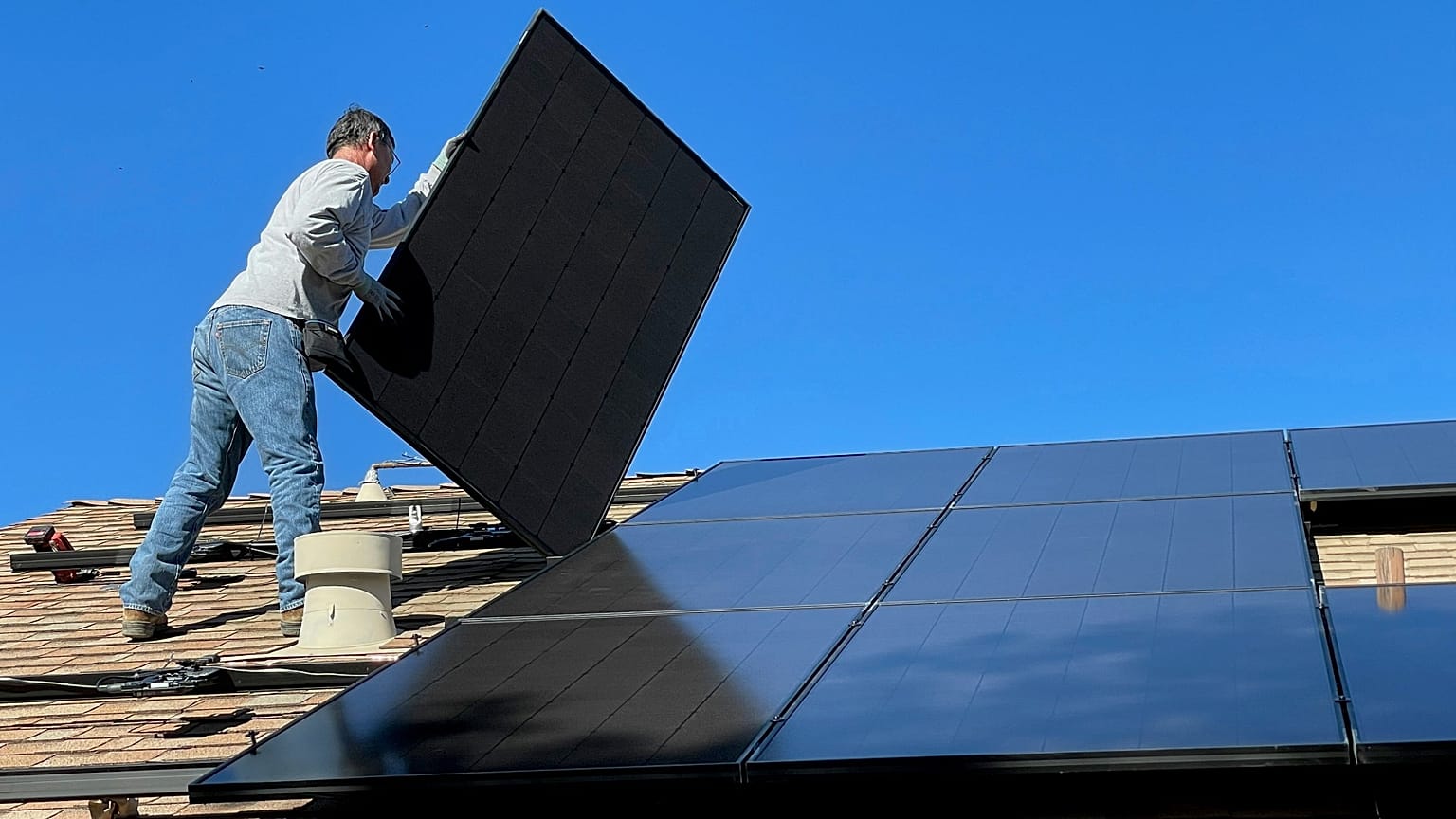













A solar bonds scheme could absorb the financial impact of rooftop solar, while keeping your energy bill savings. Here’s how.
Interest in rooftop solar has surged in recent months, as Europeans scramble to protect themselves from the spiralling costs of fossil fuels.
 ADVERTISEMENT
ADVERTISEMENT
ADVERTISEMENT
According to an EU-wide analysis published in the Nature Energy journal, rooftop solar photovoltaics (solar PV) could supply around 40 per cent of Europe’s electricity by 2050. However, only around 10 per cent of Europe’s building rooftops are currently equipped with PV.
Governments across the continent are trying to bolster uptake by offering generous subsidies or financial perks. For example, in Ireland homeowners can receive grants of up to €1,800 through the country’s sustainable energy scheme – while public grants in Hungary can cover up to two-thirds of solar panel costs for homeowners providing they meet specific requirements.
Many other countries such as Germany and the Netherlands have implemented benefits such as 0 per cent VAT on solar panel sales and installation to make the switch more affordable. However, heavy upfront installation costs remain a huge barrier – particularly among low-income households.
But, could ‘solar bonds’ be the magic solution?
How much do solar panels cost and how long does it take to see a return?
The cost of installing solar panels can vary significantly, as there are many factors that can affect the pricing.
According to solar firm LOGI, a single family home in Europe typically needs between 6 and 15 kWp of solar power, depending on household size, heat pump use and electric car charging, which costs anything from €7,000 to €30,000. In the UK, a typical 4.5 kWp system is about £7,600 (€8,831).
While solar panels can save homeowners hundreds of euros on their energy bills every year, it can take time before you will see a return on your investment. Again, this can vary depending on multiple factors – including how much you have electrified your home, whether you work from home, and what type of tariff you are on.
Many experts, including the UK’s Energy Savings Trust, say it could take a typical home at least 10 years to recoup the costs of installing panels. It also requires hefty capital for installation, which in itself can cost up to £10,000 (€11,621). For many homeowners, this means taking out a loan subject to interest.
The need for ‘solar bonds’
This is why Dr Donal Brown, a senior researcher in energy policy and political economy at the Environmental Change Institute (ECI) is calling for government-backed finance to make rooftop solar more affordable.
Published by the Common Wealth thinktank, the report, titled A Right to the Sun, proposes a universal Solar Bond scheme under which all households with a suitable roof would be eligible to access solar panels without credit checks or other eligibility requirements that are usually associated with conventional loans.
This cost would be repaid over a 25-year period through household energy bills, with the finance attached to the property rather than the homeowner. This means if you move out, the loan and finance stays with the property, so the panels and their remaining repayments would be passed onto the next occupier.
The report found that such a scheme could save households at least £83 (€96) a year (or almost double with a battery) even when the cost of finance repayments are taken into account.
“Delivering this programme would also provide an opportunity to create jobs and improve livelihoods in communities across the UK,” the report says.
“A healthy market for rooftop solar installations already exists, with the Solar Trade Association estimating more than 42,000 new jobs could be created by an expanded rollout by 2030.”