












More than 42,000 tonnes of fishery products were caught, with the Northern Aegean accounting for just over two-thirds of production.
Greek marine fisheries produced 42,100.8 tonnes of fishery products in 2025, worth €166.62 million, according to data from the Hellenic Statistical Authority (ELSTAT).
 ADVERTISEMENT
ADVERTISEMENT
ADVERTISEMENT
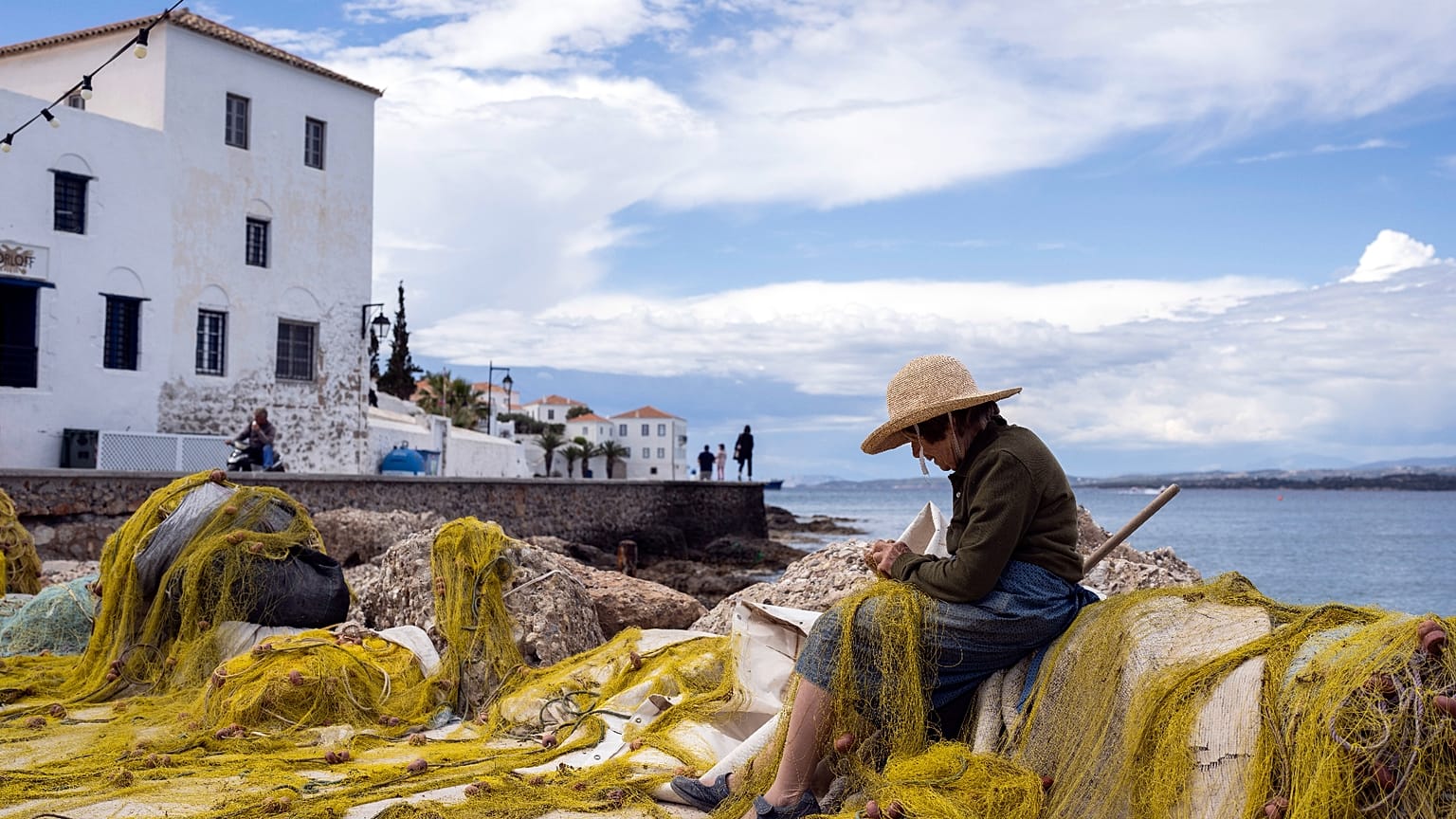
The fishing fleet consisted of 11,399 motorised vessels, the overwhelming majority of which (10,949) used other inshore fishing gear.
Boats using large nets to surround schools of fish, called purse seiners, caught more than half of the total volume, 21,667.5 tonnes, but they accounted for only 28.9% of the total value.
By contrast, vessels using other inshore fishing gear accounted for only 23% of the volume but generated the largest share of its value, at 38.3%, or €63.88 million. Trawlers accounted for 25.5% of the quantity and 32.8% of the value.
This gap becomes even clearer when looking at value per kilo. Based on the published figures, catches from purse seiners were worth an average of about €2.22 per kilo, compared with around €6.60 per kilo for catches using other inshore fishing gear.
Anchovy dominates Greek catches
Anchovy was by some distance the most important catch of the year. Production reached 10,445.1 tonnes, equivalent to almost one in every four tonnes caught in the country, or 24.8%.
It was followed by sardine, with 4,541.6 tonnes; round sardinella, with 2,603.6 tonnes; deep-water rose shrimp and caramote prawn, with 2,067.5 tonnes; and hake, with 1,949.2 tonnes. These five species together accounted for 51.3% of the total quantity caught.
Anchovy also topped the ranking by economic value, at €19.55 million. Hake followed at €16.88 million and sardine at €14.17 million.
Red mullet also stood out. A catch of just 1,066.8 tonnes generated €9.30 million, highlighting the wide differences in commercial value between species.
Fish make up 83.3% of production
Fish dominated the catch, accounting for 83.3% of total volume, at 35,057.1 tonnes, and 75.8% of total value.
Crustaceans represented 8.1% of the volume and 10.8% of the value. Molluscs, meanwhile, accounted for just 7.7% of production but 12.5% of the value.
Production was heavily concentrated in the Northern Aegean, where catches reached 28,452.9 tonnes and were worth €101.02 million.
This means 67.6% of the country’s total catch came from the Northern Aegean, while the area accounted for 60.6% of total value.
The Southern Aegean ranked second, with 9,183.2 tonnes worth €43.15 million, followed by the Central Ionian, with 3,106.7 tonnes worth €14.96 million.