





























Heads of 21 global and rising powers gather in Bishkek for the SCO summit as wars strain the global order. China and Russia have previously used the SCO to project their influence and their stand against the West, but the middle powers are now there to seek new economic and political momentum.
The annual Shanghai Cooperation Organisation (SCO) summit is gathering a diverse group of world leaders from 21 countries in Kyrgyzstan’s capital Bishkek, as they pursue new alliances, ambitions and opportunities with the rise of regional powers in the rapidly evolving multipolar Eurasia.
 ADVERTISEMENT
ADVERTISEMENT
ADVERTISEMENT
The two-day summit kicked off on Monday, focusing on political, economic and security engagements and cooperation, a long-promised development bank, connectivity, energy and trade routes strained by wars and conflicts, and the defining challenges of the Global South.
The SCO’s 10 members — China, India, Pakistan, Russia, Belarus, Iran, Kazakhstan, Kyrgyzstan and Tajikistan — speak for more than 40% of the world's population.
The bloc increasingly bills itself as an alternative to a Western-led order, as it is joined by leaders of at least 15 states as “dialogue partners,” spanning Central Asia and the rest of the continent, the South Caucasus, as well as the Middle East, including Turkey, Egypt, Saudi Arabia, Qatar, Vietnam, as well as Uzbekistan, Azerbaijan and Armenia.
The bloc, which marked its 25th anniversary, was formed to address regional security issues after the collapse of the Soviet Union, but over time it has evolved into a powerhouse of multi-layered trade, security and political cooperation.
The theme of the summit, “25 years of the SCO: together for sustainable peace, development and prosperity”, is a message in itself to the world as the 21 leaders convene to formulate answers, build influence — and possibly new alliances to the rapidly changing world.
China’s Xi Jinping, India’s Narendra Modi, Turkey’s Recep Tayyip Erdoğan and Russia’s Vladimir Putin, together with other presidents and prime ministers, including Iranian president Masoud Pezeshkian as well as UN Secretary-General Antonio Guterres, arrived in Bishkek on Monday to hold a series of bilateral meetings and later attending the opening of the World Nomad Games, a traditional Central Asian sports and culture event.
The SCO announced that Russia’s war in Ukraine, the Iran war with its far-reaching global economic consequences, as well as the push of the major and middle powers in the SCO for wider global influence, are among the main topics of this year’s gathering, while the host country Kyrgyzstan is aiming to advance the establishment of a SCO Development Fund and an Investment Fund for major projects.
Developing economic connectivity opportunities, including new energy and transport corridors, is also a key objective as the Iran war reshapes the world’s transit and supply chains.
'Golden period' of ties
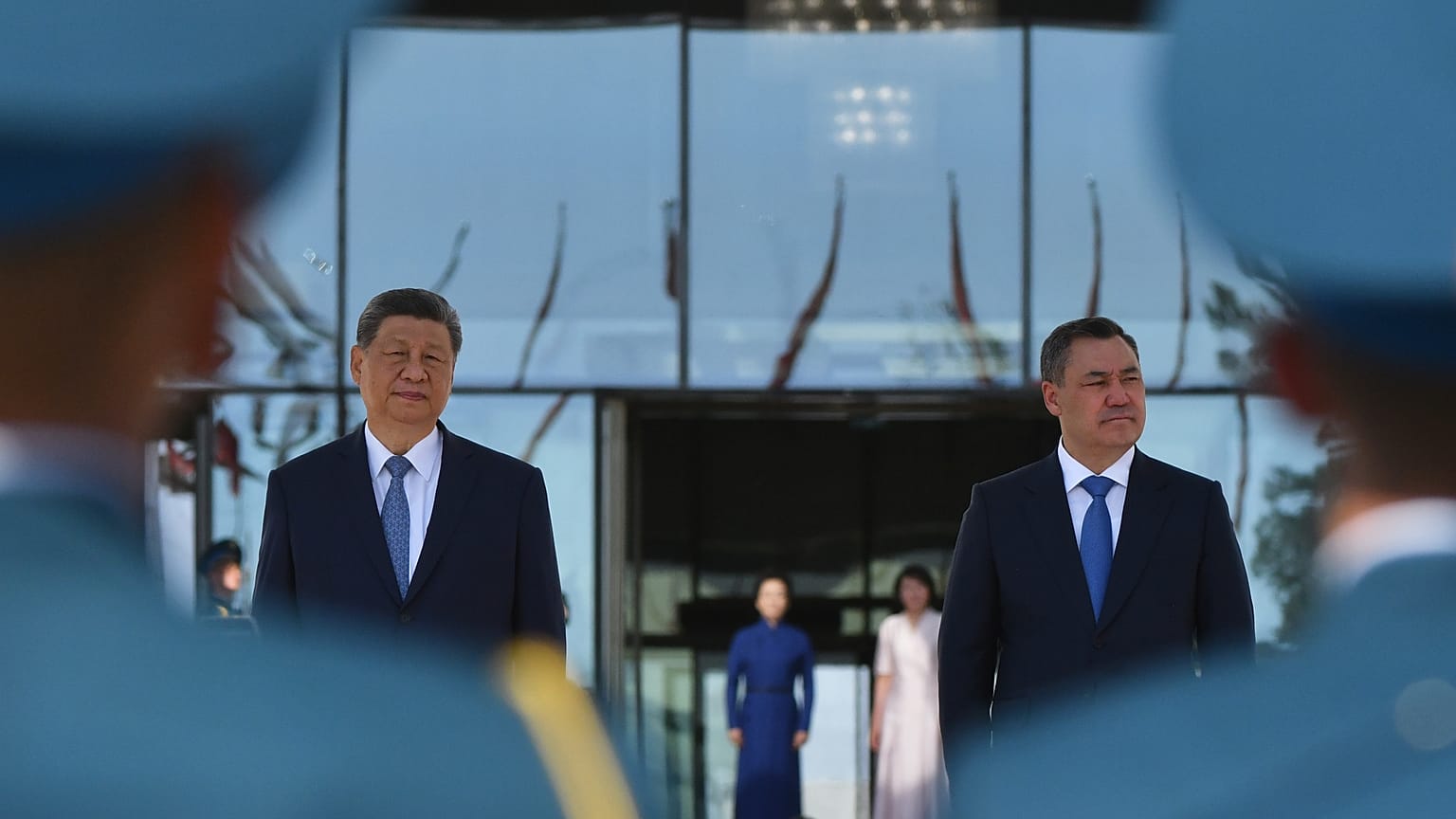
Host of the summit Kyrgyz President Sadyr Japarov welcomed his Chinese counterpart Xi on his arrival in Bishkek, and the two leaders signed a treaty on “eternal good-neighbourliness, friendship and cooperation,” which, the Kyrgyz presidency said in a statement, acts as a comprehensive strategic partnership in the new era.
Xi described the China-Kyrgyzstan ties as a “golden period” of development.
Kyrgyz President Sadyr Japarov also held a flurry of bilateral talks on Monday with UN Secretary-General Antonio Guterres, Indian Prime Minister Narendra Modi, Mongolian President Ukhnaagiin Khurelsukh, Lao President Thongloun Sisoulith, Togolese President Faure Gnassingbe and Vietnamese Vice President Vo Thi Anh Xuan as well as Iranian President Masoud Pezeshkian.
As the US and the EU are actively increasing their presence in Central Asia, China is also pushing for a rapid economic engagement across Central Asia, with major transport and infrastructure projects being developed to connect China and the West through Central Asia, such as the China-Kyrgyzstan-Uzbekistan railway, which is expected to shorten transport routes between Asia, the Middle East and southern Europe.
As industrial cooperation and transport connectivity are major priorities for Tashkent, Uzbekistan’s President Shavkat Mirziyoyev arrived in Bishkek to also promote the Trans-Afghan Corridor connecting the rapidly developing infrastructure projects of Central Asia’s countries to Afghanistan and ports on the Indian Ocean.
Azerbaijan’s President Ilham Aliyev and Armenian Prime Minister Nikol Pashinyan held a new round of peace talks in Bishkek on Monday to discuss the former rivals’ next steps in their historic peace process.
The two leaders also discussed new trade and energy cooperation as well as the key Middle Corridor projects through the Trump Route for International Peace and Prosperity (TRIPP).
Kazakh President Kassym-Jomart Tokayev also met his Azerbaijani counterpart to discuss trade and investments through joint regional projects.
Putin also arrived in Bishkek on Monday to make his mark on the regional summit and will meet Xi amid Moscow's faltering economy.
The Russian president is scheduled to meet Erdoğan to discuss Russia’s war in Ukraine and Black Sea security, as well as Iran's Pezeshkian, as Moscow has been a strong supporter of Iran during its military confrontation with the United States and Israel.
Putin is also expected to meet Pashinyan following Moscow’s warnings against Yerevan’s newly announced intention to apply for EU membership.