

















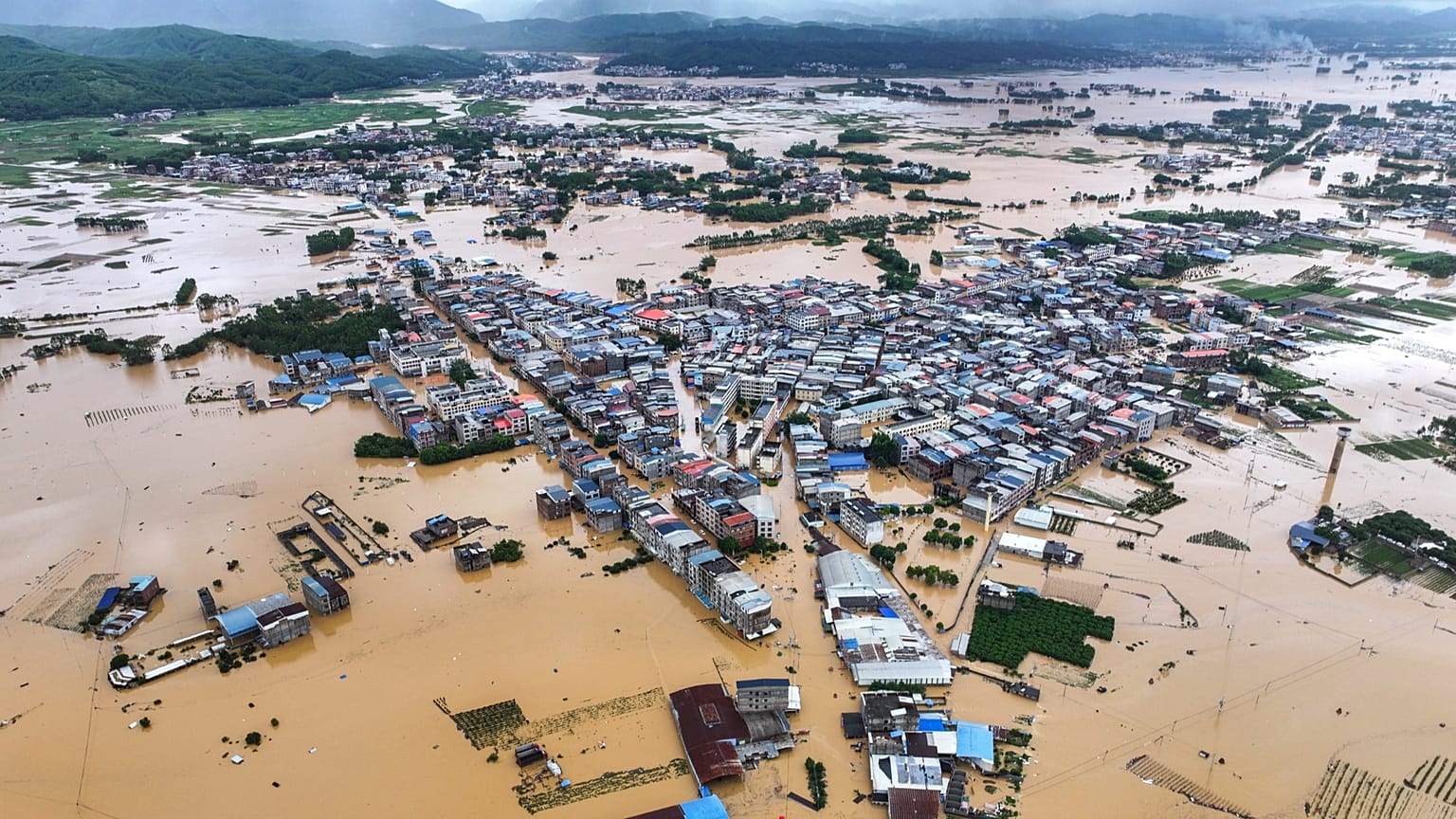













Scientists warn the intensity and frequency of global extreme weather events will increase as the planet continues to heat up because of fossil fuel emissions.
Thunderstorms and strong winds have killed at least 15 people and injured 275 in central China, state media said on Tuesday, as heavy rains and flooding left two more dead in the south.
 ADVERTISEMENT
ADVERTISEMENT
ADVERTISEMENT
Multiple areas in Hubei province experienced "severe convective weather" on Monday, state broadcaster CCTV reported.
"Thunderstorms and strong winds swept" through cities including Huangshi and Huanggang, killing eight people, it added.
Tornadoes were reported in some areas and nine people are missing.
The "severe weather" had injured 275 people in Huanggang's Huangzhou district as of Tuesday morning, state news agency Xinhua reported, without giving details of their severity.
Authorities also evacuated 408 residents to safe areas, it added.
"Rescue and relief efforts are underway," Xinhua said.
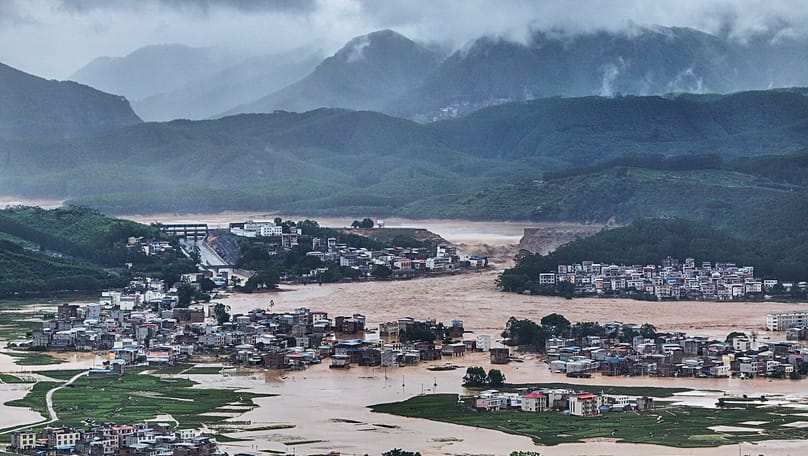
Heavy rains and severe flooding from Typhoon Maysak killed at least two people in the southern region of Guangxi and prompted authorities to evacuate at least 48,000 people as of Monday evening.
Officials in Nanning, Guangxi's capital, raised the flood control emergency response to the highest level after torrential rain breached dams.
Rain caused the walls of a reservoir dam to burst, with dramatic video shared by CCTV showing a torrent of muddy water rushing the crumbled concrete.
Homes and cars elsewhere in the region were partially submerged, it showed.
Rescue workers were seen wearing life vests and helmets, while others were on inflatable boats searching for people.
China's leader Xi Jinping called for "all out" rescue operations, state media reported on Tuesday.

Xi stressed "the need to go all out in organising emergency rescue operations, treating the injured, and resettling affected residents, carrying out disaster prevention and relief work effectively", state broadcaster CCTV said.
Scientists warn the intensity and frequency of global extreme weather events will increase as the planet continues to heat up because of fossil fuel emissions.
China is the world's biggest emitter of greenhouse gases, but it is also a global renewable energy powerhouse that aims to make its massive economy carbon-neutral by 2060.