
















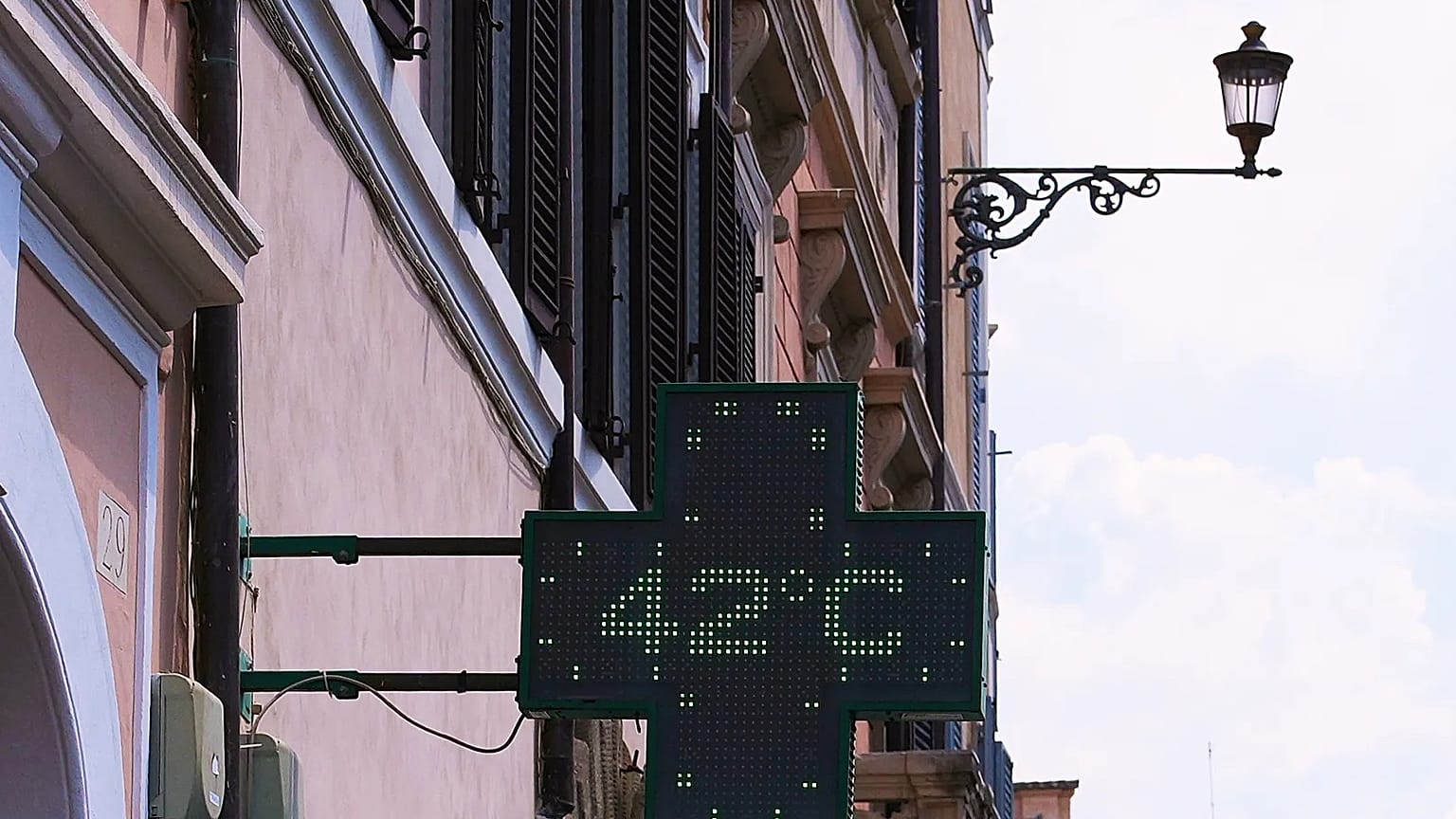













After a brutal heatwave killed 1,300 people in western Europe, the European Commission has pledged to step up climate adaptation efforts – but part of the burden was shifted to local and regional governments.
The European Commission has recognised that European policies are failing to match the accelerating pace and impacts of climate change and pledged to "double down" efforts to mitigate climate change following last week's extreme and deadly heatwave across Western Europe.
 ADVERTISEMENT
ADVERTISEMENT
ADVERTISEMENT
EU officials have said heatwaves are likely to recur this summer and stressed that the bloc must shift from reacting to disasters to preventing them, with a climate resilience strategy set to be launched in the fourth quarter of the year.
"We want to come forward with a very robust, comprehensive package and framework that facilitates and empowers the European economy as a whole, at all different levels of governance – national, regional or local level, as well as the level of the Union," an EU official told reporters, speaking on condition of anonymity.
The Commission said that around 75 percent of climate-related fatalities in Europe are now linked to heat stress, underlining how extreme temperatures have become the continent's principal climate hazard. The World Health Organization's latest death toll estimate from the recent heatwave now stands at 1,300.
The EU executive spokesperson said the warning is backed by the 2024 European Climate Risk Assessment, which concluded that current European policies are insufficient to address the speed and scale of climate change.
They also conceded that the Paris Agreement's 1.5°C target for maximum global warming "will be surpassed" in the coming years, reflecting a failure to honour the compact's pledges.
"That risk resistance showed beyond a doubt that European private policies or European policies at large are not keeping pace with the extensive and accelerating climate change," the EU official said. "So it was a wake up call for us."
The official said that while some progress has been made, it is not keeping pace with accelerating climate change, a situation that demands a "profound shift in the philosophy of policies".
"We need a hold on the economy and approach and a profound system change that would allow us to move from recovery to anticipation and prevention."
Brussels urges local governments to act
Responsibility for preparing the continent for climate change must be shared with municipalities, the official emphasised, noting that installation measures for air-conditioning, solar panels or heat pumps are all regulated at regional or local level.
"It is important that we also acknowledge that there are limits to how much we can do, including the inertia of the climate system. So these will probably get worse before they start getting better," the EU official added, saying regions and municipalities must be able to "decide the approach that works best for them".
The Commission said that many decisions affecting cooling, such as planning permission for external shading, installation of air-conditioning systems or local urban design, remain firmly within national, regional and municipal competence.
Brussels can regulate building standards and product efficiency and provide funding, but implementation largely depends on member states and local authorities, with some division of responsibilities inevitable.
Eurpoean buildings, in particular, were flagged by the Commission as ill-suited to rising temperatures, and a case in point where local government cooperation will be crucial.
Buildings account for around 40 percent of energy consumption and 36 percent of greenhouse gas emissions, according to EU data, with most designed to retain heat rather than stay cool.
"There are many effects of extreme heat – social disparities, energy prices, productivity (...) The issue we're facing is that the majority of the EU building stock is both old and inefficient, and is also not ready to withstand these high temperatures in many instances," the EU official said.
The bloc has already updated rules on energy efficiency in buildings and appliance efficiency standards, and has allocated approximately €100 billion in EU funding for building renovation between 2021 and 2027.
Regions and local governments demand EU funds
While EU co-legislators are currently deciding on the bloc's future budget, Kata Tüttő, President of the European Committee of the Regions and member of Budapest City Council, urged EU leaders to allocate more money for regions to invest in infrastructure, nature and energy systems "instead of becoming a permanent crisis-response tool".
"Every heatwave, every drought, every wildfire and every flood reminds us that our cities are heating up, our rivers are drying up and our communities are becoming more vulnerable," Tüttő said.
"Local and regional authorities remain responsible for delivering most climate adaptation and mitigation measures. The question now is whether they will still have the resources to continue."
A similar call was issued by Mohamed Ridouani, Mayor of Leuven and president of Energy Cities, a European community for future-proof cities. He has urged national leaders to ensure that cities and regions remain central to EU investment.
"Local authorities turn Europe’s competitiveness and cohesion goals into tangible results for businesses and citizens on the ground," Ridouani said in a statement on 15 June.
"Cities and towns are already building a more resilient energy future, through renovation, decarbonisation and local energy infrastructure projects, one building and one neighbourhood at a time."