















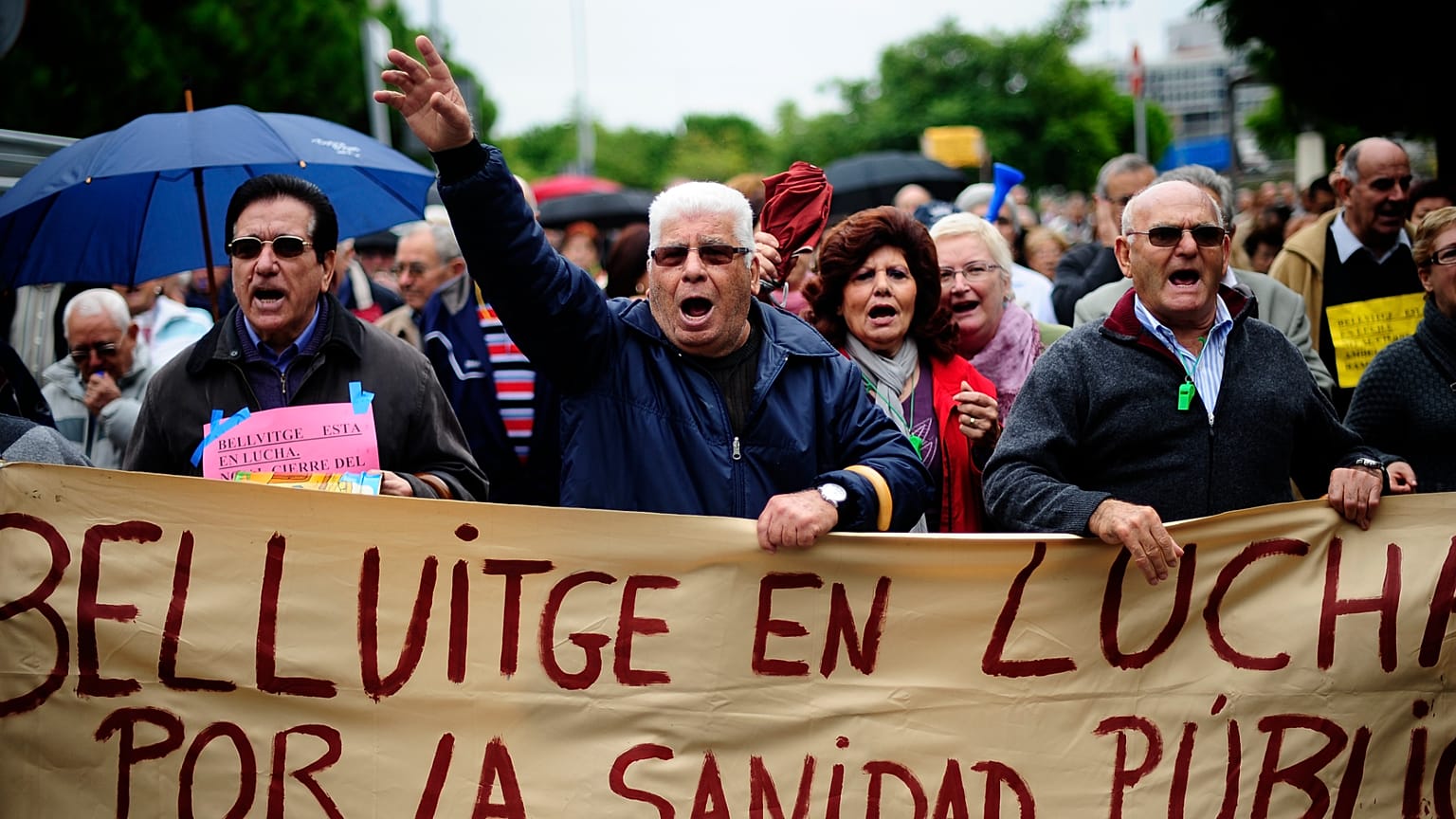













Around 13% of pensioners in the EU continue working. Financial necessity is a significant reason, but experts point to other factors too, such as changing norms, changing demography and enduring labour shortages.
Pension income is lower than late-career earnings across European countries. In the EU, a person who earned €100 between the ages of 50 and 59 would receive €58 in pension income between the ages of 65 and 74 in 2023, according to Eurostat.
 ADVERTISEMENT
ADVERTISEMENT
ADVERTISEMENT
This makes it difficult for many older people to maintain their standard of living after retirement. Nearly one in six pensioners are at risk of poverty in the EU.
Several pensioners continue to work after retirement. Their reasons vary. The main reason is enjoying work and remaining productive (36.3%), but financial necessity (28.6%) is also a major driver.
So, in which countries do retired people continue to work after receiving an old-age pension? And in which European countries is financial necessity the biggest driver?
In 2023, the most recent data available as of 2026, 12.9% of people in the EU continued working during the six months following receipt of their first old-age pension.
This varies widely across Europe, ranging from 1.7% in Romania to 54.9% in Estonia, according to Eurostat.
The share continuing to work is also above two in five in Latvia (44.2%), Lithuania (43.7%) and Sweden (41.7%). Two other Nordic countries follow this top group, with Cyprus (29.7%) sitting in the middle: Norway (37.7%) and Finland (28.5%).
Besides Romania (1.7%), the share is significantly low in Greece (4.2%), Spain (4.5%) and Croatia (5%).
“Greece used to have a very strict stance against working pensioners. This, with the encouragement of the crisis, pension cuts and pension reform softened,” Professor Platon Tinios from Piraeus University told Euronews Business.
He added that a major policy change in 2022 led to a sharp rise in registered working pensioners. However, this rise is not captured in the data, as it came after the second half of 2023.
In several countries, financial necessity is the main reason to continue working. Among those who continued working, the share citing financial necessity ranges from 9.4% in Sweden to 68.5% in Cyprus.
“Of course, wherever people say they are working for financial necessity, it means they feel their pension income is inadequate,” Dr Olga Rajevska from Riga Stradins University told Euronews Business.
“A high proportion of these answers suggests the pension system in the respective countries is inadequate and unable to provide sufficient income.”
In Romania (54.3%) and Bulgaria (53.6%), more than half said they kept working out of financial necessity. It is also above one in three in Croatia (48.2%), Latvia (47.9%), Portugal (39%), Hungary (38.1%), France (37.7%) and Germany (35.8%).
Among the EU's four largest economies, Spain has the lowest rate at 19.6%. Italy (29.7%) is just above the EU average.
At the bottom, Norway (9.8%) closely follows Sweden (9.4%). In Czechia and Luxembourg, the share of pensioners continuing to work out of financial necessity remains below 15%.
How many pensioners work because they have to
When the share of pensioners working after retirement is combined with the share citing financial necessity as their main reason, it reveals the overall share of pensioners working out of financial necessity.
This stands at 3.7% in the EU, ranging from 0.9% in Romania to 21.2% in Latvia across Europe.
Cyprus (20.3%) is also above one in five while Estonia (17.3%) and Lithuania (%) are in double digits.
“In the Baltic states, the primary factor is the financial necessity to continue working because pensions in these countries are far below the European average,” Rajevska said.
“As long as people are able to work, they continue to do so simply to earn enough for a decent standard of living.”
In Bulgaria (8.9%), Hungary (7.7%) and Slovakia (7.5%), at least 7.5% of all pensioners continue to work due to financial necessity.
Among major economies, Germany has the highest rate at 4.5% whereas France (3.7%) matches the EU average.
Spain (1%) has the lowest share of pensioners working out of financial necessity. Italy (2.8%) is also below the EU average.
Retirees are healthier and better educated than before
Professor Kène Henkens from the Netherlands Interdisciplinary Demographic Institute (NIDI) noted that in countries with poor pensions, people are more likely to continue working. But in countries with good pensions, an increase in post-retirement work is also seen. There are several important reasons for this.
“Retirees are healthier and higher educated than before and, as a result, have a stronger connection to the labour market.” he told Euronews Business.
“You see in the Eurostat figures that most of the working retirees work for pleasure and social integration.”
Changing norms
He pointed out that this development is reinforced by changing norms about post-retirement work within companies.
“In the Netherlands, for example, we can clearly see employers becoming more positive about employing workers beyond retirement age. This also has to do with changing demography and enduring labour shortages. Retirees are seen as a pool of additional labour supply,” he said.
Many may want to work but cannot find it
Henkens warned that many pensioners in poorer countries may want to work but cannot find employment. He emphasised that for this reason, the figures cover only those already working. The number of retirees involuntarily out of work may also vary significantly by country.
Tinios also noted that the possibility of pensioners working is an important component of an active ageing strategy, adding flexibility to ease the transition from full-time work to full-time retirement. It also allows society to benefit from the skills of older citizens while helping fill labour market gaps caused by demographic factors.
Financial necessity is a relative concept
Professor Lauri Leppik from Tallinn University pointed out that 'financial necessity' is a relative concept, which does not necessarily relate to the absolute amount of the public pension.
He underlined that while economic motives - financial need or the desire to supplement a public pension with earnings from work - are relevant factors behind the phenomenon of working pensioners, the link between pension adequacy and employment at pension age is not straightforward, but somewhat more nuanced.