
















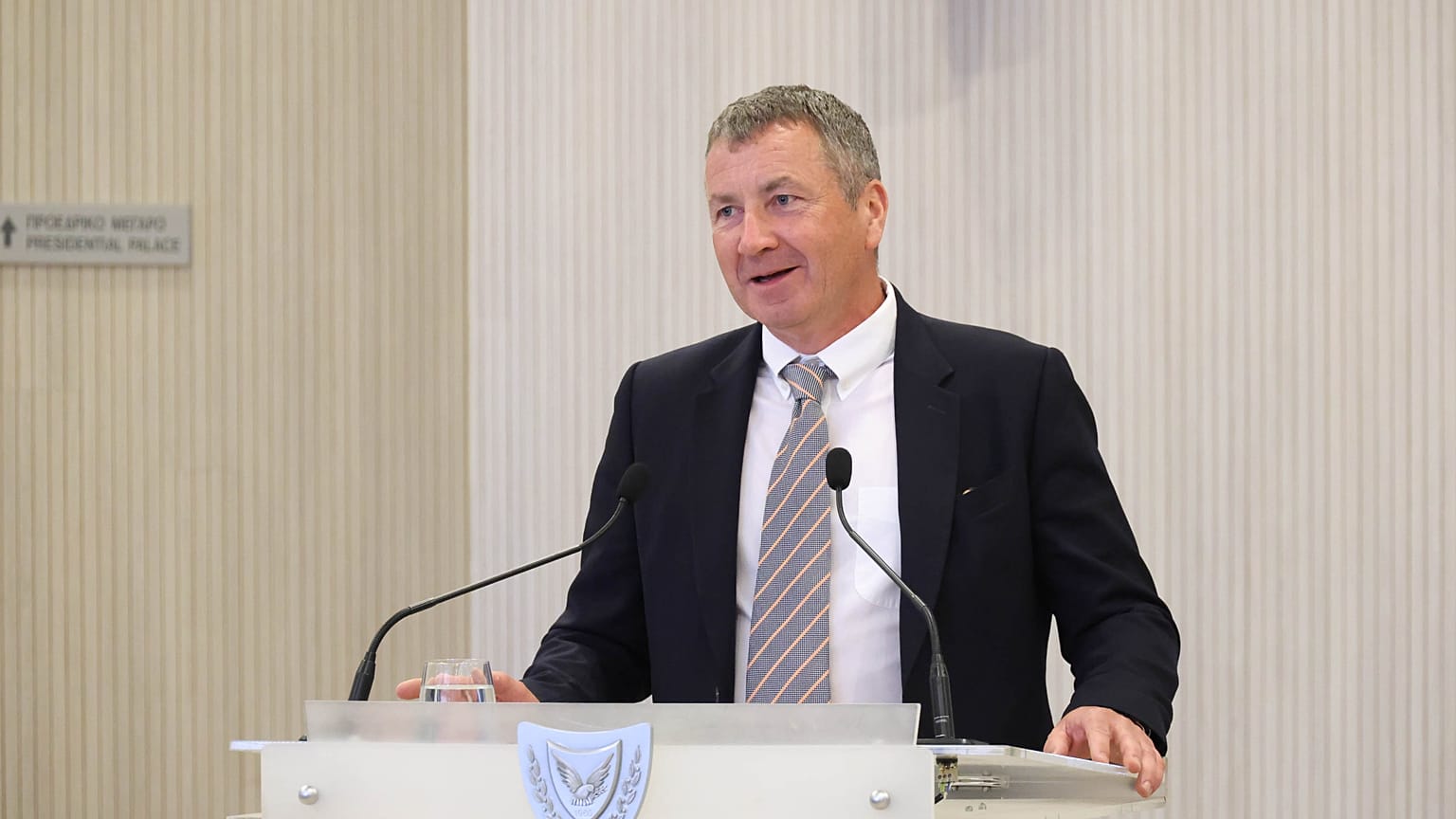













Cypriot President Nikos Christodoulides lauded the signing of the "declaration of marketability" as a "major step towards establishing the Eastern Mediterranean as a credible alternative energy corridor for Europe".
Energy companies ExxonMobil and QatarEnergy signed a "declaration of marketability" with Cyprus in Nicosia on Tuesday, officially declaring two natural gas discoveries off the coast of the island nation as commercially viable.
 ADVERTISEMENT
ADVERTISEMENT
ADVERTISEMENT
The Glaucus and Pegasus natural gas fields are major ExxonMobil discoveries in Block 10 of Cyprus's exclusive economic zone, thought to hold more than 7 trillion cubic feet of gas.
Speaking after the signing took place, John Ardill, ExxonMobil’s vice president of global exploration, reportedly said natural gas could start flowing from the fields by 2033.
“What we should tell ordinary people is we have been working very diligently together between government and investor to make these discoveries and we’re working very diligently to get the gas flowing for the people of Cyprus,” Ardill said, per the Associated Press.
In a statement on Tuesday, Saad Sherida Al-Kaabi, Qatar's minister of state for energy affairs and the president and CEO of QatarEnergy, ExxonMobil’s consortium partner, added that the declaration marked an "important step in advancing the development of offshore resources in Cyprus and in reinforcing regional energy cooperation across the Eastern Mediterranean".
Cypriot President Nikos Christodoulides also lauded the signing as a "major step towards establishing the Eastern Mediterranean as a credible alternative energy corridor for Europe".
The European Union has been working to diversify its energy market since Russia launched its full-scale invasion of Ukraine in February 2022. The bloc has agreed to phase out imports of Russian gas by late 2027.
As part of this effort, it has created what it calls a "Mediterranean gas hub" in southern Europe to help diversify energy suppliers and routes. The EU says the so-called hub could become a "key source and route for supplying gas" to member states moving forward.
Speaking in January, Michael Damianos, Cyprus's minister for energy, commerce and industry, said: "We are breaking away from detrimental reliance on Russian gas and taking a major step, in a spirit of solidarity and cooperation, towards an autonomous Energy Union".