




























A late-April protest camp and the documentary 'Sal a la ferida' condemn ICL's environmental damage in this Barcelona mining basin and its ties to white phosphorus used militarily in Lebanon.
Up to a thousand people gathered between 17 and 19 April for a protest camp against the continued operation of sodium and potash salt mines in the county of Bages, in the province of Barcelona. The reason? The national and international consequences generated by their owner, Israel Chemicals Ltd. (ICL), whose Iberian arm is known as Iberpotash and has managed the mines in the municipalities of Sallent, Balsareny, Vilafruns and Súria since they were privatised in 1998.
 ADVERTISEMENT
ADVERTISEMENT
ADVERTISEMENT
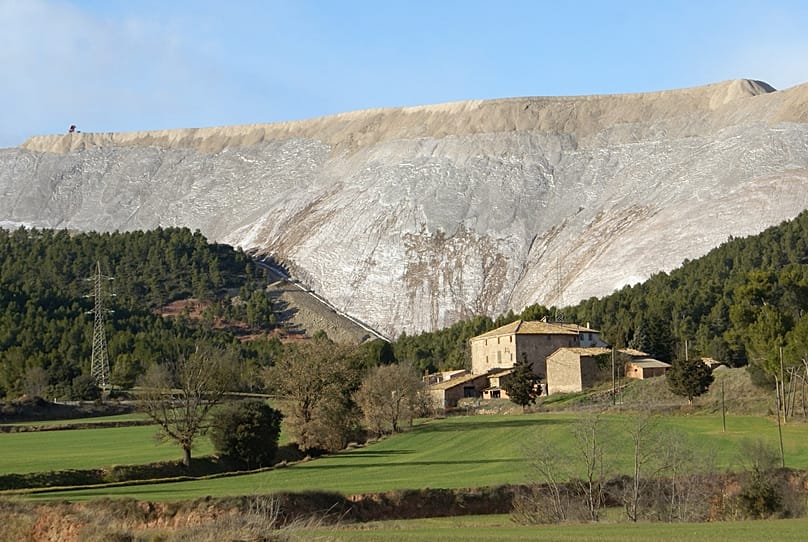
Dozens of long-standing local platforms, such as Montasalat, have for years denounced the pollution caused in this county. Over two decades the company has built up mountains of waste which are believed to have leached into the Llobregat, one of the main rivers running through the region, after using tens of thousands of litres of water in an area that suffers recurrent droughts.
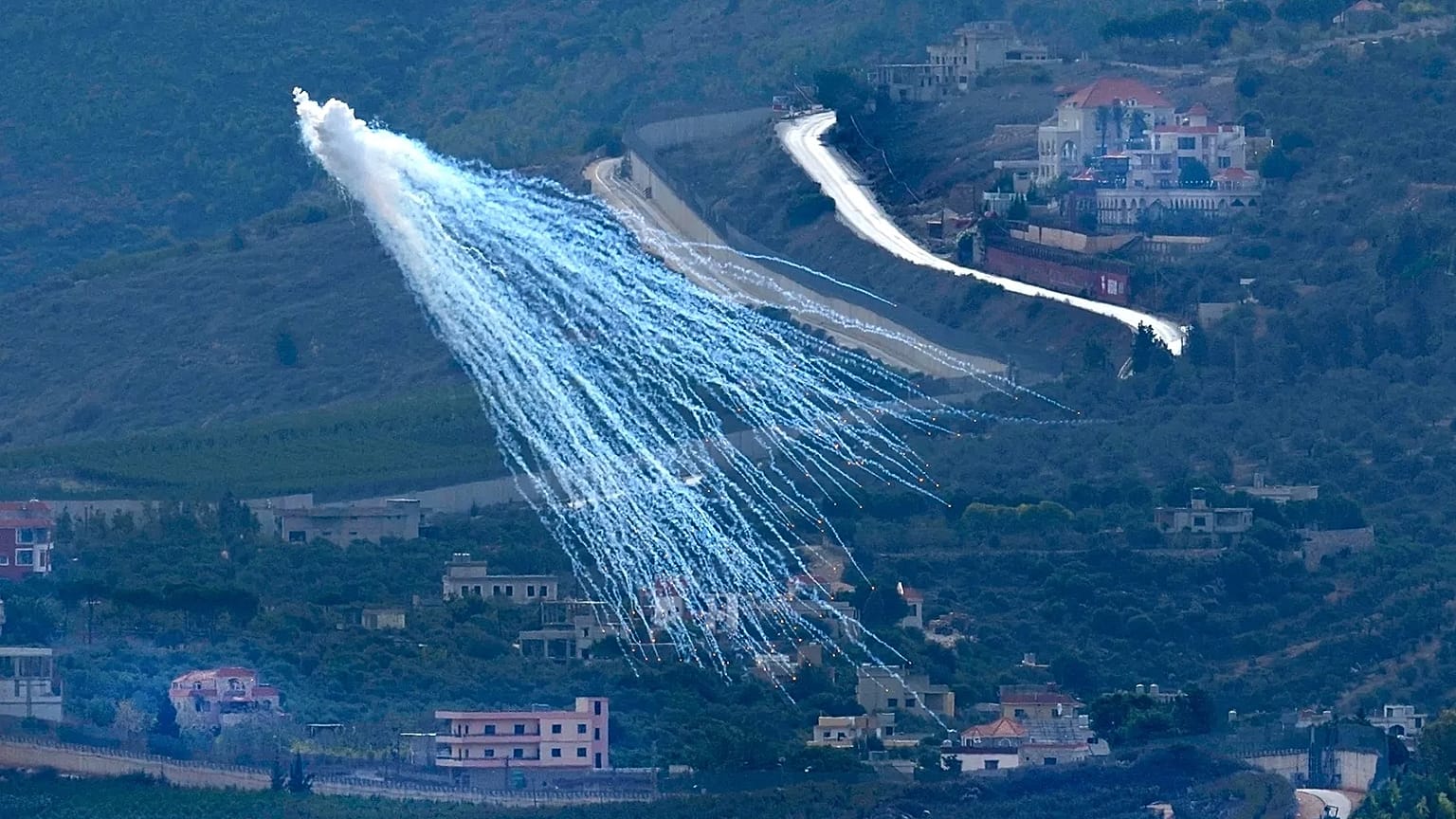
But demonstrators also took to the streets over ICL’s production of white phosphorus, a chemical that ignites instantly on contact with oxygen and is extremely hard to extinguish. Prone to sticking to skin and clothing, it causes deep, severe burns, penetrating even through bone.
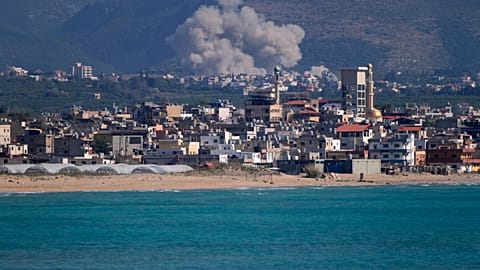
Its use was documented and verified by two human rights organisations on 16 October 2023 in the town of Daraiya, in southern Lebanon, by the Israeli army, as well as in the Gaza Strip.
The Palestinian territories – Gaza and the West Bank – have suffered this overlap between war and environmental damage inflicted by Israel since before the historic conflict in the region escalated after the events of 7 October. This has included, for example, the diversion of their water resources (according to Amnesty International, the Israeli state company Mekorot has systematically drilled wells since the second half of the 20th century to favour settlers and Israeli communities) and the destruction of their crops.
The escalation since 2023 against the people of Gaza has only made matters worse. "Israel has produced more greenhouse gases in the last two years from bombing alone than all of Spain’s activity," said Mazin Qumsiyeh, director of the Palestine Institute for Biodiversity and Sustainability, in a lecture in 2025 at the Autonomous University of Barcelona.
These two interconnected facts (the genocide recognised by the UN through an ad hoc commission, and the environmental damage caused in the region) have sparked a civil resistance movement in the heart of Catalonia, culminating in the rally mentioned in the municipality of Callús.
Eight deaths in the past decade and two counties affected
According to the Iberian Mining Observatory, these operations have created huge spoil heaps of waste composed mainly of sodium chloride which, due to rain and humidity, dissolves into a polluted brine. This seeps into groundwater, contaminating springs, streams, wells and rivers in the Llobregat basin, which supplies water to some of the largest cities in the province, including the capital and its south-western metropolitan area.
Several trade unions have also spoken out and organised strikes over poor working conditions, which have led to fatal accidents. As many as eight workers, including miners and geologists, died between 2011 and 2023, mainly due to rock falls but also accidental falls and crushing between wagons of the trains transporting the material. Two of them were interns on work placements.
The European Commission itself launched infringement proceedings in 2014 against Spain for breaching the EU mining waste directive, firstly to address the pollution generated in the spoil heaps and, secondly, to restore some of the company’s sites through a highly questionable multi-million-euro injection of public money.
Three years later the Commission ruled (source in Spanish) that Spain had granted Iberpotash unlawful state aid incompatible with the single market, and ordered the recovery of the sums unduly received. It is worth noting that the decisions which led to the infringement procedure were taken between 2006 and 2008, under an agreement between the Catalan regional government (the ‘tripartit’ coalition led by the PSC, the Catalan branch of the PSOE, together with ERC and ICV) and the central government, also led by the Socialists.
ICL’s links with the humanitarian tragedy in the Middle East
Several organisations, including Amnesty International, highlight ICL’s connection with the use of white phosphorus munitions against civilians in Lebanon and Gaza at the end of 2023. As can be seen in this public link (source in Spanish) from the US government, ICL secured a contract to supply white phosphorus to the US Army from 2020 until the end of 2025, even though several of its investors, such as Cbus, deny that the company directly manufactures this chemical.
Australia’s ABC network contacted ICL (source in Spanish) about this. Its executives issued a blanket denial before being asked about that specific contract. Only then did ICL acknowledge the agreement, although it claimed that supplies had ended before the date agreed with the US, specifically in 2023. In other words, the year in which the events of 7 October and the subsequent hostilities in Lebanon, particularly in the south of the country, unfolded.
"We wanted to highlight and make visible the complicity of the Generalitat (...) They are shipping potash from a Zionist company in order to enrich themselves and continue helping Israel to commit this genocide," said Júlia Martí, spokesperson for Revoltes de la Terra, in a recent interview with the radio production company ‘Carne Cruda’.
The signs pointing to ICL’s activities are nothing new. Back in 2014, a New Zealand Labour MP (David Shearer, defence spokesperson and leader of the opposition in the preceding three years) fought to have ICL removed from New Zealand’s sovereign wealth fund over suspicions that its products were being used for military purposes. The initiative, however, did not succeed (source in Spanish).
A new documentary exposes the plight of residents in Bages and Baix Llobregat
The accounts of up to six people affected by this environmental and humanitarian crisis are told in a recent documentary, ‘Sal a la ferida’ (Salt in the Wound), produced by ‘El Salto’, which features interviews with local farmers, researchers and activists. Nora Miralles, a researcher at the Observatori Drets Humans i Empreses platform and quoted by ‘elDiario.es’, insists that the white phosphorus does not remain in the United States and that another US company is responsible for reselling it to the Israeli army.
During the camp in Bages, participants organised activities such as talks and workshops. Some also carried out direct actions, such as climbing the spoil heaps of chemical waste or removing sections of the railway tracks used to transport material from the Súria mine to the port of Barcelona.
The 2018 restoration plan for the mines in Sallent and Balsareny-Vilafruns, which closed two years later, provides for a maximum period of 50 years to extract and sell the salt from the spoil heaps, but restoration is only scheduled to take place once that period has elapsed. It is estimated that the El Cogulló spoil heap alone contains more than 40 million tonnes of waste. Current activity is concentrated in the town of Súria, at the Cabanasses mine.