













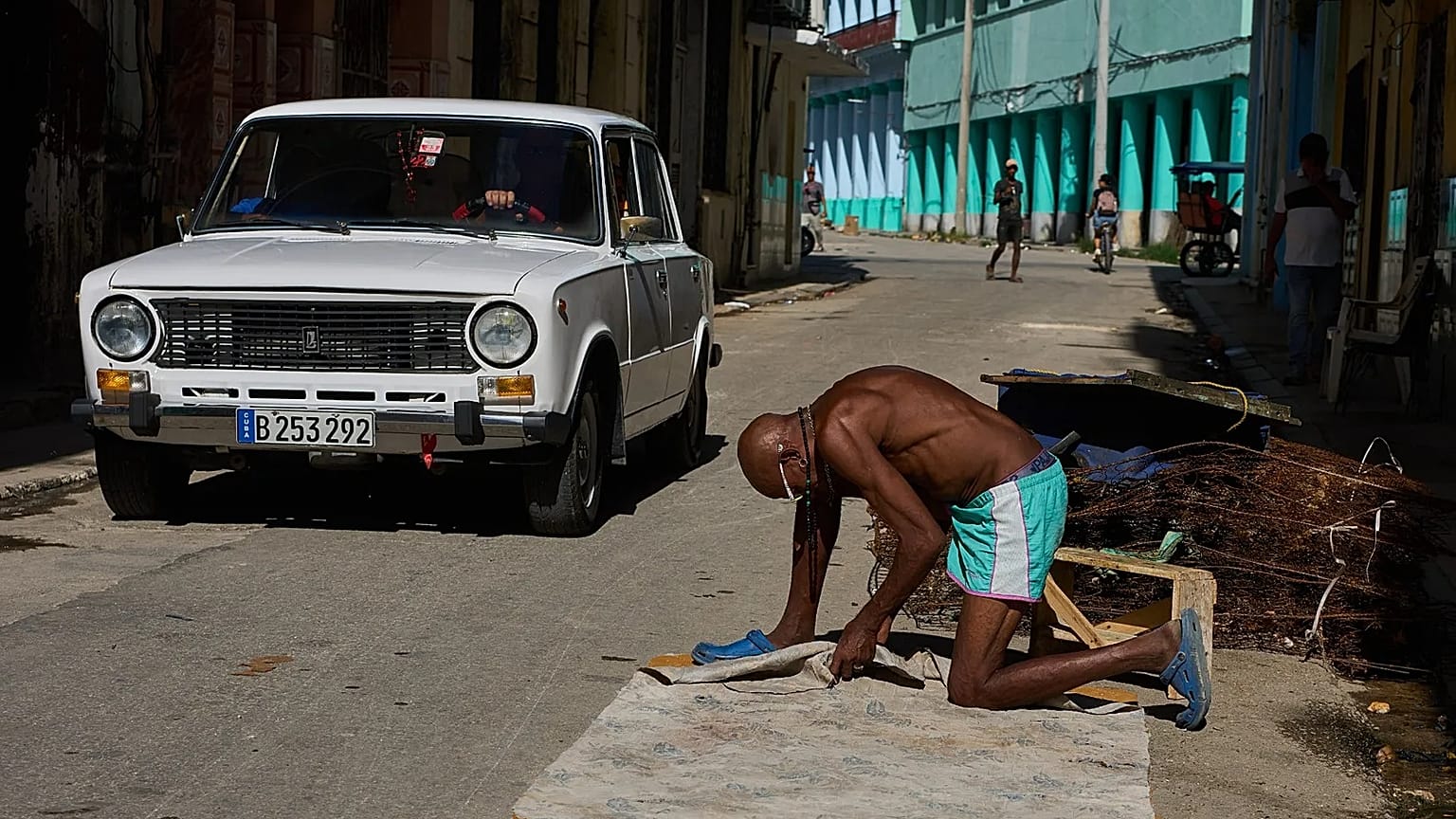













Díaz-Canel announced a slew of reforms in key sectors such as tourism, foreign trade and private business, amid new US sanctions designed to cripple the island nation into submission.
Cuba’s President Miguel Díaz-Canel sprang a surprise on Friday, announcing a wide-ranging package of economic reforms that will affect tourism, foreign trade and investment and the private sector, aiming to liberalise the island's economy amid continued US economic pressure.
 ADVERTISEMENT
ADVERTISEMENT
ADVERTISEMENT
“The country is not paralysed. The country is confronting this whole situation intelligently. We cannot spell everything out so clearly because the enemy is watching everything we do,” Díaz-Canel said in an interview. “Our response must be one of unity.”
The Cuban leader insisted that the measures respond to the “demands of the present time” and are intended to streamline and energise the economy.
Díaz-Canel stressed that the changes are not a response to external pressure, although he acknowledged the complex international backdrop and called for unity in the face of what he described as a "hostile environment."
Arguably the most important measure is the re-opening of the country's tourism sector to “new players” and “new modalities” to make use of the state-owned hotel stock, following the full or partial withdrawal of major foreign companies looking to avoid US sanctions.
Tourism, one of the Caribbean nation's economic drivers, has been in deep crisis since the COVID-19 pandemic, a situation that has dramatically continued to deteriorate, particularly in recent months amid the ongoing sanctions, blockades and embargos imposed by the Trump administration.
The reforms also extend to the agricultural sector, which will gain direct access to inputs, participation in the foreign exchange market and a reduction in bureaucratic procedures.
In addition, Havana will scrap the role of state import companies, which by law acted as intermediaries in the country’s foreign trade, and will lift restrictions on vehicle imports.
The Cuban leader also announced a reform of the state apparatus that aims to reduce the number of ministries, reiterating his intention to move towards the gradual phasing out of universal subsidies in order to "focus them on the most vulnerable groups."
The package is set to be reviewed in the coming weeks by the country’s political bodies before receiving final approval.