




























For the second time in his career, Danish footballer Christian Eriksen collapsed on the pitch. Here is how his implantable cardioverter defibrillator works.
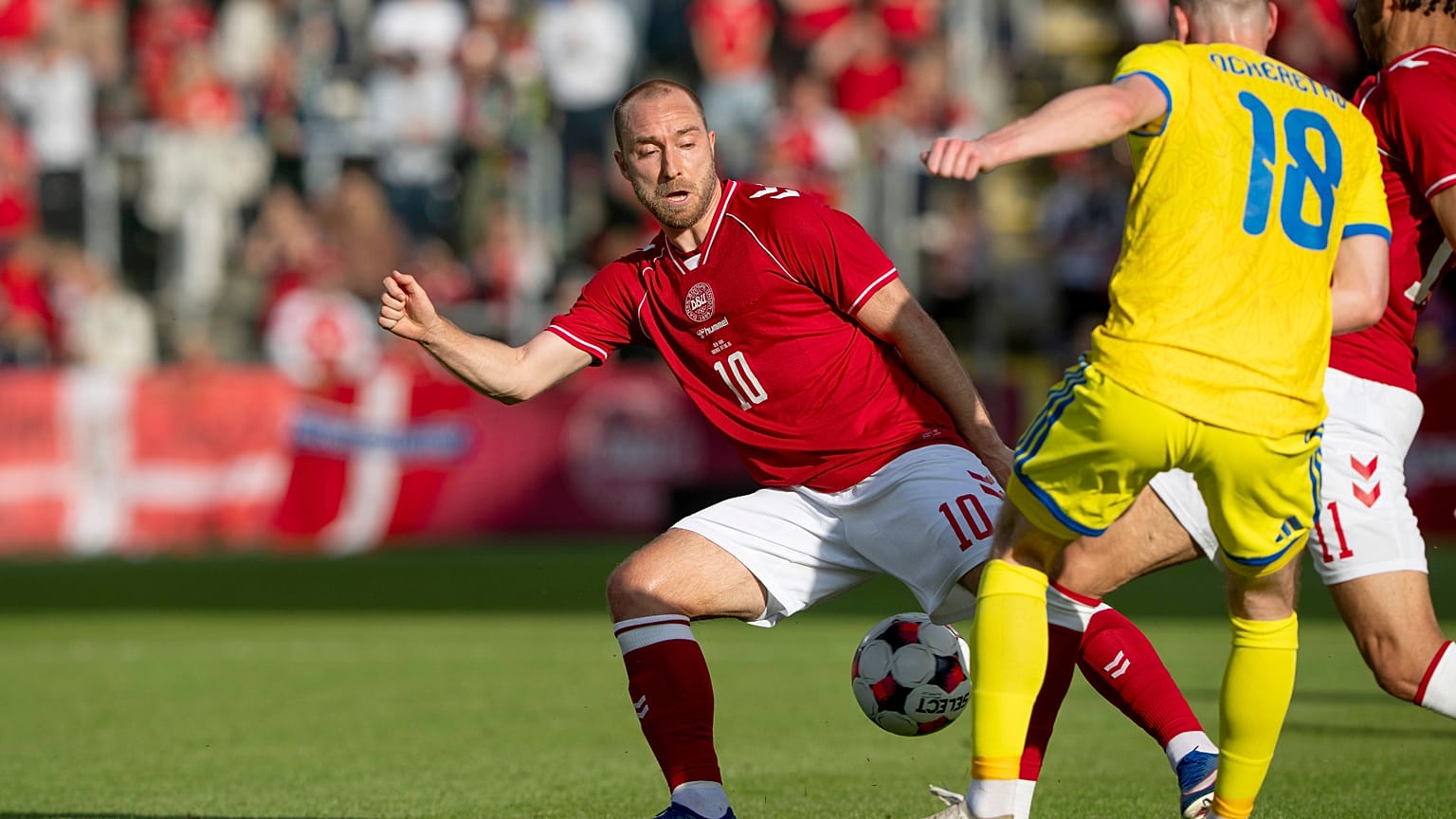
Danish footballer Christian Eriksen collapsed on the field during a game against Ukraine on Sunday.
 ADVERTISEMENT
ADVERTISEMENT
ADVERTISEMENT
It was not the first time the 34-year-old footballer had a health scare during a match. In 2021, he suffered a cardiac arrest during the European Championship, which resulted in Eriksen being fitted with an implantable cardioverter defibrillator (ICD).
Since Sunday’s incident, Eriksen has said on social media that he is doing well and is recovering at home with his family.
He thanked the medical personnel who attended to him in the stadium and the doctors who have been monitoring him since 2021.
“Thanks to their expertise, my ICD did exactly what it was designed to do: protect me when I need it,” Eriksen wrote.
What is an ICD and how does it work?
An implantable cardioverter defibrillator (ICD) is a small battery-powered device placed in the chest under the skin.
Through wires connecting it to the heart, the device constantly checks the heartbeat to detect and stop irregular rhythms, known as arrhythmias.
If the ICD detects any irregularity, it delivers electric shocks to restore a normal heartbeat.
These devices are used in patients at high risk of life-threatening arrhythmias — abnormal heart rhythms that can cause the heart to stop pumping effectively.
They are prescribed for those who have survived a heart attack or cardiac arrest, or who suffer from ventricular arrhythmias, where dangerous electrical misfires originate in the heart's lower chambers.
What is life like with an ICD?
Once a pacemaker is implanted, it generally lasts over ten years, and in most cases patients can lead a normal life with the device, according to Johns Hopkins Medicine.
This includes going back to work, driving and doing sports if cleared by a healthcare professional.
For many years, patients wearing an ICD were advised not to participate in high-intensity sports. However, recent guidelines are more nuanced and call for a case-by-case assessment.
The ICD Sports Registry, the largest study on the subject, followed 440 athletes for up to four years and found no sports-related deaths, injuries or cardiac arrests in athletes returning to sports with an ICD.
The study also found that ICDs in athletes can be set to a higher shock threshold without increasing negative outcomes.
Are there other athletes with ICDs?
While uncommon, Christian Eriksen is not the only athlete currently practicing sports with an ICD.
Katharina Bauer, a German professional pole vaulter, had a subcutaneous implantable defibrillator (S-ICD) implanted in 2018. As a child, she was diagnosed with a condition that caused her heart to have a high heart rate, which led to two heart surgeries.
After a doctor detected an abnormal heartbeat, she had the ICD implanted and continued competing in pole vaulting.
Daley Blind also had an ICD implanted after being diagnosed with myocarditis, an inflammation of the heart muscle. The Dutch footballer now plays for Girona in Spain’s top division.